

![[post_title]](https://samony.com.ng/wp-content/uploads/2025/12/1766029783_Russia-Ukraine-war-latest-Zelensky-urges-European-leaders-to-show.jpg?lm=694379D7)
Ukrainian President Volodymyr Zelensky has made an urgent appeal to European leaders, calling for a united front against Russia and decisive action on Moscow’s frozen assets. Ahead of a crucial European Union summit in Brussels, Mr. Zelensky stressed that such measures are vital to demonstrate to Russia the futility of continuing its war efforts into the coming year, underscoring the necessity for sustained support for Kyiv.
Mr. Zelensky specifically urged allies to leverage the nearly $250 billion in frozen Russian sovereign assets, most of which are held within Belgium’s Euroclear system. He emphasized that European partners must exhibit courage, acknowledge the truth of Russia’s ongoing aggression, and act accordingly to ensure Ukraine receives the necessary financial backing. This strategic utilization of assets, he argued, would be a clear signal that Moscow’s desire to prolong the conflict is pointless.
The Ukrainian president’s call follows a provocative outburst from Russian President Vladimir Putin, who recently labelled European leaders “Europe’s little pigs.” Mr. Putin accused them of aligning with the previous American administration in hopes of profiting from Russia’s collapse, further escalating the war of words. This rhetoric reinforces a broader pattern of anti-Western sentiment from Moscow, which has previously dismissed claims of Russian intent for war with Europe as “hysteria” and “a lie.”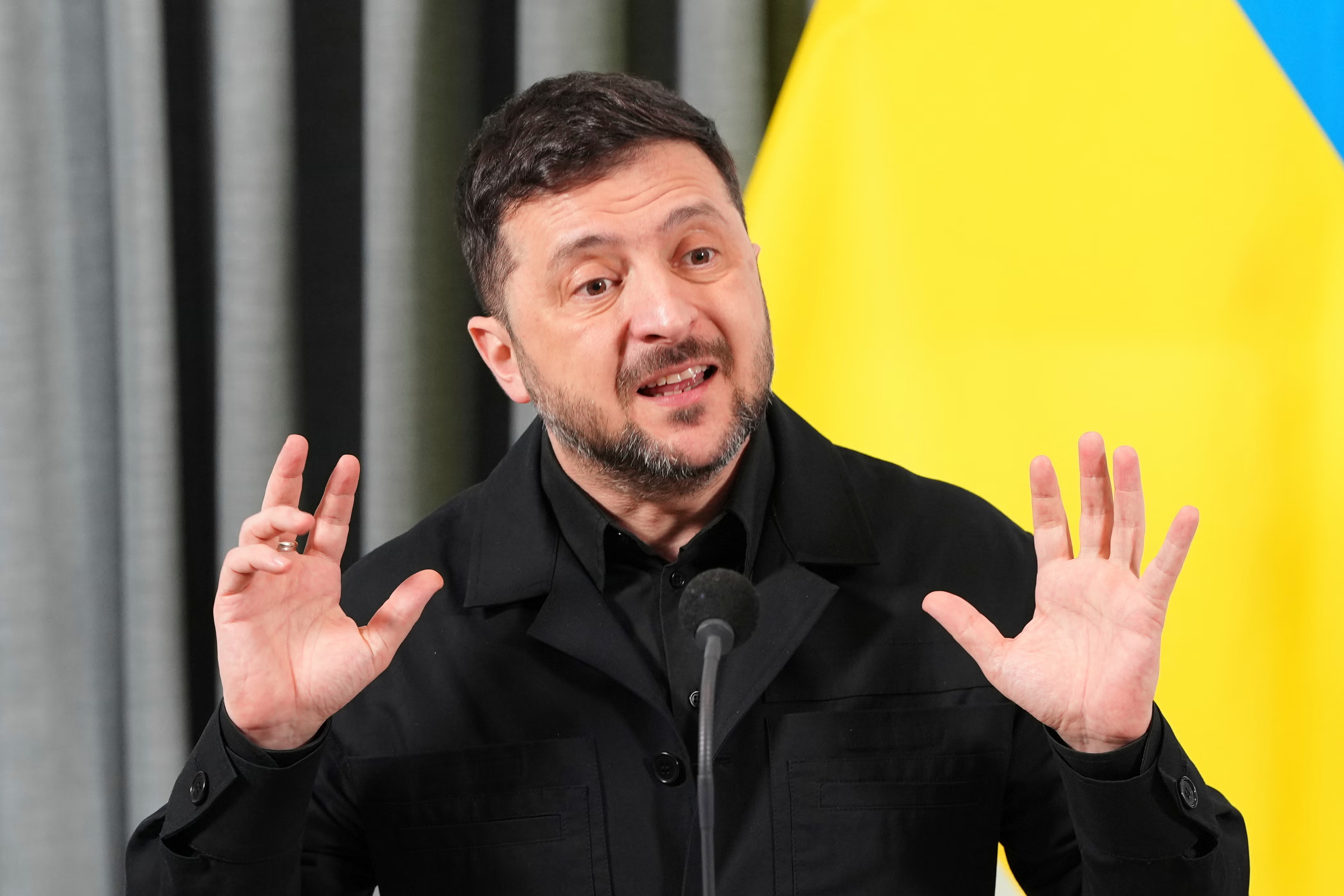
Amidst these diplomatic and rhetorical exchanges, reports indicate that US and Russian officials are preparing for high-level talks in Miami, Florida, this weekend. These discussions are reportedly aimed at exploring a potential deal to end the war in Ukraine. The US delegation is expected to include envoy Steve Witkoff and former President Donald Trump’s son-in-law, Jared Kushner, while Russia’s delegation will reportedly feature Kirill Dmitriev, head of its sovereign wealth fund.
Despite the prospect of peace talks, Mr. Zelensky has maintained a cautious outlook, ruling out a Christmas ceasefire and expressing skepticism that Russia would accept any new European-backed peace proposals. He anticipates Moscow’s refusal to cede territory or accept NATO peacekeepers in a post-war Ukraine, suggesting that Kyiv must remain prepared for continued fighting. This stance reflects a deep-seated distrust of Russian intentions and a belief that Moscow is preparing for a prolonged conflict.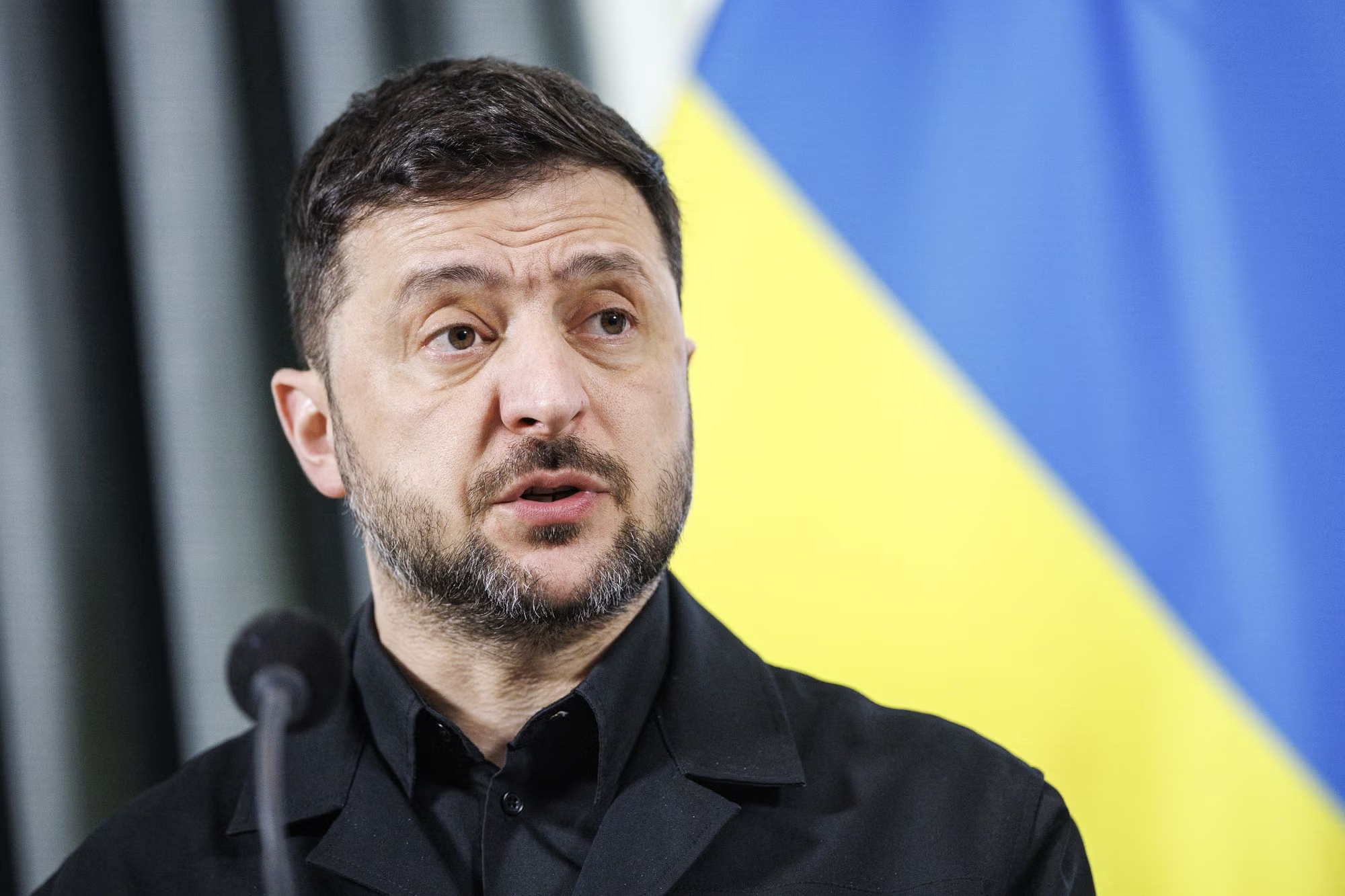
Recent military engagements underscore the ongoing intensity of the conflict. Ukrainian drones reportedly struck a tanker in the southern Russian port of Rostov-on-Don, causing a fire and resulting in an unspecified number of casualties and injuries among the ship’s crew. While a major leak of oil products was reportedly averted, the incident highlights Ukraine’s capability to target Russian assets and the persistent dangers faced by both sides.
The European Union governments had previously agreed to freeze Russian assets indefinitely, moving away from a six-month extension cycle. However, internal divisions persist, with some European leaders expressing opposition to the active use of these funds, citing concerns over potential legal risks. Mr. Zelensky’s renewed plea directly challenges these hesitations, urging allies to overcome their fears and adopt a bolder, unified approach to support Ukraine financially and strategically.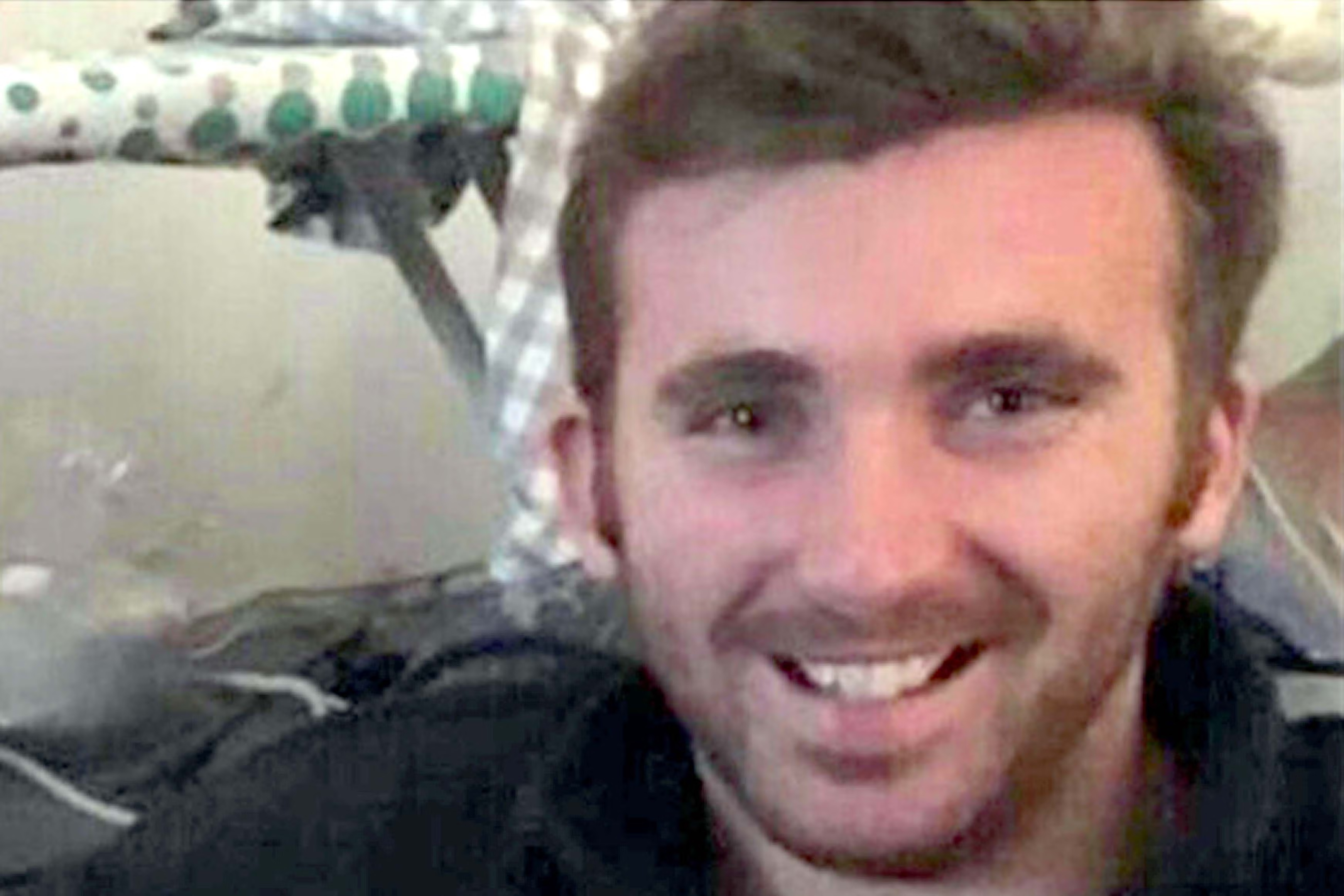
The broader outlook on the conflict remains grim, with Mr. Zelensky warning that Russia appears to be preparing for “a year of war,” despite signals from some US allies suggesting Moscow might seek to end the conflict. This stark assessment reinforces the critical need for sustained international support and decisive strategic actions, such as the full utilization of frozen assets, to alter Russia’s calculus and ultimately bring an end to the hostilities.
The human cost of the conflict was also underscored by the repatriation of British paratrooper Lance Corporal George Hooley, 28, who was killed in Ukraine in what the Ministry of Defence described as a “tragic accident.” A letter written by L/Cpl Hooley, to be opened in the event of his death, urged his family not to remember him with sadness, stating he died “doing what I believed in” and “what I trained to do,” a poignant reminder of the personal sacrifices made in the ongoing war.

![[post_title]](https://samony.com.ng/wp-content/uploads/2025/12/1766029434_As-long-as-Pastor-Chris-Okafor-Did-Not-Rape-You-300x222.png?lm=6943787B "Ogala-Okafor Dispute: Blessing CEO Highlights Consent and Contradictions")
![[post_title]](https://samony.com.ng/wp-content/uploads/2025/12/New-Dolby-FlexConnect-speakers-from-LG-will-be-shown-at-300x158.jpg?lm=69437537 "LG Unveils Modular Dolby FlexConnect Sound System at CES 2026")

![[post_title]](https://samony.com.ng/wp-content/uploads/2025/12/1766026065_Trump-holds-national-address-in-rally-style-speech-blaming-Biden.jpeg?lm=69436B51 "Trump Blames Predecessor for Economy in Rally-Style Address")
![[post_title]](https://samony.com.ng/wp-content/uploads/2025/12/Four-killed-women-abducted-in-fresh-Benue-attacks-300x169.jpg?lm=6943684A "Benue State Attacks: Four Killed, Women Abducted Amid Rising Violence")



![[post_title]](https://samony.com.ng/wp-content/uploads/2025/12/1766029434_As-long-as-Pastor-Chris-Okafor-Did-Not-Rape-You.png?lm=6943787A "Ogala-Okafor Dispute: Blessing CEO Highlights Consent and Contradictions")
![[post_title]](https://samony.com.ng/wp-content/uploads/2025/12/New-Dolby-FlexConnect-speakers-from-LG-will-be-shown-at-1024x538.jpg?lm=69437537 "LG Unveils Modular Dolby FlexConnect Sound System at CES 2026")
