

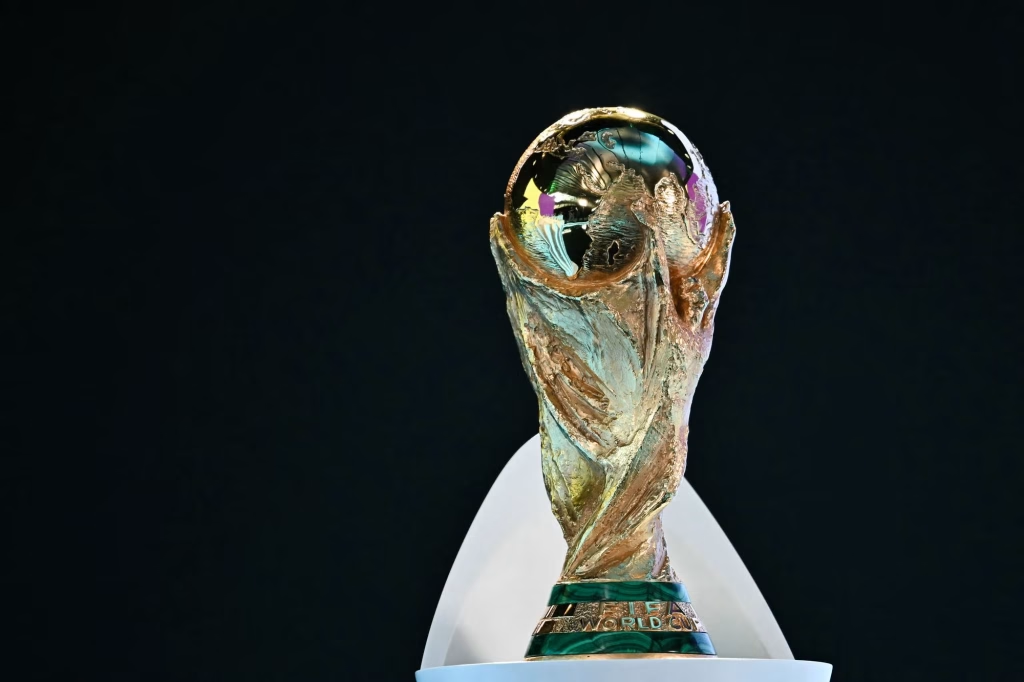
World Cup 2026: Stadium Rebranding Sparks Debate – More Than Just a Name Change?
The upcoming 2026 FIFA World Cup, co-hosted across North America, is already generating buzz. A hot topic? The temporary renaming of stadiums to comply with FIFA’s sponsorship regulations. While the intent is clear – preventing corporate branding during the tournament – the execution is, well, causing a stir.
Take Arlington, Texas, for instance. Residents are up in arms. Their beloved AT&T Stadium, home to the Dallas Cowboys, will temporarily become “Dallas Stadium.” The rub? It’s not in Dallas. It’s in Arlington. Tarrant County, even. You can see why some feel slighted. It’s not just about signage; it’s about local identity.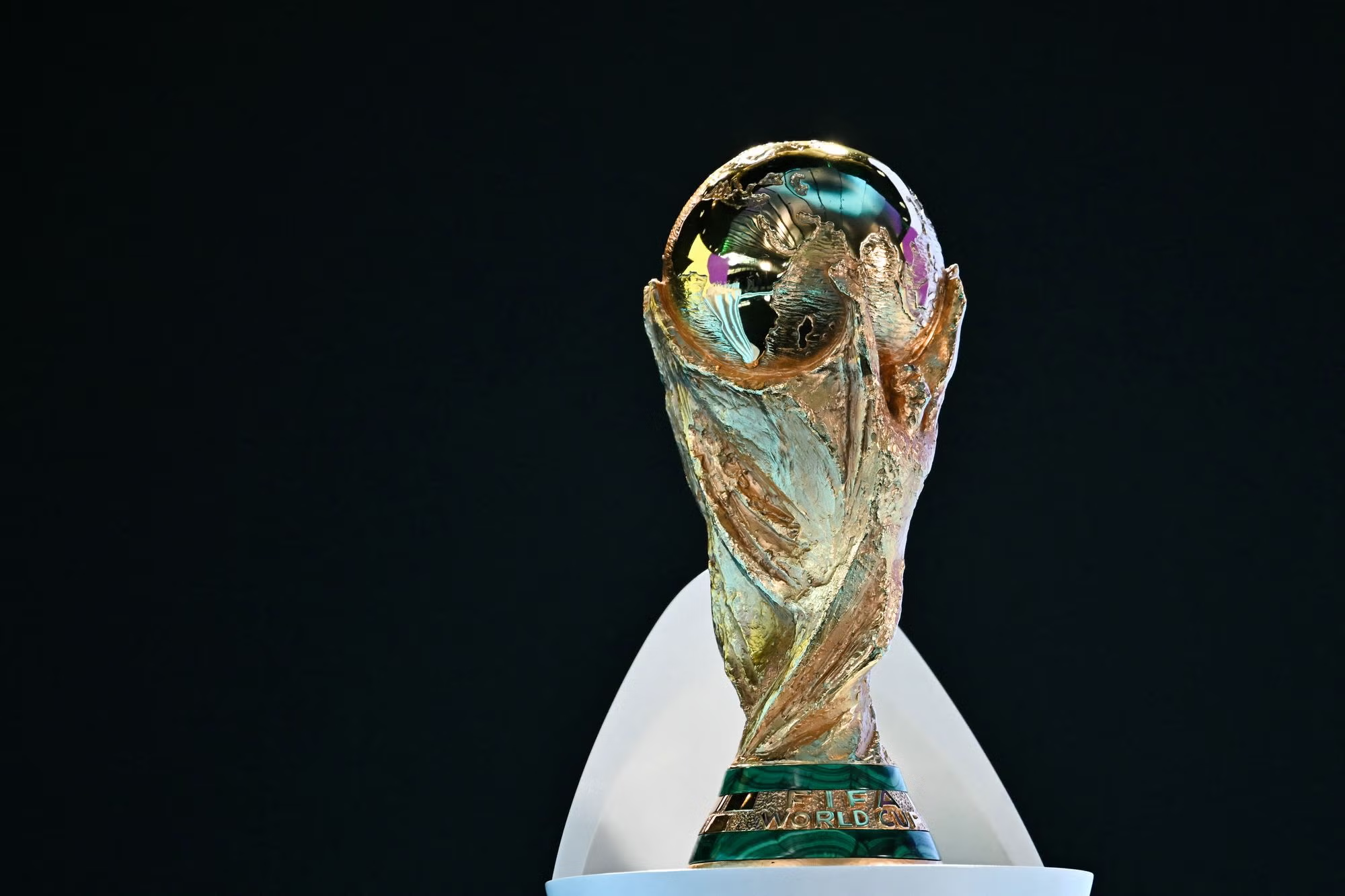 >
>
This Arlington situation highlights a broader issue. FIFA’s blanket policy, while understandable from a brand protection standpoint, overlooks the nuances of geography and local pride. It’s a reminder that global events have very local impacts. The city of Arlington supported and partly funded the stadium. They get to feel a certain way when the stadium takes the name of another city.
Other rebrandings seem less contentious. Mercedes-Benz Stadium in Atlanta becomes “Atlanta Stadium.” Gillette Stadium near Boston morphs into “Boston Stadium.” These appear more straightforward, even if the latter is geographically a bit of a stretch (Foxborough is a solid 30 miles from Boston).
Yet, even those seemingly simple changes invite some questions. What’s the real impact of these temporary names? Do fans truly care? Will it affect the “fan experience”? Maybe a little, maybe not at all.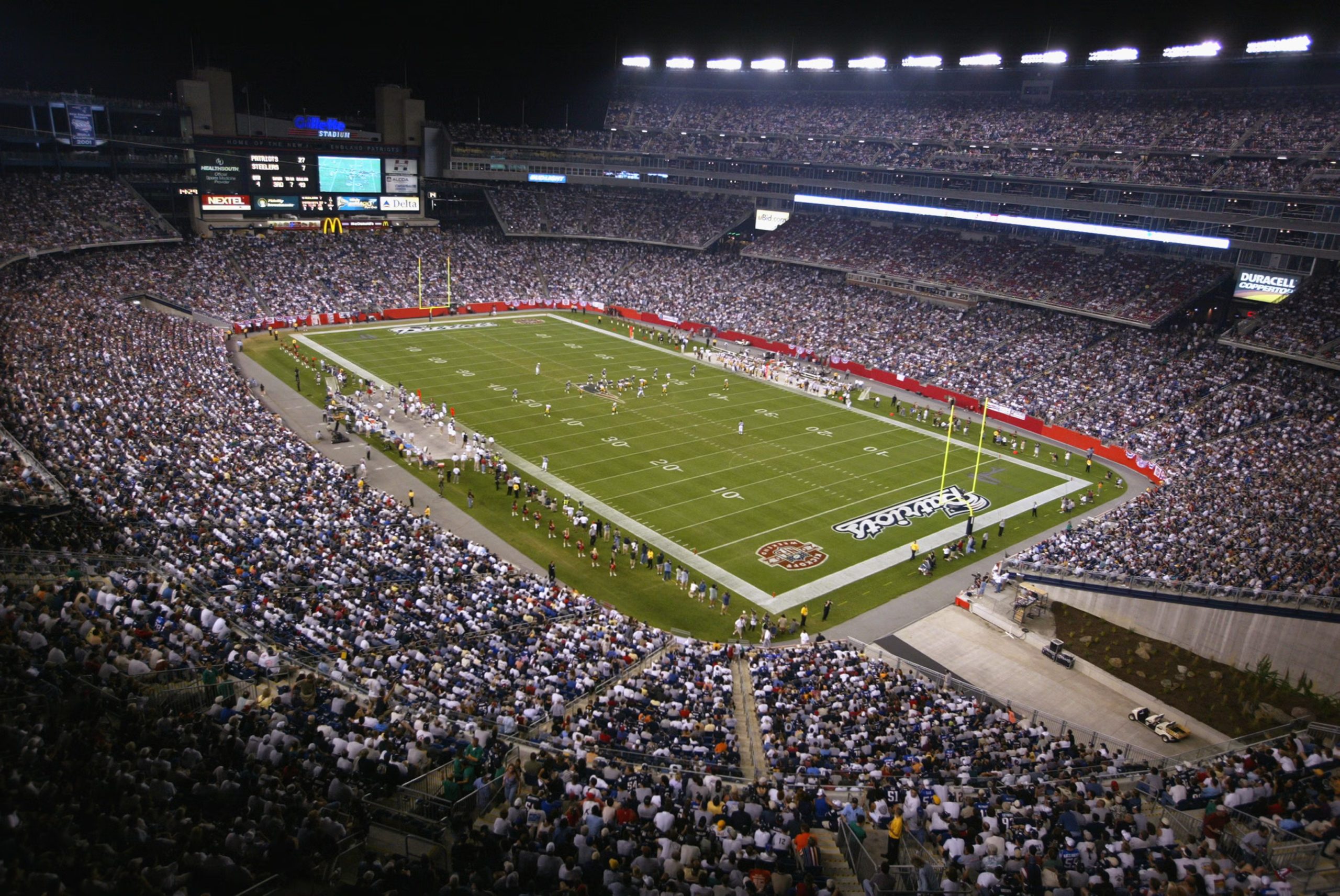 >
>
Here’s the full list of renames for the 2026 World Cup:
Atlanta Stadium (currently Mercedes-Benz Stadium) BC Place Vancouver (retains its name) Boston Stadium (currently Gillette Stadium) Dallas Stadium (currently AT&T Stadium) Estadio Azteca Mexico City (retains its name) Estadio Guadalajara (currently Estadio Akron) Estadio Monterrey (currently Estadio BBVA) Houston Stadium (currently NRG Stadium) Kansas City Stadium (currently GEHA Field at Arrowhead Stadium) Los Angeles Stadium (currently SoFi Stadium) Miami Stadium (currently Hard Rock Stadium) New York New Jersey Stadium (currently MetLife Stadium) Philadelphia Stadium (currently Lincoln Financial Field) San Francisco Bay Area Stadium (currently Levi’s Stadium) Seattle Stadium (currently Lumen Field) Toronto Stadium (currently BMO Field)
One can’t help but consider the business aspect. Naming rights are big money. Corporations pay fortunes for the visibility. FIFA’s policy effectively shuts that down for the duration of the tournament. It’s FIFA flexing its brand power, prioritizing global consistency over individual sponsorship deals.
This has repercussions. Stadium owners lose potential revenue. Sponsors see a temporary dip in exposure. Does the prestige of hosting World Cup games outweigh those losses? Probably, but the calculus is there.
The situation also highlights the power of sports branding. A stadium name becomes synonymous with the city, the team, the experience. To tinker with that, even temporarily, touches on something deeply personal for fans.
From a marketing perspective, it will be interesting to observe how cities leverage the “generic” stadium names. Will they double down on promoting the city itself? Will they try to associate themselves more strongly with the games, regardless of the stadium’s temporary moniker?
There’s also the practical side. Wayfinding, signage, merchandise…all need to be updated. That incurs costs. And after the tournament? Back to the original names. It’s a logistical puzzle, certainly.
The World Cup draw looms, increasing anticipation. But the stadium name kerfuffle, especially the Arlington case, serves as a microcosm of the challenges inherent in global events. Balancing global imperatives with local sensitivities is never easy. It demands careful consideration, open communication, and perhaps a bit more flexibility than FIFA has shown here.
Ultimately, the games will go on. The fans will cheer. Whether they’re cheering from “Dallas Stadium” or AT&T Stadium, the passion for the sport will endure. Nevertheless, this temporary name change episode gives food for thought about the intersection of sports, branding, and local identity.

![[post_title]](https://samony.com.ng/wp-content/uploads/2025/12/How-to-Break-a-Bad-Habit-11-Tips-and-Strategies-300x169.jpg?lm=6931DA31 "Work With Your Brain to Break Bad Habits")
![[post_title]](https://samony.com.ng/wp-content/uploads/2025/12/Pope-Leo-dissolves-one-of-Francis-final-acts-in-major-300x200.jpeg?lm=6931DAAB "Vatican Finances: Pope Leo Scraps Predecessor’s Plan – What’s Next?")
![[post_title]](https://samony.com.ng/wp-content/uploads/2025/12/In-1995-a-Netscape-employee-wrote-a-hack-in-10-300x169.jpg?lm=6931D870 "JavaScript’s Reign: How a 10-Day Hack Took Over the Web (And What’s Next)")
![[post_title]](https://samony.com.ng/wp-content/uploads/2025/12/1764869561_Wizkid-Set-to-Host-GOAT-Concert-in-Lagos-This-December-300x289.jpeg?lm=6931C5BC "Wizkid’s Lagos Show: True Homecoming or Calculated Move?")

![[post_title]](https://samony.com.ng/wp-content/uploads/2025/12/1764875122_Inside-Im-A-Celebrity-Aitchs-dating-history-as-rapper-sparks-1024x538.jpg?lm=6931DB73 "Celebrity Dating: The “I’m a Celebrity” Publicity Machine")
![[post_title]](https://samony.com.ng/wp-content/uploads/2025/12/How-to-Break-a-Bad-Habit-11-Tips-and-Strategies-1024x576.jpg?lm=6931DA31 "Work With Your Brain to Break Bad Habits")
