

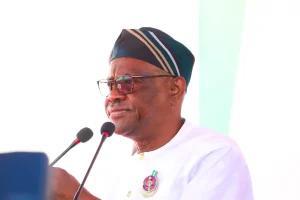
Rivers State Governor Siminalayi Fubara’s administration is facing scrutiny regarding the continued influence of former Governor Nyesom Wike. An APC spokesman has stated that Wike can no longer wield leadership authority after vacating his office, raising questions about the dynamics of power in the state. This statement highlights a potential conflict or ongoing political maneuvering that has captured public attention. The core of the debate revolves around the legitimacy and extent of Wike’s current influence following his handover of power.
The APC spokesman’s assertion is a direct challenge to any perceived continuation of Wike’s executive powers. He emphasizes that the position of leadership is tied to holding office, and once vacated, that authority ceases. This perspective suggests that any actions or directives attributed to Wike post-tenure are not officially sanctioned or constitutionally supported.
What is the main point of contention regarding Wike’s post-office influence? The main point of contention is whether a former governor can continue to exert executive authority or control over state affairs after their term has officially ended. The APC spokesman argues that such continued influence is illegitimate.
This political commentary comes at a time of significant interest in Rivers State governance. Observers are keen to understand the official stance and the implications for the current administration under Governor Fubara. The APC’s intervention adds another layer to the ongoing political narrative.
Understanding the constitutional framework surrounding the transfer of power is crucial in this context. Legal experts often weigh in on such matters, clarifying the boundaries of executive authority and the limitations placed upon former officeholders. The current situation invites a deeper examination of these legal and political principles.
The APC spokesman’s statement is not just a political jab but a signal of the opposition party’s engagement with the political landscape of Rivers State. Their commentary suggests a focus on accountability and adherence to constitutional procedures.
This situation also raises broader questions about political succession and the transition of power in Nigeria. How are these transitions typically managed, and what are the common challenges faced by incoming administrations dealing with the influence of their predecessors?
The debate about Wike’s continued involvement is likely to influence public perception and the political discourse within Rivers State. It sets a precedent for how such situations are addressed and debated.
For those following Nigerian politics, the developments in Rivers State offer a case study in the complexities of governance and the enduring impact of political figures.
This ongoing discussion underscores the importance of clear mandates and defined roles in public office to ensure smooth and effective governance.
The APC’s public statement serves to amplify the concerns about the exercise of power beyond the official tenure of an elected official, prompting a wider conversation about democratic norms and practices.
It is crucial for citizens to stay informed about these political developments to understand the governance structures at play and their potential impact on the state’s future trajectory.
Keywords: what is political leadership, Wike vs Fubara, APC spokesman statement, Rivers State politics news, Nyesom Wike news, best political strategy 2026, political transition guide 2026, how to transfer power, what is executive authority, APC Nigeria









