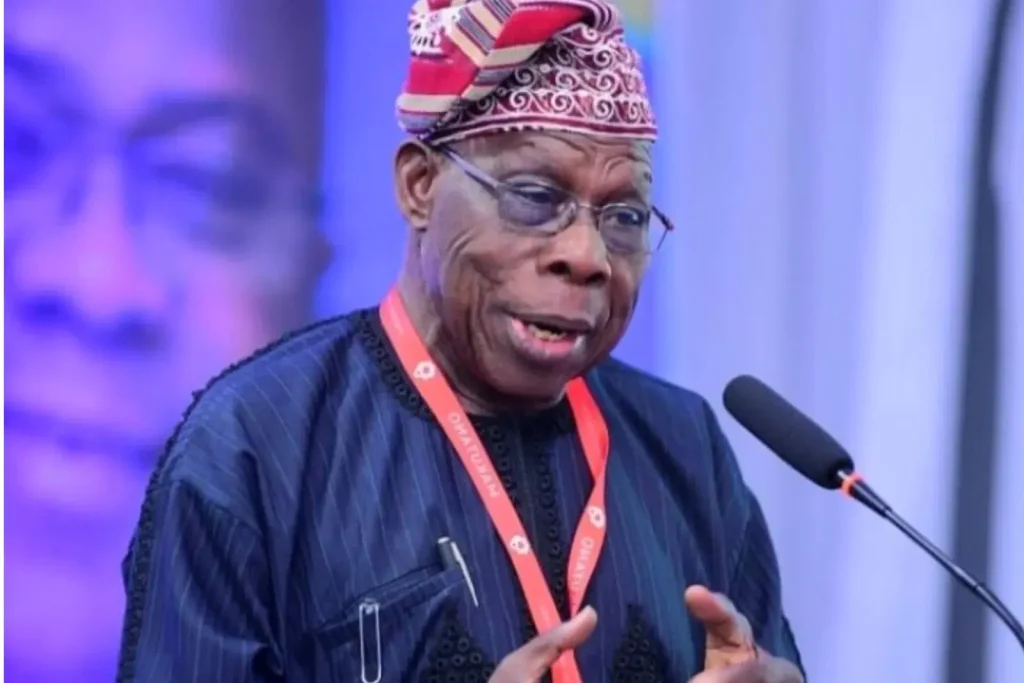
Former President Olusegun Obasanjo recently highlighted the pivotal role of his labour reforms in safeguarding Nigeria’s organised labour movement from foreign influence and funding. These critical changes, implemented during his tenure as military head of state, were designed to ensure that Nigerian unions were indigenous in structure, leadership, and financial support, thereby protecting national sovereignty. This historical context provides valuable insight into the evolution of the Nigeria Labour Congress (NLC) and its ongoing challenges.
What is Nigeria Labour Congress? The Nigeria Labour Congress is the umbrella organization for trade unions in Nigeria, playing a crucial role in advocating for workers’ rights and influencing national policy. Obasanjo detailed a period when two dominant labour organisations operated with alleged financial backing from rival foreign intelligence blocs: one from the Soviet Union’s KGB and the other from the United States’ CIA. This external dependency posed significant risks to the nation’s independence and the genuine representation of Nigerian workers.
How Obasanjo reformed labour unions? The answer is that Obasanjo initiated comprehensive reforms through the Justice Adebiyi panel, leading to the restructuring of trade unions and the enactment of laws that birthed the NLC. These reforms ensured that the NLC’s leadership emerged through elections free from direct government interference, fostering a truly Nigerian-controlled labour movement.
The former President recounted how he tasked Justice Adebiyi with leading this transformative process. Despite initial skepticism from some labour figures, including Hassan Sunmonu, about Obasanjo’s understanding of labour matters, the objective was clear: to establish a labour movement organised, controlled, and funded entirely by Nigeria. This foundational shift was crucial for the long-term stability and credibility of organised labour within the country.
The culmination of these efforts saw Hassan Sunmonu emerge as the first elected president of the Nigeria Labour Congress. This outcome, achieved without government manipulation, restored significant credibility to organised labour and ushered in a period of relative industrial peace. Obasanjo expressed satisfaction that the new structure allowed Nigerian workers to elect their leadership, a stark contrast to the previous foreign-influenced landscape.
Reflecting on his working relationship with Sunmonu, Obasanjo emphasised the necessity for both government and labour to maintain clear boundaries while working towards national progress. He famously advised Sunmonu to publicly critique government policies even after private consultations, ensuring his independence and maintaining workers’ confidence. Furthermore, the introduction of a compulsory check-off system effectively secured stable union funding, permanently eliminating foreign financial influence.
Fast forward to today, Joe Ajaero NLC news continues to highlight ongoing struggles for Nigerian workers. The current NLC President, Comrade Joe Ajaero, has sharply criticised the Federal Government’s economic policies, particularly the new tax laws. He argues that these laws disproportionately burden workers and the poor, exacerbating already excruciating poverty by taxing the national minimum wage. Ajaero lamented labour’s deliberate exclusion from key policy-making bodies like the Presidential Committee on Tax.
A significant Nigeria tax laws update is urgently needed, according to Ajaero, who insists that policies crafted without workers’ input are regressive and deepen poverty. He also echoed concerns raised by Hassan Sunmonu regarding Nigeria’s growing public debt, questioning the utilisation of borrowed funds. This disconnect between government and organised labour threatens public trust and national stability, demanding a more sincere engagement.
When considering NLC vs TUC Nigeria, both major labour centres face similar pressures regarding workers’ welfare and policy influence. The philosophy of “Organise, Don’t Agonise,” championed by Sunmonu, remains relevant as a guide for workers. Senator Adams Oshiomhole, a former NLC President, reinforced this sentiment, urging labour to organise effectively rather than merely lamenting challenges. The Nigerian labour law explained through these experiences underscores the need for continuous advocacy.
Looking ahead, the Nigerian labour future 2026 will heavily depend on how current grievances regarding wages, taxation, and policy exclusion are addressed. An NLC reforms guide 2026 would need to focus on strengthening internal structures, ensuring inclusive policy dialogue, and safeguarding workers’ rights against economic hardships. The legacy of Obasanjo labour reforms serves as a reminder of the importance of an independent and nationally focused labour movement.
Keywords: what is Nigeria Labour Congress, how Obasanjo reformed labour unions, NLC vs TUC Nigeria, Obasanjo labour reforms vs current challenges, Nigerian labour law explained, NLC guide for workers, Joe Ajaero NLC news, Nigeria tax laws update, Nigerian labour future 2026, NLC reforms guide 2026