


The tragic death of a 13-year-old boy in Akwa Ibom on New Year’s Day has ignited urgent calls for justice, bringing to the forefront the persistent issue of military brutality in Nigeria. This devastating incident, involving a soldier and young Timothy Daniel Monday, underscores the critical need for accountability within security forces and protection for civilians. The family’s plea for intervention highlights a recurring pattern of violence that demands immediate and comprehensive action.
Timothy Daniel Monday, a JSS 2 student, was allegedly shot dead by a soldier attached to Sterling Global during a crossover service in Ikot Abasi. Eyewitness accounts from his sister, Miracle Daniel Monday, describe an altercation where soldiers accosted her and her siblings. Despite an initial intervention from another soldier, the same individual who assaulted them later opened fire, killing Timothy instantly. This harrowing account provides critical context for the ongoing Akwa Ibom soldier killing news.
Human rights lawyer Inibehe Effiong has taken up the case, demanding a thorough investigation, prosecution of the alleged culprit, and compensation for the bereaved family. His involvement is crucial in navigating the legal complexities surrounding such a grave incident. Effiong’s vocal criticism of Sterling Global for its silence further amplifies the calls for corporate responsibility in situations involving their security personnel.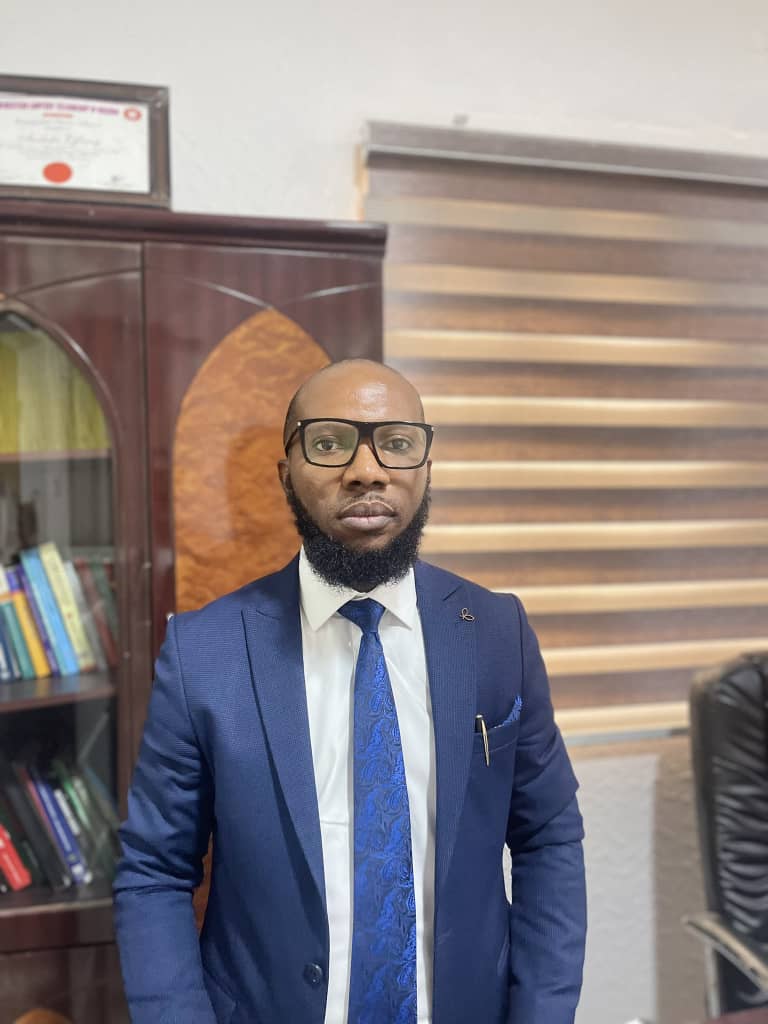
What is extrajudicial killing in Nigeria? Extrajudicial killing in Nigeria refers to the unlawful and deliberate killing of a person by state agents, such as military or police personnel, without any legal process or trial. These actions violate fundamental human rights, including the right to life, as enshrined in the Nigerian Constitution and international laws.
The concept of “what is extrajudicial killing in Nigeria” is central to understanding the severity of Timothy’s death. Such acts represent a profound breach of public trust and a failure of the state to protect its citizens. These killings are not only illegal but also erode the fabric of justice and the rule of law, perpetuating a cycle of fear and impunity among the populace.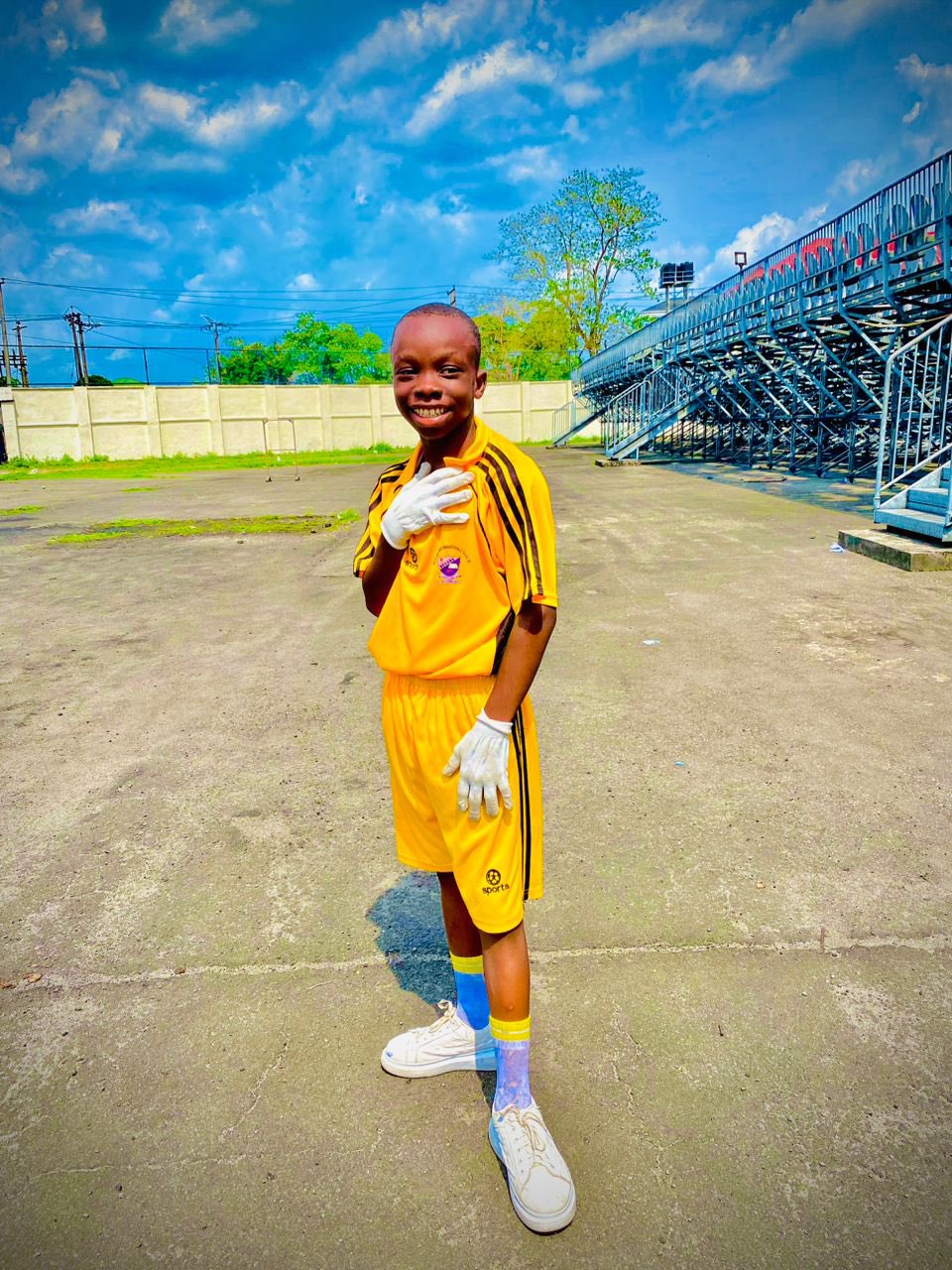
For victims and their families seeking justice, understanding “how to get justice for military brutality in Nigeria” can be a daunting path. Legal avenues typically involve reporting to military authorities, the police, and potentially pursuing civil actions. However, the efficacy of these routes often depends on transparency, political will, and the persistence of advocacy groups.
A significant hurdle in these cases is the question of jurisdiction and accountability. The debate of “military justice vs civilian court in Nigeria” often arises, with military personnel sometimes tried under their own code of conduct rather than civilian criminal law. This dual system can complicate prosecution and raise concerns about fairness and impartiality, particularly when victims are civilians.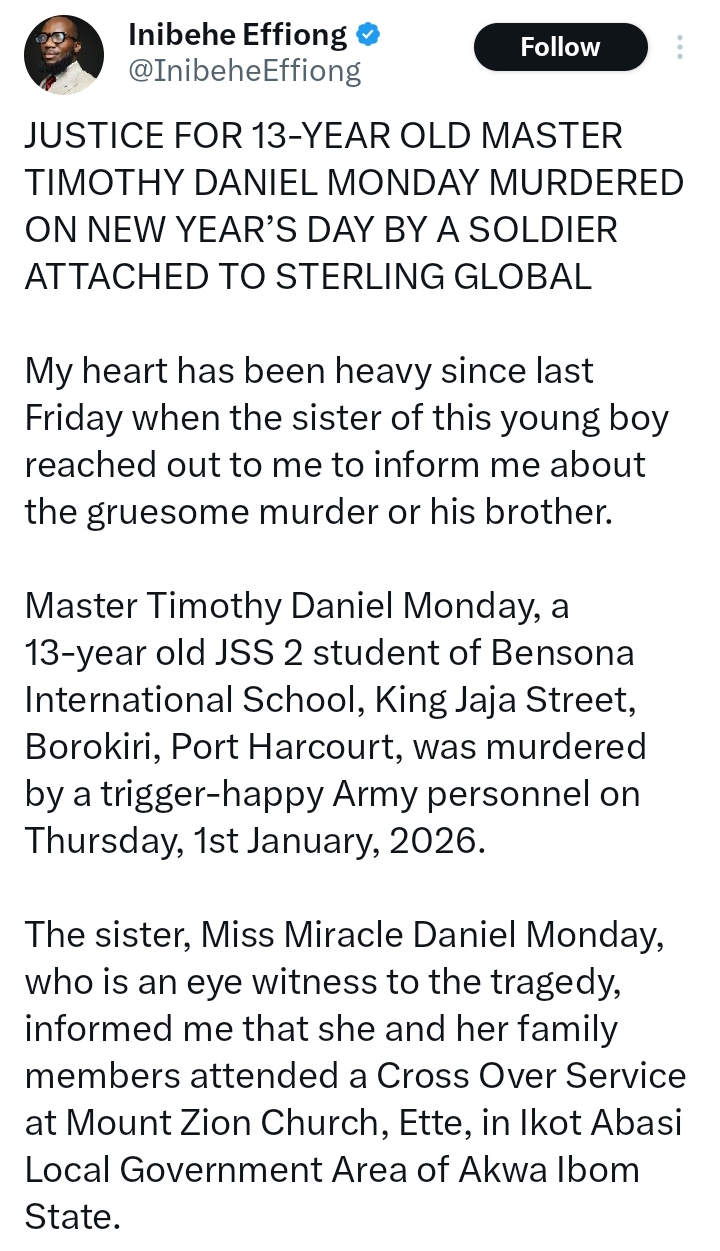
Timothy’s case is not isolated; it reflects a broader pattern of misconduct by security forces. While distinct, the issues surrounding “police brutality vs military brutality Nigeria” share commonalities in their impact on civilian lives and the urgent demand for reform. Both highlight a systemic problem of excessive force and lack of accountability that plagues various arms of Nigeria’s security apparatus.
The alleged non-responsiveness of Sterling Global, the company whose personnel were involved, adds another layer of ethical and legal concern. Companies operating in sensitive areas have a responsibility to ensure their security details adhere to strict human rights standards. Their silence, as highlighted by Effiong, can be perceived as complicity and a failure to support justice for victims of military violence Nigeria.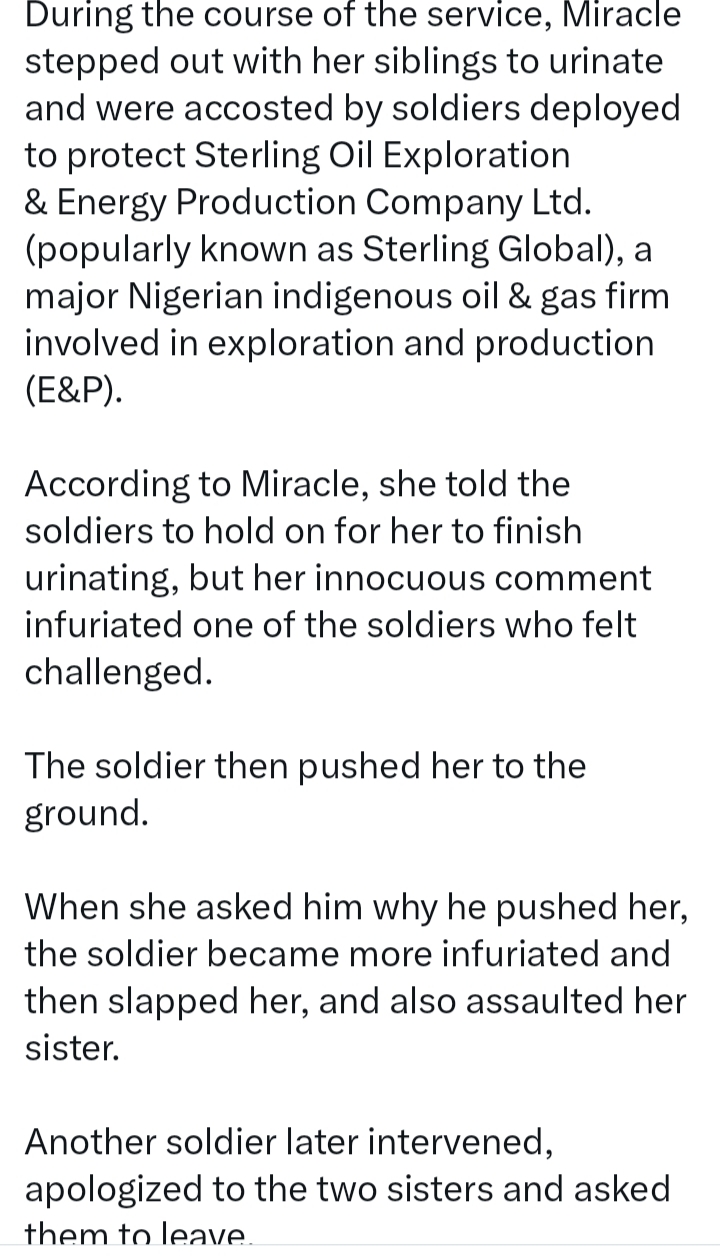
The incident in Akwa Ibom tragically exemplifies “human rights violations in Akwa Ibom explained” through the lens of individual suffering. The right to life is sacrosanct under Section 33 of the Nigerian Constitution, yet incidents like Timothy’s death demonstrate how frequently this fundamental right is violated. These violations demand comprehensive documentation and robust legal responses to deter future occurrences.
Moving forward, there is a clear need for a robust “military accountability Nigeria 2026 guide” that outlines clear protocols for engagement, investigation, and prosecution. Such a guide would be instrumental in preventing future tragedies and ensuring that soldiers operate within the bounds of the law. It must emphasize transparency and swift disciplinary action to rebuild public trust.
Furthermore, sustained “human rights advocacy Nigeria 2026” will be essential in pushing for systemic reforms within the military and police. This includes better training on human rights, improved oversight mechanisms, and independent investigatory bodies. Adequate compensation for victims and their families is also a critical component of restorative justice that cannot be overlooked.
The devastating loss of Timothy Daniel Monday is a stark reminder of the human cost of unchecked power and the urgent need for justice. The ongoing calls for accountability, from legal professionals to concerned citizens, emphasize that the fight against military brutality in Nigeria is far from over. Only through sustained pressure, transparent investigations, and meaningful reforms can Nigeria truly protect its citizens and uphold the sanctity of life.







