

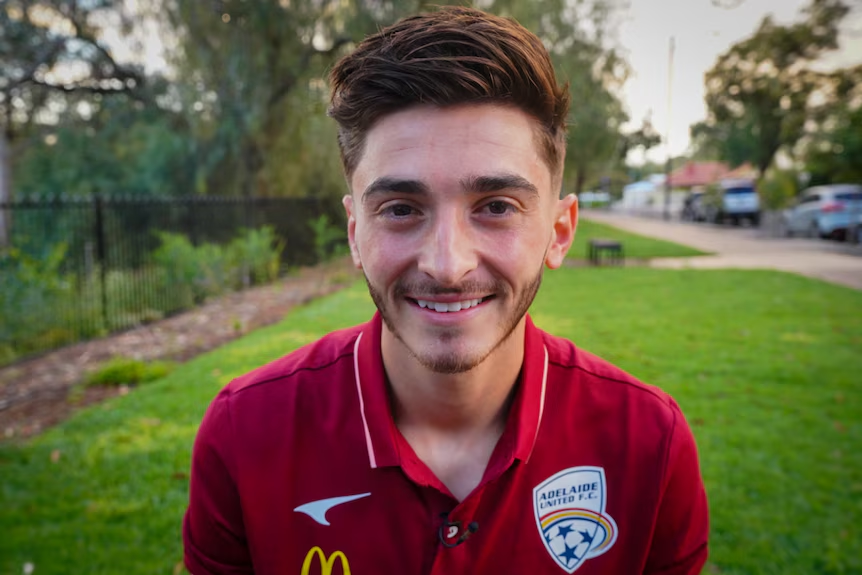
The recent allegations by former A-League player Josh Cavallo regarding homophobia at his past club, Adelaide United, spotlight a persistent and critical issue within professional sports: LGBTQ+ discrimination in football. Cavallo, who made global headlines as Australia’s first openly gay male professional footballer, bravely shared his experience, stating it was “hard to swallow when I realised my own club was homophobic.” This revelation, coming from an athlete who has consistently advocated for inclusion, underscores the urgent need for systemic change and greater accountability within sporting organizations worldwide.
Cavallo’s powerful statement detailed how his contributions were “continuously ignored” in the lead-up to his departure from Adelaide United in May 2025, profoundly affecting his wellbeing. Such experiences can force athletes to question their authenticity, with Cavallo admitting he “actually questioned if I should have kept my sexuality a secret.” This fear of career repercussions for being oneself is a significant barrier to LGBTQ+ athletes coming out and thriving in their sport.
What is homophobia in sports? The answer is homophobia in sports refers to prejudice, discrimination, or antagonism directed at LGBTQ+ individuals within athletic contexts, often manifesting as slurs, exclusion, or systemic biases that create hostile environments for athletes based on their sexual orientation or gender identity.
The incident with Josh Cavallo is not isolated. A 2023 study by the International Centre for Sport Security (ICSS) revealed that 78% of LGBTQ+ athletes globally have experienced or witnessed homophobic behavior in sports, with nearly 60% of those incidents occurring at the club level. These figures highlight a pervasive culture that often fails to protect its most vulnerable members, despite public declarations of support for diversity.
For many athletes, the courage to come out publicly, as Cavallo did in October 2021, is a monumental step. It is a decision that often comes with immense personal sacrifice and the burden of representation. Yet, when the very institutions meant to foster talent and teamwork fail to uphold basic principles of respect and equality, it creates a profound sense of betrayal and isolation.
Clubs and governing bodies bear a significant responsibility in cultivating truly inclusive environments. This extends beyond rainbow armbands and pride month campaigns; it requires robust anti-discrimination policies, clear reporting mechanisms, and consistent education for players, staff, and management. True allyship means actively challenging and dismantling discriminatory practices.
The emotional toll on athletes like Cavallo is immense. He described how his fresh start with English club Stamford has helped him “breathe again,” signaling the profound relief that comes from escaping a toxic environment. This demonstrates the critical impact of supportive club cultures on an athlete’s mental health and overall career longevity.
Beyond individual incidents, the broader societal implications of such allegations are far-reaching. When a high-profile athlete like Cavallo speaks out, it not only draws attention to specific injustices but also empowers others facing similar struggles. It sends a message that silence is not an option and that collective action is necessary to drive change.
While Adelaide United was contacted for comment regarding Cavallo’s allegations, the incident itself serves as a stark reminder for all sports organizations to rigorously review their internal policies and foster genuine cultures of acceptance. The goal must be to ensure that every athlete, regardless of their identity, can pursue their passion without fear of prejudice.
Josh Cavallo’s ongoing advocacy, despite the personal cost, is a testament to his commitment to making football a safer and more welcoming space for everyone. His journey, from a public coming out to now openly challenging discrimination, continues to inspire a global conversation about LGBTQ+ discrimination in football and the imperative for sports to truly reflect the diverse world we live in.
Keywords: how to support LGBTQ+ athletes, what is homophobia in sports, football homophobia vs racism, LGBTQ+ allyship vs tokenism, best ways to combat homophobia in football, LGBTQ+ inclusion guide for sports clubs, Josh Cavallo news update, Adelaide United controversy, LGBTQ+ athlete support guide 2026, best football clubs for inclusion 2026






