


The year 2026 is poised to be a period of significant global uncertainty, as leading experts and decision-makers anticipate a complex web of challenges. A recent World Economic Forum (WEF) survey reveals that the biggest global risks are overwhelmingly centered around escalating trade disputes and the specter of inter-state conflict. This outlook suggests a world grappling with profound geopolitical shifts and economic vulnerabilities, demanding careful navigation from leaders across all sectors. The annual poll, surveying 1,300 global leaders and experts, paints a picture of a world balancing on a precipice, with tensions rapidly rising.
The findings from the WEF’s latest Global Risks Report highlight “geoeconomic confrontation” and “state-based armed conflict” as the two most pressing dangers. These concerns were voiced even before recent high-stakes trade talks and declarations of intent from major global powers, underscoring the deep-seated anxieties permeating international relations. The perceived dangers align with the heightened geopolitical tone expected at the upcoming Davos summit, where an unprecedented number of heads of state and government are set to gather.
What are the biggest global risks for 2026? The answer is that the World Economic Forum’s annual survey identifies geoeconomic confrontation and state-based armed conflict as the two most significant dangers. These risks are amplified by economic downturns, inflation, and the potential for asset bubbles, painting a turbulent picture for the coming year. This comprehensive assessment captures the anxieties of decision-makers worldwide.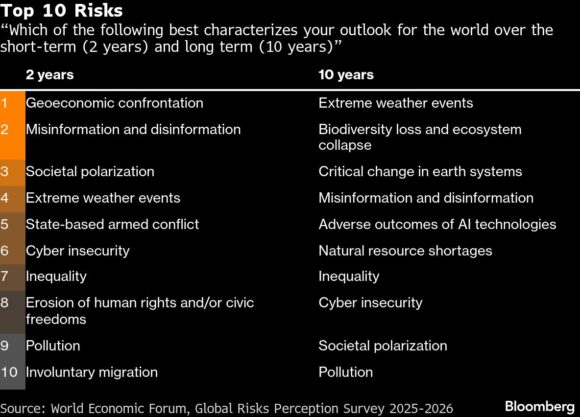
Understanding the distinction between geopolitical vs geoeconomic risks is crucial in this evolving landscape. Geopolitical risks pertain to traditional power struggles, territorial disputes, and military conflicts between nations. Geoeconomic risks, on the other hand, involve the use of economic tools—such as trade sanctions, investment restrictions, or currency manipulation—as instruments of statecraft to achieve strategic advantage. Both forms of confrontation are expected to intensify, creating a volatile environment for businesses and governments alike.
The report also extensively explores the implications of trade war vs state conflict. While state conflict involves direct military engagement, trade wars manifest as tariffs, retaliatory measures, and supply chain disruptions, impacting global commerce and economic stability. Both scenarios contribute to a fragmented world order, where cooperation becomes increasingly difficult, and the risk of escalation remains ever-present. The deployment of economic weapons for strategic advantage is becoming as potent as traditional military might.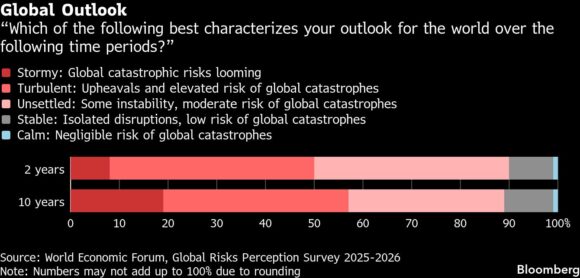
Looking at the global economic outlook 2026, the WEF survey reveals a significant worsening in perception regarding economic risks. Aside from geoeconomic confrontation, worries about a global downturn, persistent inflation, and the bursting of asset bubbles have all intensified. Half of the respondents anticipated a “stormy” or “turbulent” outlook in the next two years, a notable increase from previous reports. This suggests a widespread expectation of economic headwinds that could further exacerbate social and political instabilities.
The presence of key global figures, such as former US President Donald Trump, at the Davos summit underscores the political weight of these discussions. Discussions around a Trump Davos speech update would certainly focus on his muscular approach to trade and geopolitics, which has demonstrably jolted allies and rivals. His administration’s past actions, including high-stakes trade talks and bold declarations, exemplify the kind of assertive statecraft contributing to the current atmosphere of uncertainty.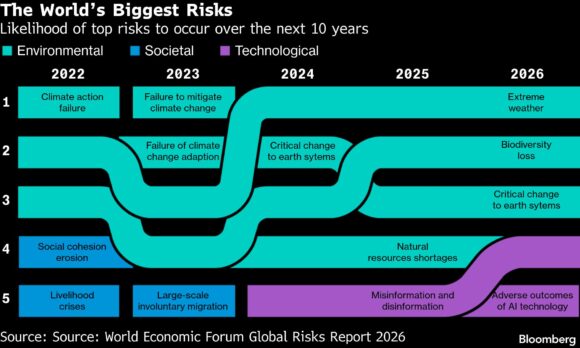
The Davos agenda 2026 will undoubtedly be dominated by these profound global risks. The sheer number of G-7 leaders and other heads of state attending signifies the urgency with which the international community views these challenges. Discussions will likely revolve around strategies to mitigate conflict, foster economic resilience, and rebuild trust in a fracturing world. The annual meeting provides a critical platform for dialogue amidst increasing global fragmentation.
To fully grasp the complexities, a deeper dive into the global risks report explained is beneficial. The report, based on a survey of leaders across academia, business, government, and civil society, provides a comprehensive framework for understanding emerging threats. It moves beyond singular issues to connect various risks, illustrating how they can cascade and amplify one another, leading to systemic vulnerabilities. This holistic view is essential for effective risk management.
Navigating this turbulent future requires a proactive approach, and the insights from the World Economic Forum guide decision-makers in understanding the intricate interdependencies. The report’s emphasis on a “new competitive order” suggests that traditional paradigms of international relations are shifting, demanding innovative solutions and renewed commitments to multilateralism, even as fragmentation grows. Preparing for these intertwined challenges is paramount for stability.
The survey’s findings also highlight a stark increase in anxiety, with 57% of respondents anticipating a “stormy” or “turbulent” outlook over the next decade. This heightened sense of apprehension underscores the need for robust policy frameworks and international cooperation to address the root causes of these escalating risks. The collective challenge is to steer the world away from the precipice and towards a more stable future.
In conclusion, the global risks identified for 2026, primarily geoeconomic confrontation and state-based armed conflict, signal a period of profound challenge. The World Economic Forum’s comprehensive analysis serves as a critical warning, urging leaders to prepare for escalating trade disputes, economic vulnerabilities, and a more fragmented international order. Proactive engagement and a deep understanding of these intertwined threats will be essential for navigating the turbulent years ahead.







