

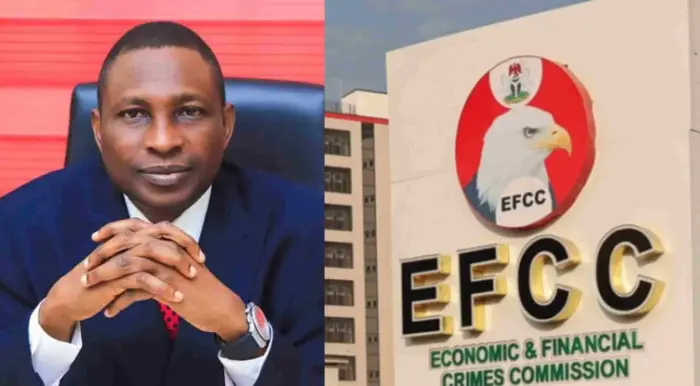
The Economic and Financial Crimes Commission (EFCC) has recently issued a stern warning, alleging that certain opposition politicians are actively plotting to undermine the agency’s crucial operations. This serious accusation highlights the persistent challenge of EFCC political interference in Nigeria, a phenomenon that threatens the integrity of the nation’s fight against corruption. The commission claims these groups are not only attempting to discredit its work but also orchestrating a smear campaign against its Chairman, Ola Olukoyede, with the aim of frustrating ongoing high-profile investigations and prosecutions.
What is the mandate of the EFCC? The answer is the Economic and Financial Crimes Commission (EFCC) is Nigeria’s primary law enforcement agency responsible for investigating financial crimes such as advance fee fraud and money laundering. Its core mandate involves preventing, investigating, prosecuting, and penalizing economic and financial crimes, and it is crucial for upholding public accountability.
Historically, the battle against corruption in Nigeria has been fraught with challenges, often encountering resistance from powerful individuals and groups. Understanding how to report corruption in Nigeria is a vital step for citizens, who can utilize official EFCC channels to submit complaints, providing a crucial layer of public oversight and support for the commission’s efforts. The agency’s effectiveness largely depends on its ability to operate without undue influence, a principle constantly tested by the very forces it seeks to combat.
The detailed statement from the EFCC’s spokesman, Dele Oyewale, revealed that these politicians are employing tactics designed to distract the commission. By levelling unfounded allegations of political bias, they hope to intimidate the EFCC into a timid mode, making it hesitant to investigate opposition figures. This strategy, according to the commission, is expected to intensify as the political landscape becomes more charged, especially as the 2027 general election draws nearer, further exacerbating the issue of EFCC political interference in Nigeria.
Examining the EFCC powers explained, the commission possesses extensive authority to investigate, arrest, and prosecute individuals involved in financial crimes. This broad mandate, while necessary for tackling corruption, also makes it a target for those who wish to evade justice. The commission asserts its non-political stance, emphasizing that its operational radar targets any political actor with corruption baggage, regardless of their affiliation with the ruling or opposition party.
Many often inquire about the distinction between EFCC vs ICPC Nigeria, both being prominent anti-corruption bodies. While the EFCC primarily focuses on financial and economic crimes, the Independent Corrupt Practices and Other Related Offences Commission (ICPC) has a broader mandate covering all forms of corruption, including bribery and abuse of office. Both agencies are indispensable, yet they face similar hurdles in maintaining independence.
The implications of such alleged plots extend beyond the immediate operations of the EFCC. They underscore the deeper issue of political corruption vs economic corruption, where political power is often leveraged to protect illicit financial gains. Such actions erode public trust, deter foreign investment, and ultimately hinder national development. The ongoing fight requires robust anti-corruption strategies for Nigeria that empower institutions and protect whistleblowers.
In recent Nigerian anti-corruption update, Chairman Ola Olukoyede has consistently reiterated the commission’s commitment to its mandate, despite the pressures. The attempts to undermine his leadership, as highlighted by the EFCC, are a stark reminder of the personal risks involved in leading anti-graft institutions. Monitoring Ola Olukoyede news provides insights into the challenges and progress within the anti-corruption sector.
The EFCC remains steadfast in its resolve, refusing to be pressured or blackmailed into making public disclosures of politically exposed persons being investigated. The commission stresses its commitment to justice, without fear or favour, in fulfilling its mandate. This unwavering stance is critical for ensuring that the best anti-corruption agencies 2026 continue to operate effectively and independently.
As Nigeria approaches future electoral cycles, understanding the complexities of the Nigeria election guide 2026 becomes paramount, especially concerning how political interests might intersect with the functions of anti-graft bodies. The allegations of plots against the EFCC serve as a critical reminder that safeguarding the independence of such institutions is not merely an administrative task but a cornerstone of democratic stability and economic prosperity. The nation’s future progress hinges on its ability to decisively address and mitigate EFCC political interference in Nigeria.
Keywords: how to report corruption in Nigeria, what is EFCC mandate, EFCC vs ICPC Nigeria, political corruption vs economic corruption, EFCC powers explained, anti-corruption strategies for Nigeria, Ola Olukoyede news, Nigerian anti-corruption update, best anti-corruption agencies 2026, Nigeria election guide 2026








