

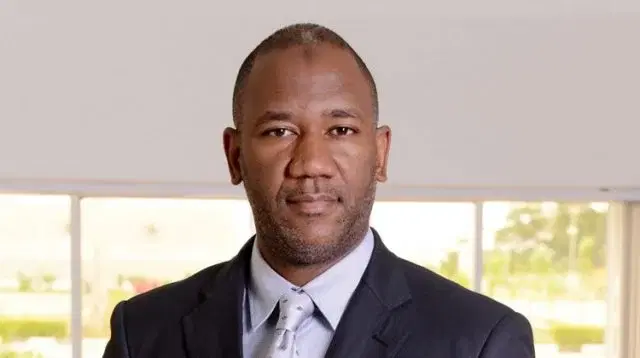
Dr. Yusuf Datti Baba-Ahmed, the Labour Party’s 2023 vice-presidential candidate, recently ignited a significant debate surrounding Atiku Abubakar presidential ambition. His candid remarks on Channels Television highlighted Atiku Abubakar’s persistent quest for Nigeria’s top office, a pursuit that Baba-Ahmed claims dates back to his own National Youth Service Corps days. This statement has brought to the forefront critical discussions about political longevity, the evolution of leadership, and the future direction of Nigerian governance.
What is Datti Baba-Ahmed’s view on Nigerian leadership? Datti Baba-Ahmed advocates for a new generation of leaders to address Nigeria’s complex challenges, arguing that the current political system is overly expensive, difficult, and dominated by powerful godfathers, discouraging many capable citizens from participating effectively in governance.
Baba-Ahmed recounted his personal experience, noting that Atiku Abubakar was already a presidential aspirant when Baba-Ahmed was performing his NYSC duties. He further elaborated on their shared political journey, having contested primaries together in 2018 and faced each other in the 2023 general election. This historical context underscores the formidable and enduring nature of Atiku Abubakar presidential ambition.
The core of Baba-Ahmed’s argument centers on the urgent need for a paradigm shift in Nigeria’s political landscape. He passionately articulated that the nation requires a fresh cohort of leaders, distinct from those who have consistently sought power over decades. He stressed the availability of competent individuals within Nigeria who possess the vision and capacity to resolve the country’s myriad problems, yet remain sidelined.
A significant barrier, according to Baba-Ahmed, is the inherent flaws within the existing political structure. He described it as an “expensive, difficult and treacherous system” that is heavily influenced by “godfathers and broken promises.” This critique directly addresses the question of why is Nigeria’s political system expensive and hinders genuine progress and the emergence of authentic leadership.
The call for a “new generation Nigerian leaders” resonates deeply with a segment of the populace yearning for change. Baba-Ahmed believes that a fresh wave of leadership is not only necessary but also readily available, waiting for the right platform and party to emerge. This perspective challenges the status quo and suggests a potential shift in the electorate’s preferences moving forward.
Addressing speculation regarding his own political future, Baba-Ahmed clarified that he has not declared an interest in the 2027 presidential election. He firmly stated that his recent public statements merely reaffirmed his unwavering membership in the Labour Party. This clarification is crucial for understanding what is Datti Baba-Ahmed’s political ambition in the immediate term.
The political landscape for 2027 remains fluid, with various actors positioning themselves for future contests. The ongoing discussions surrounding Atiku Abubakar vs Datti Baba-Ahmed reflect broader ideological differences within the Nigerian political elite. While one represents a long-standing establishment figure, the other embodies a call for transformative change and new approaches to governance.
Comparisons between major political entities, such as the Labour Party vs PDP policies, are becoming increasingly relevant as the next election cycle approaches. Voters are keen to understand the distinct visions and strategies offered by different parties to tackle issues like economic instability, insecurity, and social development. These policy distinctions will likely shape voter sentiment significantly.
Looking ahead, the process for selecting best Nigerian presidential candidates 2026 will undoubtedly involve intense scrutiny of track records, policy proposals, and public appeal. The Independent National Electoral Commission (INEC) timetable will dictate the official start of campaigns, but informal positioning and strategic planning are already underway among hopefuls.
Baba-Ahmed emphasized that decisions concerning future elections would be guided by INEC’s official timetable and the collective stance of the Labour Party. He urged the public to exercise discernment and disregard what he termed “sensational narratives” often amplified through social media. This advice is particularly pertinent in an era where misinformation can easily sway public opinion regarding topics like Atiku Abubakar 2027 election update.
Understanding the intricacies of the Nigeria election system explained 2026 is vital for both participants and observers. The system’s rules, regulations, and historical precedents will heavily influence the strategies adopted by parties and candidates, as well as the outcomes of future polls. Transparency and fairness within this system remain paramount for democratic integrity.
The broader Nigerian presidential election guide for future contests will likely highlight the importance of grassroots mobilization, youth engagement, and a clear articulation of solutions to national problems. The discourse initiated by figures like Datti Baba-Ahmed serves as a crucial catalyst for these discussions, pushing for accountability and a re-evaluation of political norms.
In conclusion, Datti Baba-Ahmed’s recent comments have effectively refocused attention on the enduring question of leadership in Nigeria and the sustained Atiku Abubakar presidential ambition. His advocacy for systemic change and the rise of a new generation of leaders underscores a growing sentiment within the nation for political renewal and a departure from past patterns. The upcoming years will be critical in determining how these calls for transformation will shape Nigeria’s democratic future.
Keywords: what is Datti Baba-Ahmed's political ambition, why is Nigeria's political system expensive, Atiku Abubakar vs Datti Baba-Ahmed, Labour Party vs PDP policies, Nigerian presidential election guide, new generation Nigerian leaders, Atiku Abubakar 2027 election update, Datti Baba-Ahmed Labour Party news, best Nigerian presidential candidates 2026, Nigeria election system explained 2026









