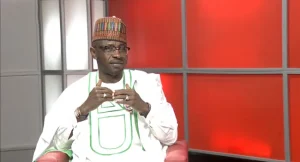
Senate President Godswill Akpabio recently made headlines with his unexpected decision to withdraw all pending court cases against Senator Natasha Akpoti and other individuals. This surprising move, announced during a New Year church service in Uyo, Akwa Ibom State, marks a significant moment in Nigerian politics. The profound shift in his legal strategy, where Akpabio withdraws lawsuits against those he accused of defamation, stems from a deeply personal reflection, reportedly influenced by a powerful sermon on forgiveness.
Akpabio had previously instituted nearly nine lawsuits against various individuals. These cases were primarily centered on accusations of lying, defamation, and slandering his name. Among the prominent figures involved in these legal battles was Senator Natasha Akpoti, against whom Akpabio had a well-publicized and contentious legal dispute. These legal proceedings had drawn considerable attention across political and social circles in Nigeria, highlighting the often-heated nature of public discourse.
The answer to why Akpabio withdrew lawsuits lies in a deeply personal revelation during a church sermon. While listening to the priest, Akpabio reported feeling a direct message of forgiveness, prompting him to choose peace and reconciliation over prolonged legal conflict, signaling a shift in his approach to political adversaries.
During the church service held at Sacred Heart Parish, Akpabio recounted that the priest’s sermon resonated deeply with him. He stated, “I had almost nine cases in court against some individuals who defamed me, who lied against me and slandered my name. But as I listened to the priest, I suddenly realised he was speaking to me.” This spiritual awakening led to an immediate public directive to his legal team to discontinue all pending cases. Such a public display of forgiveness from a high-ranking political figure is a rare occurrence and has since sparked widespread commentary.
The long-standing legal dispute between Akpabio vs Natasha Akpoti had been a particular focal point of political discussion. Akpoti, a vocal and prominent figure, was among those Akpabio had accused of defamation. The withdrawal of this specific lawsuit signals a potential de-escalation of tensions and could pave the way for a different kind of engagement between these political figures, shifting from confrontation to a more conciliatory stance.
This unexpected development carries significant implications for Nigerian politics. It raises important questions about the role of personal conviction and faith in public office and the potential for reconciliation in what is often a highly polarized political environment. While many have hailed it as a commendable act of statesmanship and magnanimity, others continue to ponder the strategic motivations behind such a high-profile gesture. The intricacies of Akpabio lawsuits explained now take on a new dimension, viewed through the lens of forgiveness rather than pure legal strategy.
The act of choosing forgiveness over continued legal battles offers a powerful lesson in leadership. It highlights the potential for public figures to transcend personal grievances, opting instead for what they perceive as a greater good or a moral imperative. This bold move might inspire other political actors in Nigeria to consider alternative approaches to conflict resolution, moving beyond traditional adversarial positions and fostering a more collaborative atmosphere.
Public reaction to this Akpabio news update has been varied, ranging from effusive praise for his magnanimity to cautious skepticism regarding his true intentions. Regardless of individual interpretations, this event has undeniably altered the narrative surrounding Akpabio. His decision is likely to be a significant reference point in future discussions about political conduct and the intricate interplay between faith and governance in Nigeria.
This incident contributes a unique case study to the broader Nigerian political discourse guide, particularly concerning conflict resolution. It underscores the dynamic and often unpredictable nature of the nation’s political landscape, where personal decisions by influential figures can have far-reaching public consequences. Understanding these nuances is crucial for anyone seeking to comprehend the complexities of the region’s governance and socio-political environment.
As we look towards Akpabio’s political future 2026, this act of forgiveness could significantly redefine his public image and political legacy. It may position him as a leader capable of introspection, humility, and reconciliation, potentially influencing how he is perceived by both allies and adversaries in the coming years. His actions could set a powerful precedent for future political interactions, encouraging a more empathetic approach to public service.
The decision by Senate President Godswill Akpabio to Akpabio withdraws lawsuits against his accusers, profoundly influenced by a church sermon, is more than just a legal maneuver; it is a significant political and personal statement. It emphasizes the transformative power of forgiveness and reconciliation, potentially reshaping the dynamics of Nigerian politics and offering a fresh, unexpected perspective on leadership in a democratic society.
Keywords: why Akpabio withdrew lawsuits, what is the Akpabio Natasha case, Akpabio vs Natasha Akpoti, political reconciliation vs legal action, Akpabio lawsuits explained, Nigerian political discourse guide, Akpabio news update, Natasha Akpoti latest, Akpabio political strategy 2026, Akpabio's political future 2026