The recent revelation concerning an AI-generated image shared by the Nigerian Presidency has ignited a significant AI generated image controversy, raising critical questions about digital authenticity and official communication. This incident, involving a supposed meeting between President Bola Tinubu and Rwandan President Paul Kagame in Paris, quickly went viral but was subsequently flagged as being created by artificial intelligence. The episode underscores a growing challenge for governments and public institutions worldwide: maintaining trust in an era where sophisticated AI tools can fabricate compelling visual content.
Initially posted by President Tinubu and his aides, the image depicted both leaders in a private engagement. President Tinubu’s accompanying statement detailed discussions on global and African affairs, lending an air of official legitimacy to the visual. However, the absence of any corresponding post or reference from President Kagame’s verified X account, coupled with the image’s tell-tale AI characteristics, swiftly led to its debunking by social media users.
What is AI image generation? It is the process by which artificial intelligence algorithms create new images from text descriptions, existing images, or other data, often indistinguishable from real photographs, using complex neural networks. Tools like Grok, developed by xAI, exemplify this capability, generating images and text-based responses that can mimic reality with alarming precision.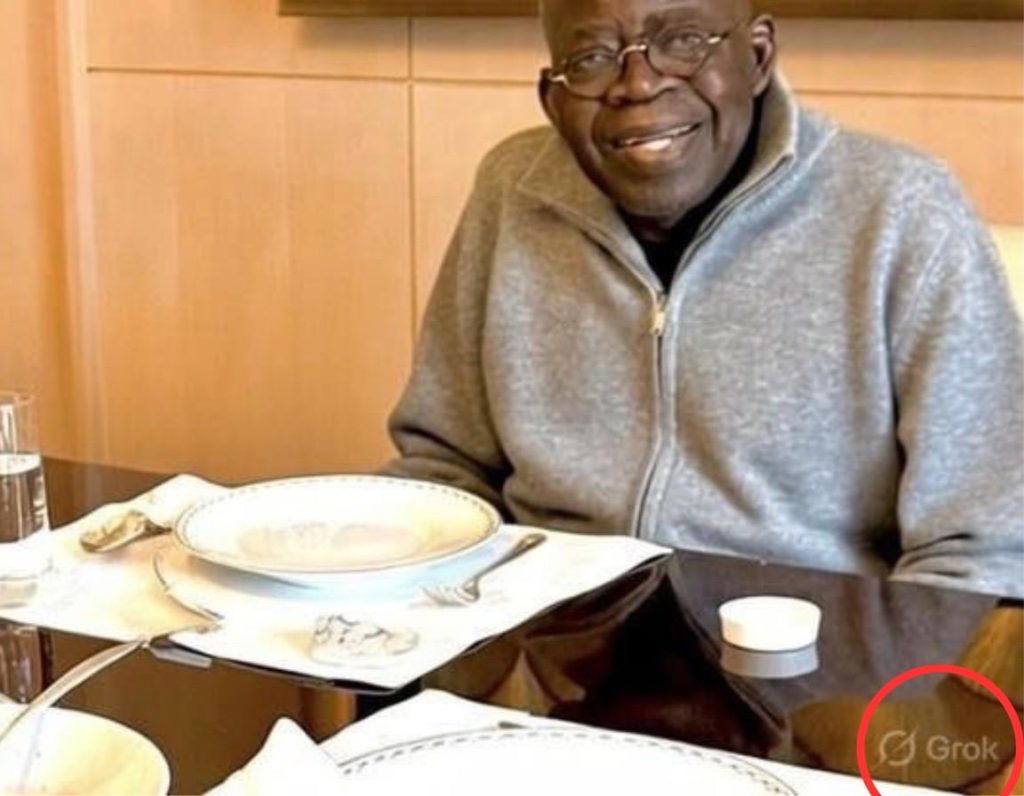
The implications of using such fabricated visuals in official government communication are profound. It erodes public trust and can complicate international relations, as seen in the lack of clarification from the Nigerian Presidency regarding the image’s origin. This incident highlights the urgent need for robust government communication best practices that prioritize transparency and verifiable information, especially when dealing with high-level diplomatic engagements.
Many are now asking how to spot AI generated images given their increasing sophistication. Key indicators often include subtle inconsistencies in lighting, distorted or unusual features in backgrounds or human subjects, unnatural textures, and sometimes, peculiar rendering of text or logos within the image. Developing a keen eye for these details is becoming an essential skill in our digital landscape, especially as the line between AI vs real photos blurs.
The debate over official photos vs AI generated content extends beyond mere technical detection; it delves into ethical considerations. Should government bodies ever use AI-generated images to represent real-world events, even if for illustrative purposes? The prevailing consensus leans heavily towards strict authenticity, as the potential for misinformation and manipulation far outweighs any perceived convenience or creative benefit.
The Tinubu AI image controversy serves as a stark reminder of the challenges posed by advancing technology. While AI offers numerous benefits, its application in sensitive areas like official state communication demands extreme caution. The incident has spurred discussions among Nigerians about digital literacy and the responsibility of public officials in verifying the content they disseminate.
This is not merely an isolated incident but part of a broader trend reflected in presidency AI photos news globally, where similar incidents have sparked public debate. As AI technology continues to evolve, the ability to create convincing deepfakes and synthetic media will only improve, making the task of distinguishing authentic from artificial increasingly difficult for the average person.
Looking ahead, an AI image ethics 2026 guide will be crucial for institutions navigating this complex terrain. Such a guide would establish clear guidelines on the permissible use of AI in public communication, emphasizing integrity and accountability. Furthermore, understanding AI in government communication 2026 will involve not just policy but also investment in tools and training for verification processes.
For those interested in practical solutions, staying updated on the best AI image detectors 2026 will be vital. These tools, which leverage advanced algorithms to identify AI-generated artifacts, are constantly improving and will become indispensable for fact-checkers, journalists, and the public alike in combating misinformation. The ongoing AI generated image controversy underscores the imperative for vigilance and critical engagement with digital media, ensuring that truth and trust remain at the forefront of public discourse.
This afternoon, I had a private lunch with H. E. President Paul Kagame of Rwanda to discuss the current state of world affairs and advancing Africa in an ever-changing global landscape.@PaulKagame pic.twitter.com/7iiIzXYK5z
— Bola Ahmed Tinubu (@officialABAT) January 4, 2026