

![[post_title]](https://samony.com.ng/wp-content/uploads/2025/12/1766000206_White-House-adds-plaques-below-Biden-and-Obama-portraits-calling.jpeg?lm=6943064E)
The White House has recently installed a series of descriptive plaques beneath portraits of former presidents, featuring rhetoric that aligns closely with the political views of the current administration. These new additions, part of a display located along the colonnade, offer highly subjective assessments of past leaders, notably featuring critical characterizations of former Presidents Joe Biden and Barack Obama. The move marks a departure from traditional, neutral historical commemorations within the executive mansion.
One of the most prominent plaques, positioned beneath a photo of former President Joe Biden – an autopen reproduction rather than his official portrait – labels him “the worst President in American History.” The description further asserts that Biden took office “as a result of the most corrupt Election ever seen in the United States.” This specific characterization mirrors unproven claims frequently made by President Donald Trump regarding the integrity of the 2020 presidential election.
Similarly, the plaque accompanying former President Barack Obama’s portrait describes him as “one of the most divisive political figures” in the nation’s history. It directly attributes the passage of the Affordable Care Act, controversially termed the “Unaffordable Care Act,” to subsequent political losses for his party. The text claims this legislation led to Democrats losing control of both houses of Congress and the election of the largest House Republican majority since 1946.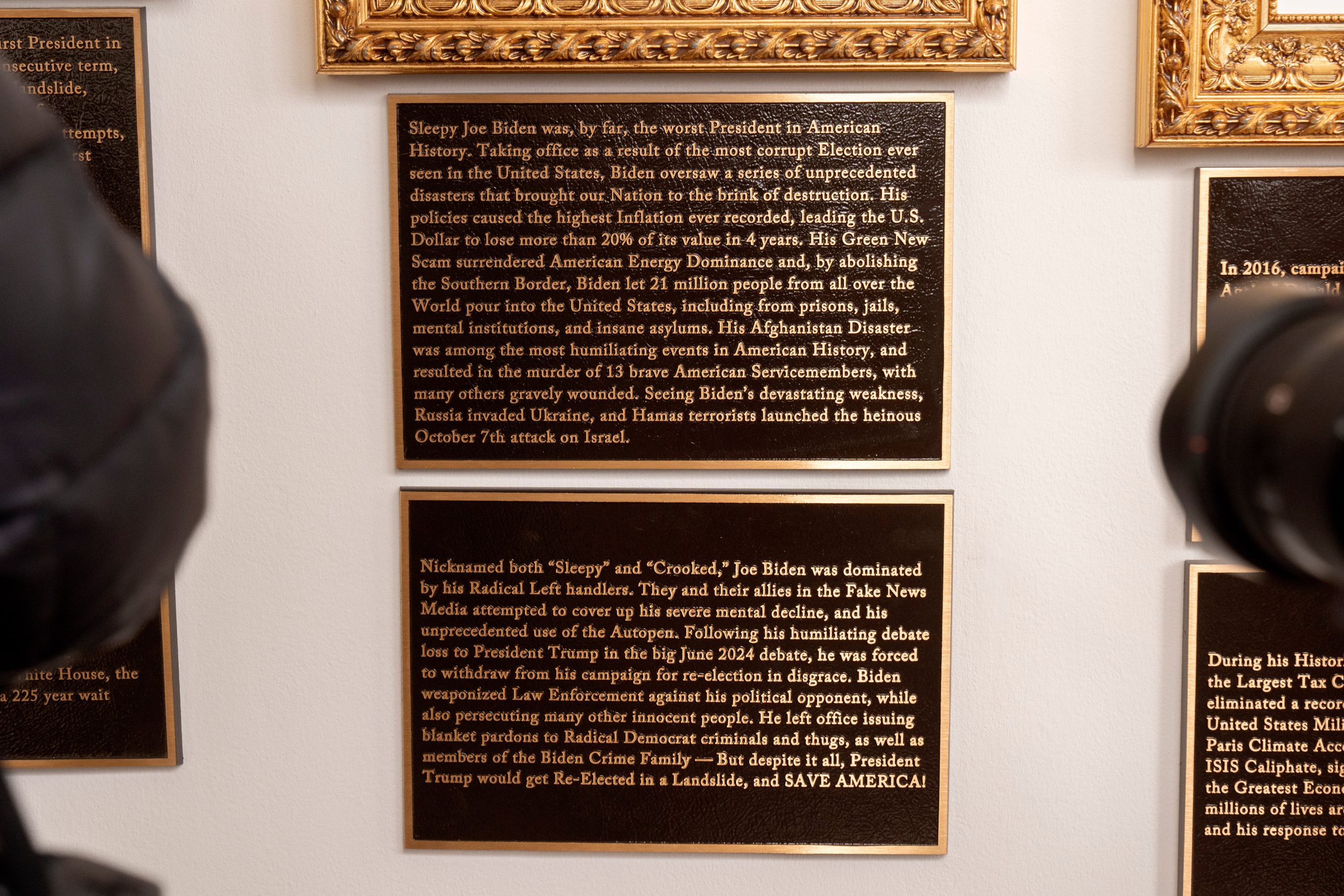
Former President Bill Clinton’s plaque also includes pointed commentary, attributing his legislative successes not to his own efforts but to “Republicans in Congress.” The description further notes the 2016 presidential election loss of Hillary Clinton, a detail unrelated to his own presidency. It also boasts that President Trump later terminated the North American Free Trade Agreement (NAFTA), a trade deal originally struck during Clinton’s tenure.
The descriptions for other former presidents exhibit a clear pattern, with those perceived as less aligned with the current administration often receiving critical assessments. For instance, former President George W. Bush’s plaque acknowledges his creation of the Department of Homeland Security but immediately criticizes his decision to start “wars in Afghanistan and Iraq, both of which should not have happened.” It also links his administration to a “Global Financial Crisis and major Recession.”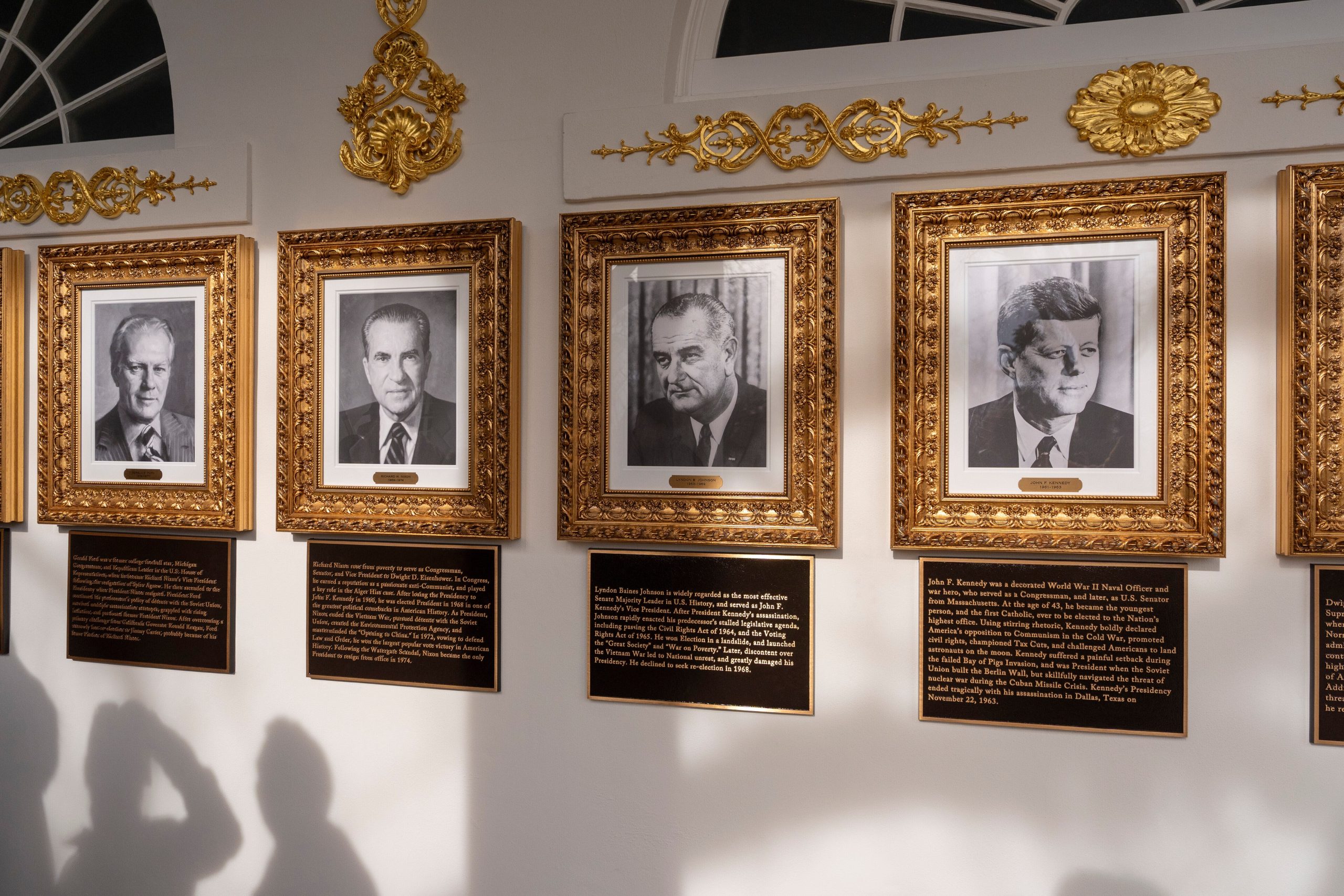
The plaque for former President John F. Kennedy references the “failed Bay of Pigs Invasion,” while Lyndon B. Johnson’s description highlights how “discontent over the Vietnam War led to National unrest and greatly damaged his Presidency.” Former President Jimmy Carter’s entry primarily lists negative events such as the Iran hostage crisis, inflation, the spread of Communism, and the Soviet Union’s invasion of Afghanistan, though it concludes by acknowledging his post-presidency humanitarian work.
In stark contrast, plaques for presidents viewed more favorably by the current administration, such as Ronald Reagan and Richard Nixon, feature overwhelmingly positive portrayals. Reagan’s description hails him as “The Great Communicator,” noting his 1984 landslide re-election and high approval upon leaving office. It also asserts a mutual admiration between Reagan and President Donald J. Trump, stating Reagan “was a fan of President Donald J. Trump long before President Trump’s Historic run for the White House.”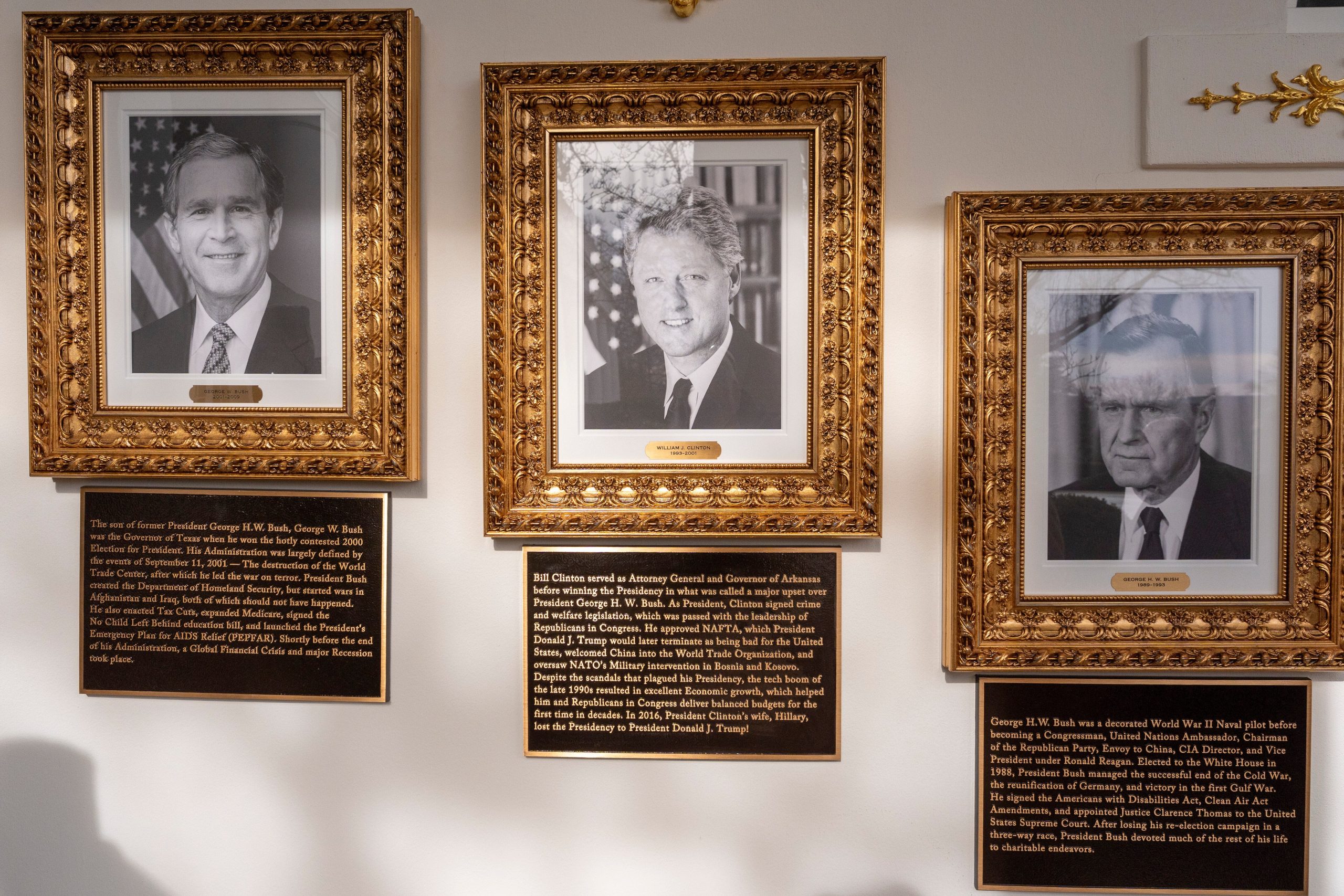
Richard Nixon’s plaque claims he had “one of the greatest political comebacks in American History” and “won the largest popular vote victory in American History,” focusing on his electoral achievements. Former President Gerald Ford is commended for issuing a “brave Pardon to Richard Nixon,” while former President George H. W. Bush’s description solely enumerates his accomplishments, notably omitting any critical remarks present in other entries.
These new plaques are part of the White House’s “Presidential Walk of Fame,” an outdoor display located near the West Wing that presents portraits of every president in chronological order. The inclusion of highly opinionated and politically charged text on these official displays represents a significant break from the historical practice of maintaining a bipartisan and respectful tone in White House commemorations.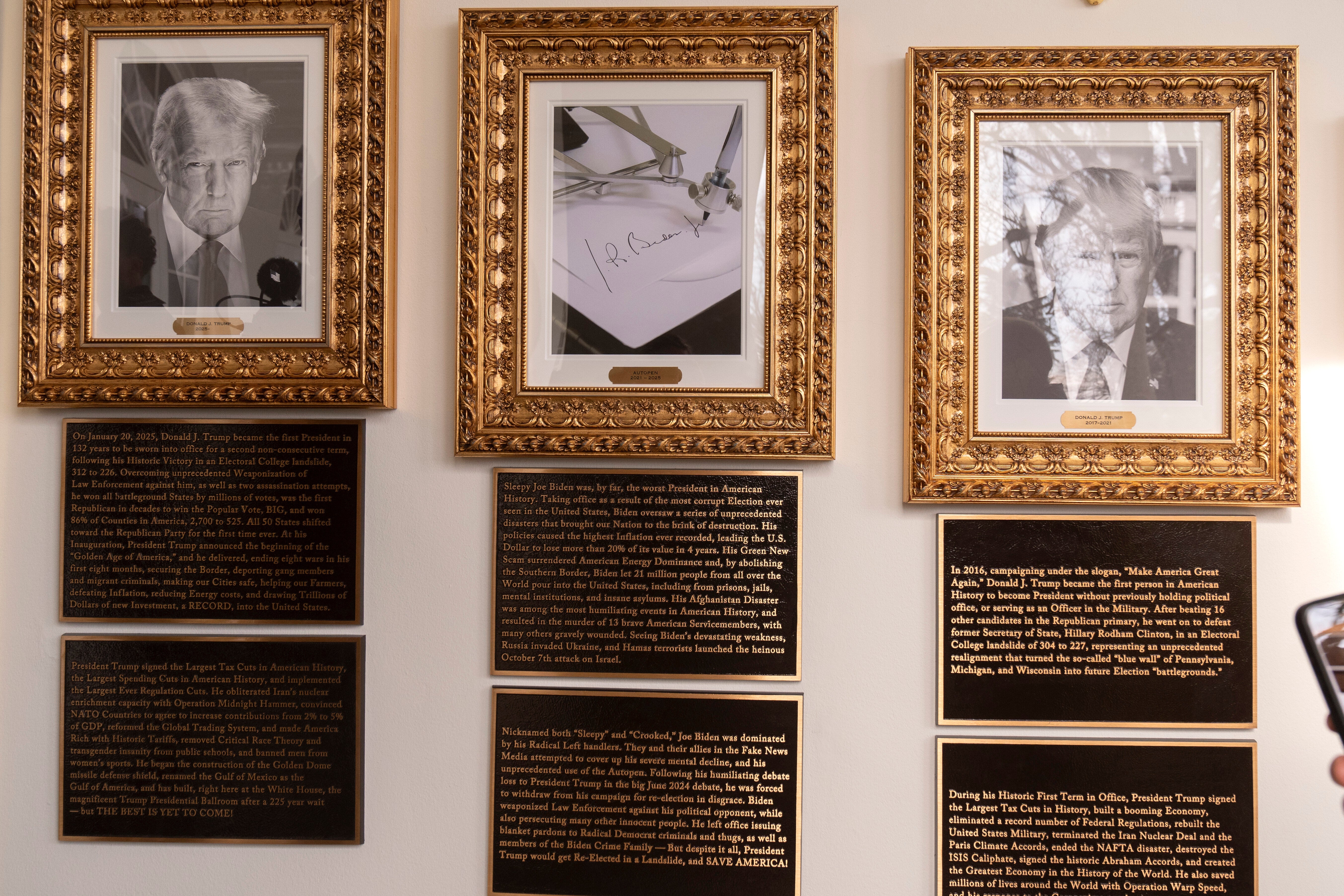
The installation of these plaques aligns with a broader pattern observed throughout the current administration, which has frequently utilized official platforms and communications to express strong political opinions and critique opponents. This latest initiative appears to be another instance where the White House has deployed its prominence to convey specific political messaging and reinforce the President’s narratives concerning past presidencies and policies.


![[post_title]](https://samony.com.ng/wp-content/uploads/2025/12/1765999541_AI-toys-are-telling-kids-how-to-find-knives-and-300x156.jpg?lm=694303B7 "AI Toy Safety Under Scrutiny: Senators Raise Child Content, Privacy Fears")

![[post_title]](https://samony.com.ng/wp-content/uploads/2025/12/Davido-opens-up-on-how-miscommunication-with-Omah-Lay-led-300x150.jpg?lm=69430321 "Davido Details Grammy-Nominated Hit ‘With You’ Origin")

![[post_title]](https://samony.com.ng/wp-content/uploads/2025/12/1765998510_Whos-Middle-Class-Now-Changing-Thresholds-and-Real-Costs-300x225.jpg?lm=6942FFB0 "Middle Class Defined: Income, Location, and Financial Health")

![[post_title]](https://samony.com.ng/wp-content/uploads/2025/12/Team-news-How-we-start-against-OH-Leuven-Team.jpg?lm=69430788 "Arsenal Women Make Key Changes for Crucial UWCL Finale at OH Leuven")
![[post_title]](https://samony.com.ng/wp-content/uploads/2025/12/1765999541_AI-toys-are-telling-kids-how-to-find-knives-and-1024x532.jpg?lm=694303B7 "AI Toy Safety Under Scrutiny: Senators Raise Child Content, Privacy Fears")
