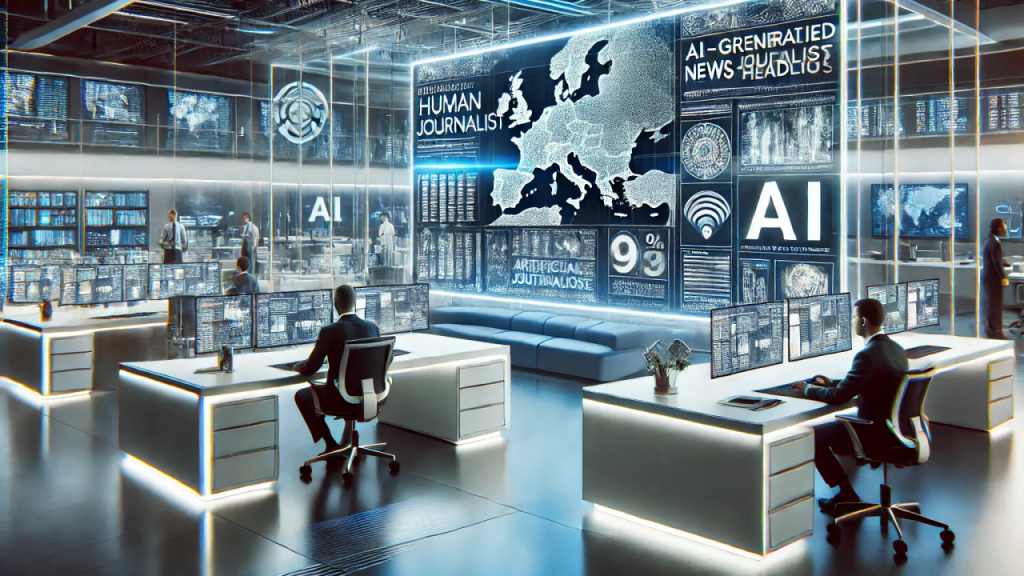
Google’s AI Headline Experiment: A Glimpse into a Clickbait Future?
Google is tinkering again. This time, it’s with AI-generated headlines in Google Discover, that news feed you see when swiping right on some Android phones. The premise? To provide easier-to-digest topic details. The reality? It often feels like a dive into a pool of clickbait, and it’s raising serious questions about the future of news and content creation.
Some examples cited, like “Origami model wins prize,” aren’t terrible. They’re just…bland. Yet, the push for brevity seems to be where things fall apart.

The issue is that in its ambition to distill stories into bite-sized chunks, Google’s AI frequently misses the point. It attaches misleading, even nonsensical headlines to carefully crafted journalism. Take the example of “Steam Machine price revealed.” It wasn’t. The original headline conveyed a far more nuanced reality. Such misrepresentation erodes trust.
It’s not just inaccuracy. It’s also the sheer lack of context. “Schedule 1 farming backup?” “AI tag debate heats?” These headlines dangle fragments without providing substance. They feel like Mad Libs created by an algorithm. It’s a disservice to the reader and the original article.
Here’s the rub. This isn’t just about bad headlines. It’s about Google potentially diminishing the agency of content creators. Headlines are the book covers of our digital world. We pour effort into crafting headlines that accurately reflect the content, entice readers, and convey the story’s significance. So when a tech giant decides it knows better and rewrites our work? That stings.
 >
>
Moreover, this raises ethical questions. While Google discloses (if you dig deep enough) that “something” is “Generated with AI,” it doesn’t specify what. Readers might reasonably assume the publication itself is responsible for the clickbait, thereby damaging a news outlet’s reputation. It’s a dangerous game.
Granted, this is an experiment. Google says it’s just “testing a new design.” They claim the goal is to make “topic details easier to digest.” Maybe.
Still, this feels like a symptom of a larger trend. Google has been gradually prioritizing its own products, often at the expense of sending traffic to the very websites that fuel its search engine. Some would say this is slowly, but surely, squeezing the open web.
I’ve seen these patterns before. Remember when Facebook pivoted to video, promising publishers untold riches, only to pull the rug out later? Or when Apple News+ launched, siphoning off paying subscribers from individual news sites? Tech platforms often promise benefits to content creators, only to change the rules of the game later.
This challenge is compounded by the rise of AI-generated content itself. We are facing a potential future where the lines between original reporting, AI-generated summaries, and outright misinformation blur. This creates an environment where quality journalism struggles to stand out.
Now, some might argue that AI can help improve headlines, making them more engaging and shareable. That’s a valid point. AI could assist in A/B testing different headlines, identifying optimal keywords, and personalizing content for individual users. But, the human element is crucial. AI should augment, not replace, the creativity and judgment of human editors.
For news organizations and content creators, the path forward isn’t easy. It may involve:
Doubling down on quality: Producing unique, in-depth reporting that AI can’t easily replicate. Building direct relationships with audiences: Encouraging readers to subscribe to newsletters, follow on social media, and visit websites directly, rather than relying solely on search engines. Experimenting with new monetization models: Exploring subscriptions, memberships, events, and other ways to generate revenue beyond advertising. Advocating for fair treatment: Working with industry groups to lobby for policies that protect the interests of content creators.
It’s worth noting that Google’s dominance in search and online advertising gives it immense power to shape the future of the web. This power comes with a responsibility. I believe that Google has a duty to support quality journalism and ensure that the open web continues to thrive.
Ultimately, the future of news hinges on our ability to distinguish between substance and noise. We, as readers, need to be more discerning, more willing to pay for quality content, and more aware of the forces shaping the information landscape. Otherwise, we risk drowning in a sea of AI-generated clickbait. And nobody wants that. The stakes are high: informed societies need well-crafted news headlines to guide them.


![[post_title]](https://samony.com.ng/wp-content/uploads/2025/12/1764752038_Gary-Lineker-to-appear-on-Netflix-in-2026-World-Cup-300x202.jpg?lm=692FFAA9 "Lineker on Netflix? This Changes Everything About How We Watch Football.")