

Analyzing Industry Developments: A Critical Perspective
The narrative surrounding Secretary Hegseth and the alleged “double tap strike” in Venezuela raises some serious questions, far beyond just this isolated incident. It’s a situation demanding deeper analysis, considering its implications for international law, military ethics, and the media landscape. News outlets are reporting claims of unlawful actions, so it’s necessary to evaluate the potential ramifications and place it within a broader context.
First off, the immediate claims. The core accusation – targeting survivors after an initial strike – is deeply troubling. It touches upon the fundamental principles of the laws of armed conflict. These laws, at their essence, exist to minimize unnecessary suffering. If these reports hold water, we’re not simply talking about a policy misstep, but potentially a violation of internationally recognized norms.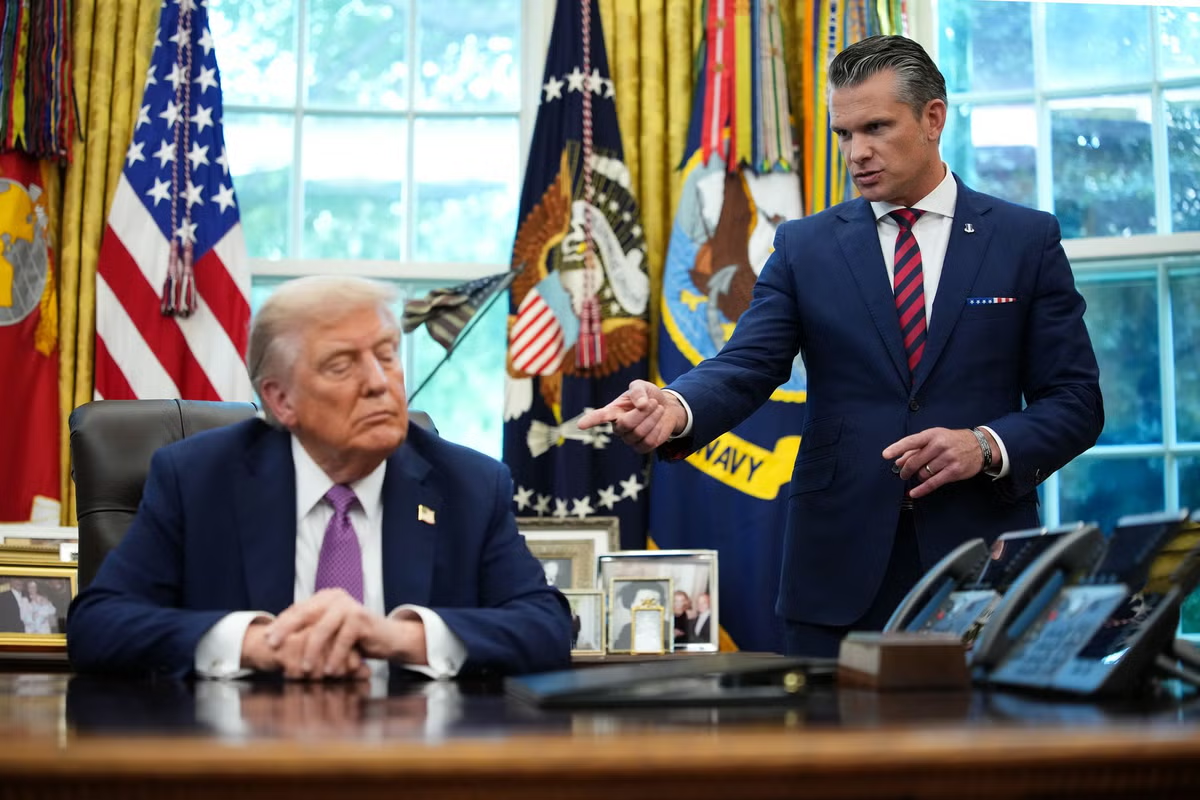 >
>
Now, the political backdrop. Trump’s swift defense of Hegseth, calling attention to the immediate denial, isn’t surprising. Loyalty has always been prized in his inner circle. Still, such a quick endorsement, given the gravity of the accusations, demands closer scrutiny. It invites us to consider political motivations at play, influencing narratives and possibly obscuring the truth.
The media’s role is also a key consideration. Sensational headlines certainly grab attention. Do such stories add nuance to an already complex event, or are they being used to fuel political agendas? Independent verification is critical, especially when dealing with claims involving military operations shrouded in secrecy. This is the nature of responsible investigation. It’s a difficult balancing act; maintaining public awareness without amplifying unsubstantiated claims.
Looking at the bigger picture, one can’t help but recall similar situations. Throughout history, military actions have been met with accusations of impropriety, often with conflicting narratives emerging in the aftermath. Remember the Abu Ghraib scandal? The My Lai Massacre? These events remind us that war pushes ethical boundaries, and accountability is essential to avoid repeating past errors. It requires continuous evaluation.>
This Venezuela situation, regardless of its precise details, underscores a concerning trend. Namely, the increasing blurring of lines between military action, political strategy, and media manipulation. The rhetoric surrounding “narco-terrorism,” for example, can be a powerful tool for justifying aggressive actions. Are we carefully weighing the consequences of such language? Or are we allowing it to bypass critical examination?
The stakes are high. A perceived lack of accountability in these situations can erode public trust in military institutions. It can also damage America’s standing on the global stage. If the U.S. is seen as disregarding international laws and norms, it weakens its ability to lead and influence on other critical issues. To that end, a thorough, transparent investigation into the Venezuela incident is paramount.
It’s also vital to look at this from a legal perspective. If a war crime investigation were to proceed, what evidence would be needed? What legal standards would apply? The process itself would be fraught with challenges, considering the classified nature of military operations. It’s a steep climb.
The immediate repercussions are evident: Congressional inquiries, public debate, potential damage to reputations. The long-term ramifications, however, are much harder to predict. This event could shape future military policy, influence international relations, and even affect the upcoming elections. So what happens next is going to have a ripple effect.
Personal observation leads me to believe that these sorts of situations rarely have simple answers. Human error, political maneuvering, and the fog of war often combine to create a messy reality. It’s not a case of black or white, but shades of gray that require nuanced understanding.
Still, it’s easy to feel overwhelmed by the complexity. The constant barrage of information, coupled with political polarization, makes it harder to arrive at objective conclusions. This is where critical thinking becomes essential. We need to question assumptions, evaluate sources, and consider alternative perspectives. Only then can we hope to make informed judgements.
The Hegseth situation serves as a reminder that we must hold our leaders accountable, regardless of their political affiliation. It emphasizes the significance of safeguarding ethical principles in times of conflict. How we respond to these allegations will shape our future in both tangible and intangible ways. And, ultimately, that response depends on our collective commitment to truth and justice. That’s an important perspective to hold on to.

![[post_title]](https://samony.com.ng/wp-content/uploads/2025/12/If-You-Are-A-Christian-In-Nigeria-And-You-Say-300x222.jpeg?lm=692D5BBF "Nigeria Christian Persecution Claims Examined: Kukah Urges Caution")
![[post_title]](https://samony.com.ng/wp-content/uploads/2025/12/1764580305_Important-BBC-star-dies-as-well-loved-presenter-honoured-for-300x158.jpg?lm=692D5BD2 "BBC Radio Merseyside Host’s Death Sparks Media Landscape Reflection")
![[post_title]](https://samony.com.ng/wp-content/uploads/2025/12/Police-bust-suspected-cult-group-in-Sokoto-300x169.jpeg?lm=692D2829 "Sokoto WhatsApp Cult Busted: Digital Indoctrination Alarms Police")
![[post_title]](https://samony.com.ng/wp-content/uploads/2025/12/1764578567_Aplastic-anaemia-Teenagers-rash-and-headaches-lead-to-devastating-diagnosis-300x200.jpeg?lm=692D550B "Aplastic Anemia: The Unseen Urgency and My Call for a Better Donor System")

![[post_title]](https://samony.com.ng/wp-content/uploads/2025/12/Immigration-launches-response-after-attack-on-Kebbi-border-post.jpg?lm=692D5B30 "Nigeria Immigration Attack Exposes Border Security Flaws")
![[post_title]](https://samony.com.ng/wp-content/uploads/2025/12/If-You-Are-A-Christian-In-Nigeria-And-You-Say.jpeg?lm=692D5BBE "Nigeria Christian Persecution Claims Examined: Kukah Urges Caution")
![[post_title]](https://samony.com.ng/wp-content/uploads/2025/12/1764580305_Important-BBC-star-dies-as-well-loved-presenter-honoured-for-1024x538.jpg?lm=692D5BD3 "BBC Radio Merseyside Host’s Death Sparks Media Landscape Reflection")
