


The viral hashtag iwasfifteen has emerged as a powerful counter-narrative against the minimization of adolescent victimization, particularly in the wake of public discourse surrounding the ongoing release of documents related to convicted sex offender Jeffrey Epstein. This digital movement gained traction after conservative media figure Megyn Kelly made remarks widely perceived as downplaying the experiences of teenage victims. Celebrities and individuals took to social media, sharing photos and stories from age fifteen, aiming to underscore the profound vulnerabilities exploited by traffickers.
The long-anticipated release of information regarding powerful individuals associated with Jeffrey Epstein, known as the Epstein files, has created a significant public stir. President Donald Trump signed the Epstein Files Transparency Act in November 2025, mandating the Justice Department’s release of related documents by December 19, 2025. However, information has been trickling out for months, including over 20,000 of Epstein’s emails released by members of Congress in November, fueling intense public scrutiny and debate.
Amidst this unfolding information, conservative media figure Megyn Kelly made comments that sparked widespread criticism for minimizing the victimization of teenagers. Her remarks ignited a firestorm of reactions across social media platforms. In direct response, the iwasfifteen hashtag rapidly went viral, with countless individuals sharing personal images from their adolescence. This collective act aimed to visually and emotionally illustrate the youthfulness and vulnerability of those targeted by predators, challenging prevalent societal misconceptions.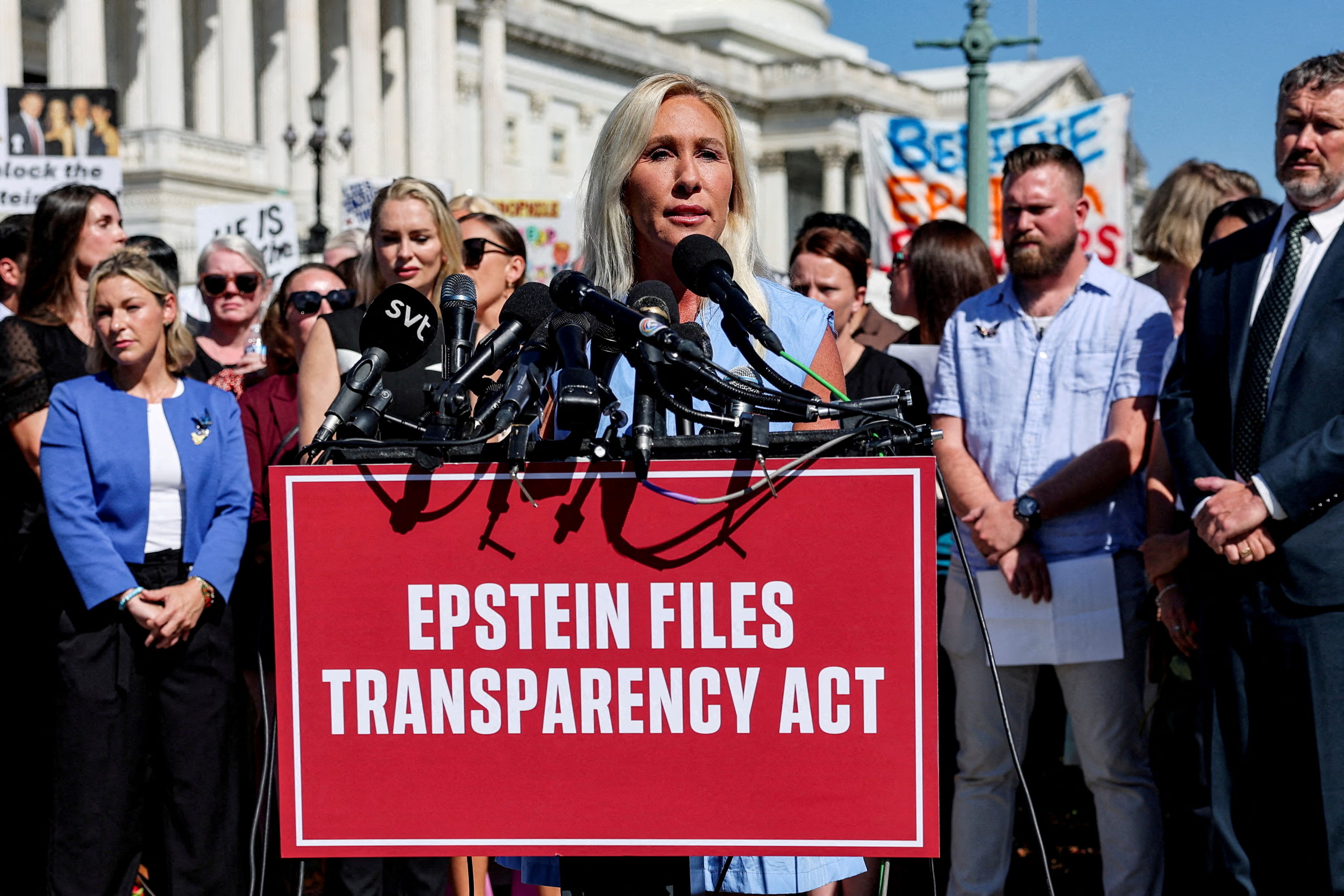
For clinical psychologists studying intimate violence, the minimization of adolescent abuse is a sadly familiar pattern. Decades of research consistently show that victims disclosing abuse are frequently met with disbelief and blame. However, the viral iwasfifteen hashtag offered a surprising clarity, effectively illuminating the insidious dynamics of abuse and the specific vulnerabilities traffickers exploit. It moved beyond individual stories to expose systemic patterns of manipulation.
Contrary to popular stereotypes of snatch-and-grab kidnappings, perpetrators of minor sex trafficking employ sophisticated grooming tactics, building relationships with their young targets. A 2014 analysis of over 40 social service case files revealed common strategies, including the use of flattery or romance to entrap adolescents. Traffickers often cultivated trust by helping teens in difficult situations, simultaneously normalizing sex and prostitution while isolating victims from their support networks. This mirrors the grooming strategies described by victims of Epstein and Ghislaine Maxwell.
Beyond initial entrapment, traffickers maintain tight control through economic and emotional manipulation. They confiscate money, employ blackmail, shame tactics, and issue threats of harm should victims attempt to leave. Echoing aspects of the Epstein case, many victims were compelled to participate in the trafficking itself, often by recruiting their own friends. National studies, including a 2019 report on over 1,400 cases, consistently show a third of traffickers utilizing threats and psychological coercion to control their victims.
Adolescence, a period of rapid identity formation and developing autonomy, becomes a critical vulnerability traffickers exploit. Young people, still dependent on adults for psychological and physical needs, experience a profound betrayal trauma when the abuser is also the source of their perceived support. This creates a scenario where victims cannot simply escape, leading to psychological adaptations such as “betrayal blindness,” a minimization of abuse awareness. This short-term coping mechanism, vital for immediate survival, can have severe long-term psychological and physical health consequences.
In the long term, betrayal traumas are associated with more severe psychological and physical health problems compared to other forms of trauma. Survivors often grapple with intense shame, self-blame, and fear, leading to alienation and deep distrust of others. They may also find it challenging to disclose abuse perpetrated by someone they trusted, and even struggle with remembering specific events, exacerbating self-doubt and complicating their healing process.
Public perception of victims is heavily influenced by pervasive myths surrounding sexual violence and trafficking, which often inadvertently serve perpetrators. Research has documented these erroneous views for decades, showing their persistent presence in media and their detrimental consequences for survivors. These misconceptions frequently minimize the perpetrator’s role while shifting blame onto victims, particularly if victims had pre-existing vulnerabilities or mental health struggles.
The iwasfifteen movement provided a crucial platform to directly challenge these victim-blaming narratives, redirecting focus to the exploitative tactics of abusers. Countering sex trafficking myths with evidence-based research is essential to accurately assigning responsibility to those who traffic and abuse youth. Studies confirm that greater adherence to these myths directly correlates with increased victim blame and disbelief, even among trained law enforcement officers.
The psychological consequences of betrayal trauma, from minimizing abuse to profound distress, unfortunately feed into these societal myths about intimate violence. This creates a devastating cycle where victims’ natural responses to trauma make it easier for friends, family, and even juries to doubt or disbelieve them. This aligns precisely with a common perpetrator tactic: telling victims, “No one will believe you,” explaining why survivors often delay coming forward for years, if ever.

![[post_title]](https://samony.com.ng/wp-content/uploads/2025/12/1766081682_New-photos-from-Epstein-estate-published-by-Democrats-ahead-of.JPG?lm=69444492 "Epstein Documents Released by Democrats Ahead of DOJ Deadline")
![[post_title]](https://samony.com.ng/wp-content/uploads/2025/12/Bishop-Kukah-Visits-Nnamdi-Kanu-In-Sokoto-Custodial-Centre.jpeg?lm=6944420F "Bishop Kukah Meets Nnamdi Kanu in Custodial Facility")
![[post_title]](https://samony.com.ng/wp-content/uploads/2025/12/1766080554_Are-T-Mobiles-Prepaid-Perks-a-Home-Run-or-a-Strikeout-300x200.jpg?lm=6944402B "T-Mobile Prepaid Plans: Perks, Value, and Network Considerations")
![[post_title]](https://samony.com.ng/wp-content/uploads/2025/12/Kolu-tattoos-Davidos-hand-on-his-head-after-Carter-Efes-300x150.jpg?lm=69444040 "Fan Tattoos Davido’s Touch After Viral Livestream Moment")
![[post_title]](https://samony.com.ng/wp-content/uploads/2025/12/Kia-and-Hyundai-will-spend-millions-fixing-old-cars-to-300x156.jpg?lm=69444097 "Kia, Hyundai Settle Over Thefts, Offer Free Anti-Theft Fixes")
![[post_title]](https://samony.com.ng/wp-content/uploads/2025/12/1766079645_Why-Ducati-had-no-doubt-that-Alex-Marquez-deserved-factory-300x200.jpg?lm=69443C9F "Alex Marquez Secures Factory Ducati GP26 for 2026 MotoGP Season")

![[post_title]](https://samony.com.ng/wp-content/uploads/2025/12/Napoli-v-AC-Milan-v-Sassuolo-Supercoppa-Italiana-20252026-official-1024x480.png?lm=694447D6 "Napoli vs AC Milan Supercoppa Italiana Lineups Revealed")
