


The United States is intensifying its efforts to curb Venezuela’s oil exports by employing a naval blockade aimed at intercepting sanctioned tankers. This move targets Venezuela’s state-run oil company, PDVSA, which has become heavily reliant on oil revenues to fund its operations. Facing international sanctions, the Venezuelan government has turned to a clandestine network of “ghost ships” to circumvent these restrictions and continue its oil trade.
These “ghost ships” are a critical component of Venezuela’s strategy to maintain oil exports despite stringent US sanctions imposed in 2019. While Venezuelan crude exports saw a significant decline following the initial sanctions, they have since recovered to approximately 920,000 barrels per day. This resilience suggests that the sanctions have not achieved their intended effect, largely due to the innovative methods employed by the Maduro administration, with the ghost fleet at its core.
The phenomenon of ghost fleets is not unique to Venezuela; both Russia and Iran, also under Western sanctions, utilize similar tactics. Financial intelligence firms estimate that a substantial portion of the global oil tanker fleet is involved in smuggling oil from sanctioned nations. These vessels often operate under false pretenses to obscure the origin of the oil, making it difficult for authorities to track and intercept.
One of the primary methods employed by these ghost tankers involves frequently changing their names and flags, sometimes multiple times within a single month. This tactic makes it challenging for international bodies and governments to identify and sanction specific vessels. For instance, a recently seized tanker, known as The Skipper, had a history of name changes and was previously linked to an oil-smuggling network supporting Iran’s Revolutionary Guard.
Another deceptive practice involves the use of “zombie ships,” which adopt the identification numbers of vessels that have already been scrapped. These ships, often older and less scrutinized, can operate undetected by mimicking the identities of defunct vessels. Investigations have revealed instances of these zombie ships carrying Venezuelan crude, highlighting the sophisticated nature of the evasion schemes.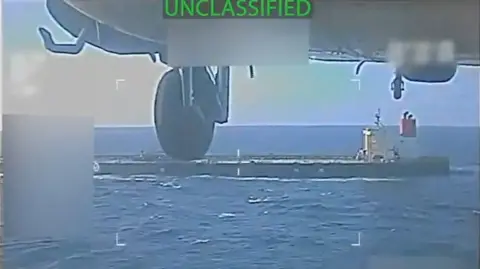
Furthermore, ghost tankers frequently engage in ship-to-ship transfers in international waters. This process involves transferring oil from a sanctioned vessel to a legally compliant tanker with a different flag. The oil is then delivered to its destination, appearing to originate from a country not subject to sanctions, thereby masking its true source and circumventing detection.
Many of these vessels also resort to disabling their Automatic Identification System (AIS), a mandatory tracking system that transmits a ship’s name, flag, position, and route. By deactivating the AIS, these ships can effectively hide their identity and location, making them nearly invisible to maritime authorities. This stealth operation is a key element in their ability to evade interdiction.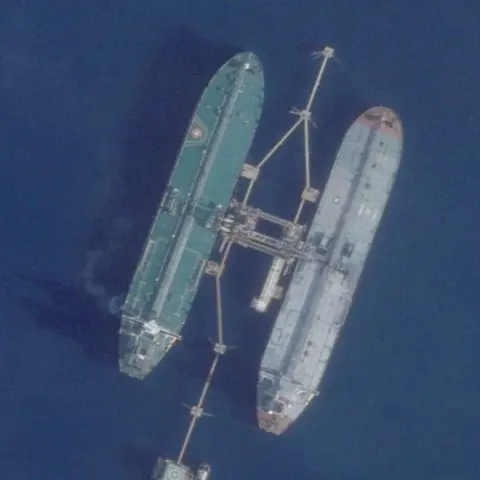
Reports indicate a significant number of foreign tankers operating in Venezuelan ports, with a notable portion under sanctions or linked to ghost fleets. Many of these vessels exhibit prolonged stays in port areas without docking at designated oil terminals, raising serious concerns about their illicit activities. These extended durations contrast sharply with the swift loading and departure of sanctioned-but-authorized vessels.
The US military’s deployment of assets, including the USS Gerald R. Ford aircraft carrier, in the Caribbean signifies a robust effort to counter these evasion tactics. This heightened naval presence is expected to significantly disrupt Venezuela’s reliance on its ghost fleet, potentially curtailing its ability to export oil under sanctioned conditions and further isolating the Maduro government.


![[post_title]](https://samony.com.ng/wp-content/uploads/2025/12/1765970350_First-Spider-Man-Brand-New-Day-trailer-and-new-Avengers-Doomsday-300x169.jpg?lm=694291B0 "Spider-Man and Avengers Trailers Leak Amid Studio Takedown Battle")
![[post_title]](https://samony.com.ng/wp-content/uploads/2025/12/1765970519_Russia-Ukraine-war-latest-Zelensky-plays-down-hopes-of-peace.jpeg?lm=69429257 "Ukraine Peace Talks Face Hurdles as Russia Rejects Truce")
![[post_title]](https://samony.com.ng/wp-content/uploads/2025/12/1765969473_TV-presenter-and-husband-found-dead-at-home-as-young-300x158.jpg?lm=69428E42 "TV Presenter and Husband Found Dead in Apparent Murder-Suicide")
![[post_title]](https://samony.com.ng/wp-content/uploads/2025/12/PDP-Chairman-Says-Nigerians-Nostalgic-For-Partys-Return-Amid-APC-300x200.jpg?lm=69428FFB "PDP Chairman: Nigerians Nostalgic for Party Amid APC Failures")
![[post_title]](https://samony.com.ng/wp-content/uploads/2025/12/Akwa-Ibom-Rewards-Sports-Festival-National-Youth-Games-Athletes.jpeg?lm=69428BE1 "Akwa Ibom Rewards Athletes with Cash Prizes")

![[post_title]](https://samony.com.ng/wp-content/uploads/2025/12/1765970767_NMDPRAs-CEO-disowns-response-to-Dangote-allegations-clarifies-position.jpg?lm=6942934F "NMDPRA CEO Denies Dangote Allegations Response")
![[post_title]](https://samony.com.ng/wp-content/uploads/2025/12/1765971030_Pub-tells-customers-everyone-hates-you-in-onslaught-to-festive-1024x538.jpg?lm=69429458 "Hartlepool Pub’s Controversial Christmas Rules Spark Debate")
![[post_title]](https://samony.com.ng/wp-content/uploads/2025/12/1765970350_First-Spider-Man-Brand-New-Day-trailer-and-new-Avengers-Doomsday-1024x576.jpg?lm=694291B0 "Spider-Man and Avengers Trailers Leak Amid Studio Takedown Battle")
