

Analyzing the Escalating US Military Presence Near Venezuela: A Critical Perspective
The situation unfolding near Venezuela, particularly the US military buildup, warrants close examination. News outlets report a surge in naval power, coupled with aggressive actions against alleged drug-smuggling vessels. It sparks serious questions about the strategic aims and the legal justification underpinning these actions. Having observed similar geopolitical maneuvers in the past, a degree of skepticism is warranted.
The Trump administration, as detailed in reports, designated certain Latin American crime organizations as foreign terrorist organizations, a label typically reserved for groups with political motivations. This classification, applied to profit-driven crime rings, raises eyebrows. Following this, the US military began deploying destroyers and other vessels to the Caribbean, amassing a considerable force. It included advanced fighter jets and submarines.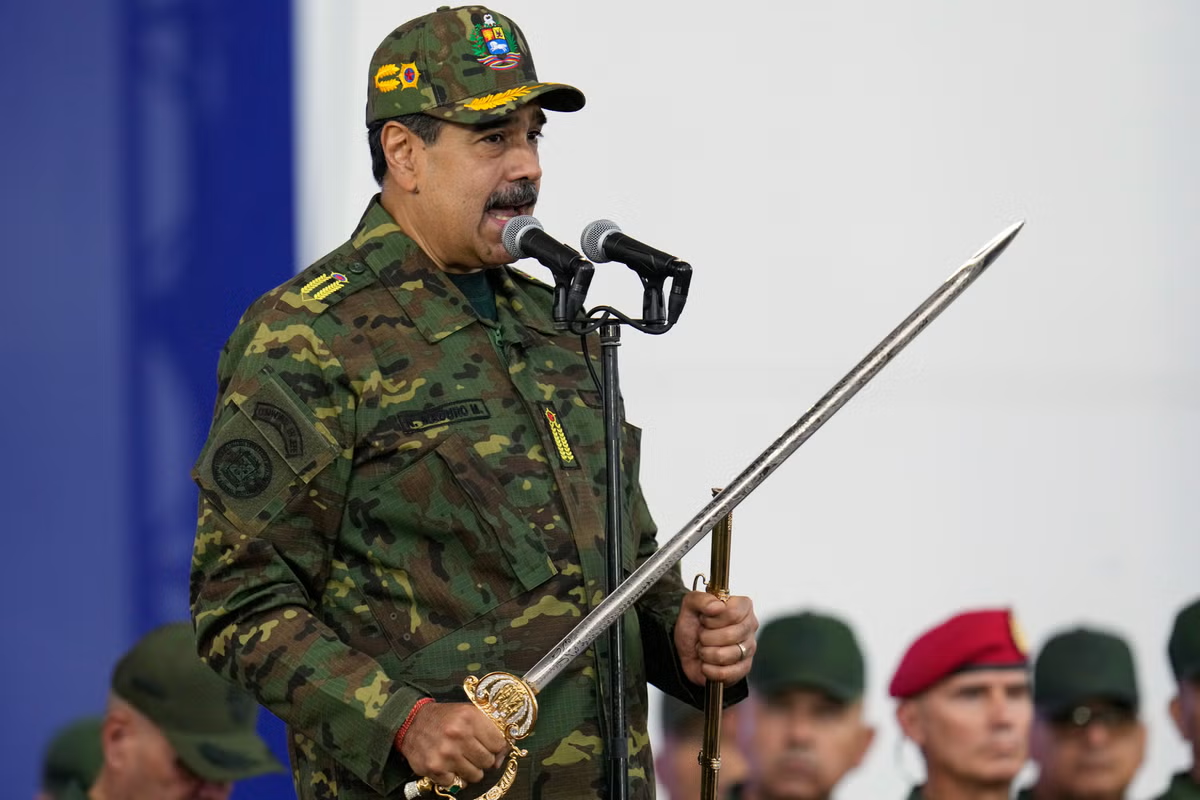 >
>
Then came the strikes. The US military initiated a series of attacks against vessels allegedly involved in drug trafficking, originating from Venezuela. Claims were made about the identities of those killed, with assertions of links to terrorist organizations and drug cartels. But these claims weren’t always backed by irrefutable evidence. For instance, the Trump administration described “big bags of cocaine and fentanyl” during one of the attacks. Images were never released, fueling suspicion about the veracity of these claims.
It’s worth noting the response from within the US. Lawmakers, primarily Democrats, raised concerns about the legality of the strikes. The argument centered on whether the US military had the authority to act as judge, jury, and executioner, hunting down and killing suspected criminals without due process. A particularly disturbing detail emerged, alleging a “follow-on strike” to eliminate survivors of an initial attack. It immediately demands investigation.
Venezuelan President Nicolás Maduro, unsurprisingly, sees this buildup as a thinly veiled attempt to force him from office. It’s a familiar narrative in the region. To that end, Venezuela launched military exercises. It presented a show of force in response to what they perceive as a direct threat to their sovereignty.>
The legal justification for these actions is murky at best. The Trump administration declared an “armed conflict” with drug cartels, attempting to legitimize military strikes. However, this assertion of presidential war powers faced criticism. Some, including Republican Senator Rand Paul, questioned the constitutional basis for such actions without congressional approval. The Senate’s failure to pass legislation requiring congressional authorization further muddies the waters.
Consider the timeline. The frequency of these strikes increased, the geographical area expanded, and the military firepower escalated with the arrival of the USS Gerald R. Ford. Meanwhile, reports indicate the CIA was authorized to conduct covert operations inside Venezuela. Trump even hinted at potential land operations. This sequence of events paints a picture of escalating intervention.
Adding to the intrigue, the Navy admiral overseeing operations in the region announced his early retirement. Adam Smith, a leading Democrat on the House Armed Services Committee, pointed out the unusual timing of this departure. This lack of transparency fueled concerns about the true nature of the operation.
The United Nations weighed in. The UN human rights chief called for an investigation into the strikes. It appears to be the first such condemnation from a United Nations organization. The message was clear: the US must halt these attacks and prevent extrajudicial killings.
While the US asserts its right to combat drug trafficking and protect its borders, these actions carry significant risks. The potential for miscalculation, escalation, and unintended consequences is high. It seems important to ask: Does the aggressive pursuit of drug cartels justify military intervention in a sovereign nation? Is this a targeted effort to combat drug trafficking or something else entirely?
The events near Venezuela require critical analysis. It demands accountability. The legal basis for these strikes, the justification for expanding military presence, and the true objectives behind these actions must be thoroughly examined. This situation warrants continued scrutiny to ensure adherence to international law and prevent further escalation.
It is not just about Venezuela. It is about the precedent being set. It questions the limits of executive power and the use of military force in the absence of clear and present danger. These are vital conversations, because their outcomes shape the future of US foreign policy.


![[post_title]](https://samony.com.ng/wp-content/uploads/2025/12/1764969684_What-Netflixs-54bn-takeover-of-Warner-Bros-means-for-Hollywood-300x158.jpg?lm=69334CD7 "Streaming’s New Colossus: Integrating Legacy, Navigating Monopoly, and Preserving Creative DNA")

![[post_title]](https://samony.com.ng/wp-content/uploads/2025/12/streaming-chaine-TV-et-compos-300x157.jpg?lm=693336DA "Ligue 1’s Chessboard: Reading Between the Lines of Lille vs. Marseille")



![[post_title]](https://samony.com.ng/wp-content/uploads/2025/12/1764969684_What-Netflixs-54bn-takeover-of-Warner-Bros-means-for-Hollywood-1024x538.jpg?lm=69334CD8 "Streaming’s New Colossus: Integrating Legacy, Navigating Monopoly, and Preserving Creative DNA")
