

![[post_title]](https://samony.com.ng/wp-content/uploads/2025/12/Pope-Leo-dissolves-one-of-Francis-final-acts-in-major-1024x683.jpeg?lm=6931DAB7)
Vatican Finances: A New Pope, New Priorities?
Pope Leo’s decision to dissolve the fundraising commission established by the late Pope Francis raises some intriguing questions about the direction of Vatican finances. It’s a move that seems to rewind one of Francis’ final attempts to address the Holy See’s persistent budget issues.
Francis, during his pontificate, grappled with the Vatican’s financial challenges. His efforts included slashing cardinal salaries, a sign of the severity of the situation. He launched the “Commission on Donations for the Holy See” during his final days, hoping to tap into the generosity of lay Catholics and other benefactors. Yet, some questioned the commission’s fundraising expertise.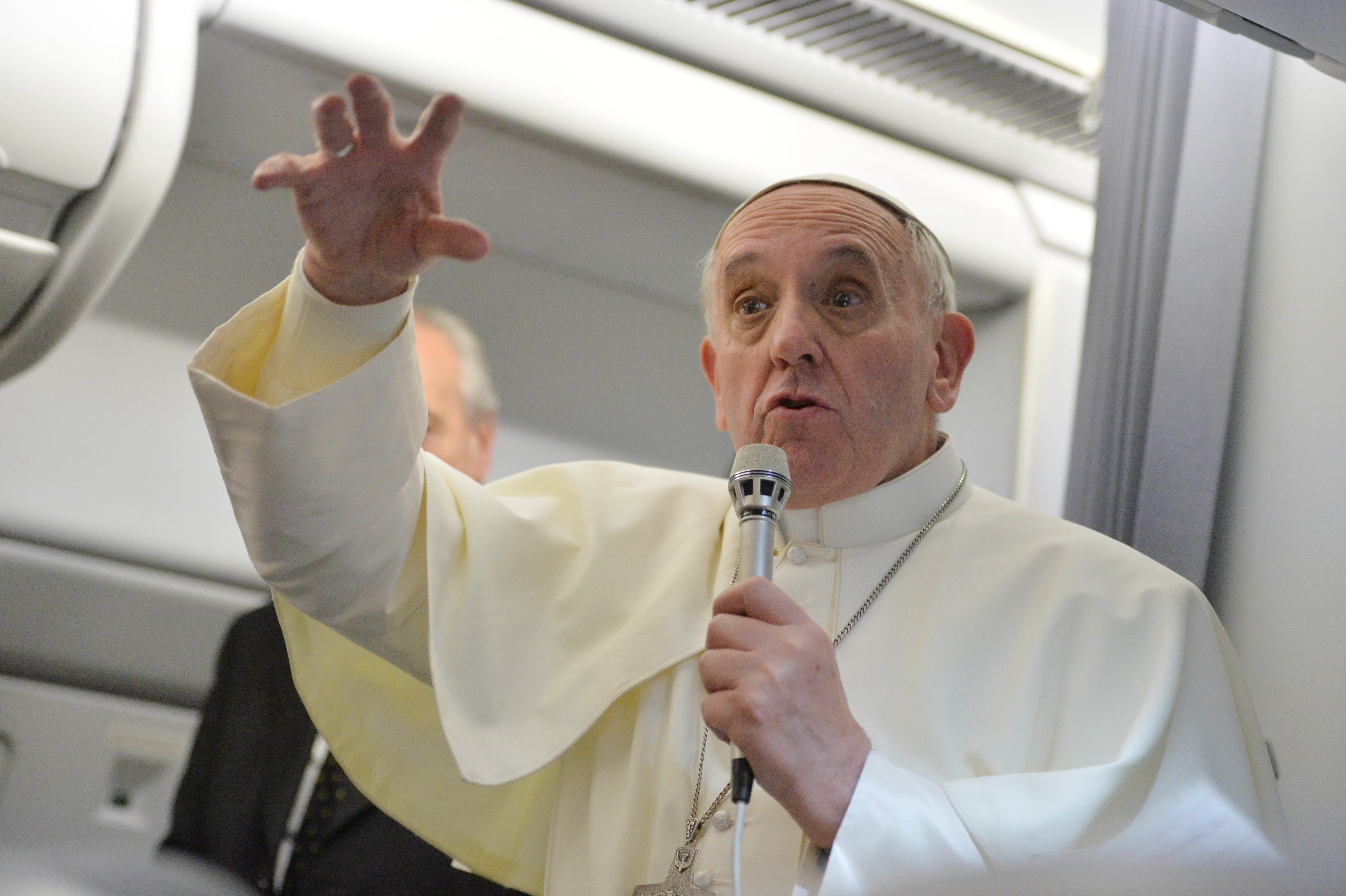 >
>
Leo’s swift action—dissolving the commission without detailed explanation—suggests a divergence in approach. He directed funds to the Vatican’s general accounting office and hinted at a new fundraising body in the future. Why disband a commission meant to bolster funds? It could signal a re-evaluation of fundraising strategies or even a difference in how the new pontiff views the Vatican’s financial predicament.
It’s worth remembering that the Vatican did announce its first budget surplus last month after years of deficits. Was Francis’ commission deemed unnecessary given this recent, albeit perhaps fragile, fiscal improvement? Or is Leo preparing a more streamlined, efficient approach to Vatican finances?
The bigger picture involves mounting liabilities within the Vatican’s pension fund. Estimates suggest these liabilities were already significant a couple of years ago, and insider whispers imply they’ve only grown larger. This challenge will eventually demand a resolution.>
The late Pope Francis also dealt with firm resistance from his own cardinals as he sought to fix the gap in the Vatican’s finances. Perhaps Pope Leo seeks to solve that challenge in a different way.
The impact of the Covid-19 pandemic on tourist revenue further complicated the financial landscape, and the Pope’s acknowledgment of necessary cuts to the Vatican’s media operations underscores the need for fiscal prudence.
The Vatican faces difficult decisions. Shrinking charitable works or scaling back diplomatic presence might be on the table. As Rev. Tom Reese insightfully pointed out, financial constraints can severely impact the Pope’s influence. The key question: How will Leo navigate these challenges while preserving the Vatican’s mission?
From my experience watching similar trends unfold in other organizations, leadership transitions often bring strategic shifts. This move could be an indicator of deeper changes within the Vatican’s financial structure. Pope Leo’s actions seem to suggest a desire for a different path, though the specifics remain unclear.
The coming months will reveal whether this dissolution is simply a tactical adjustment or a fundamental change in how the Vatican manages its resources. The Vatican’s response to these financial pressures will shape not only its future but also its global influence. What remains to be seen is how Pope Leo will balance fiscal responsibility with the church’s extensive mission. It’s not just about the numbers; it’s about prioritizing the church’s role in a changing world, a balancing act that will define his legacy.

![[post_title]](https://samony.com.ng/wp-content/uploads/2025/12/In-1995-a-Netscape-employee-wrote-a-hack-in-10-300x169.jpg?lm=6931D870 "JavaScript’s Reign: How a 10-Day Hack Took Over the Web (And What’s Next)")
![[post_title]](https://samony.com.ng/wp-content/uploads/2025/12/1764869561_Wizkid-Set-to-Host-GOAT-Concert-in-Lagos-This-December-300x289.jpeg?lm=6931C5BC "Wizkid’s Lagos Show: True Homecoming or Calculated Move?")



![[post_title]](https://samony.com.ng/wp-content/uploads/2025/12/How-to-Break-a-Bad-Habit-11-Tips-and-Strategies-1024x576.jpg?lm=6931DA31 "Work With Your Brain to Break Bad Habits")
![[post_title]](https://samony.com.ng/wp-content/uploads/2025/12/In-1995-a-Netscape-employee-wrote-a-hack-in-10-1024x576.jpg?lm=6931D870 "JavaScript’s Reign: How a 10-Day Hack Took Over the Web (And What’s Next)")
![[post_title]](https://samony.com.ng/wp-content/uploads/2025/12/1764869561_Wizkid-Set-to-Host-GOAT-Concert-in-Lagos-This-December.jpeg?lm=6931C5BB "Wizkid’s Lagos Show: True Homecoming or Calculated Move?")
