

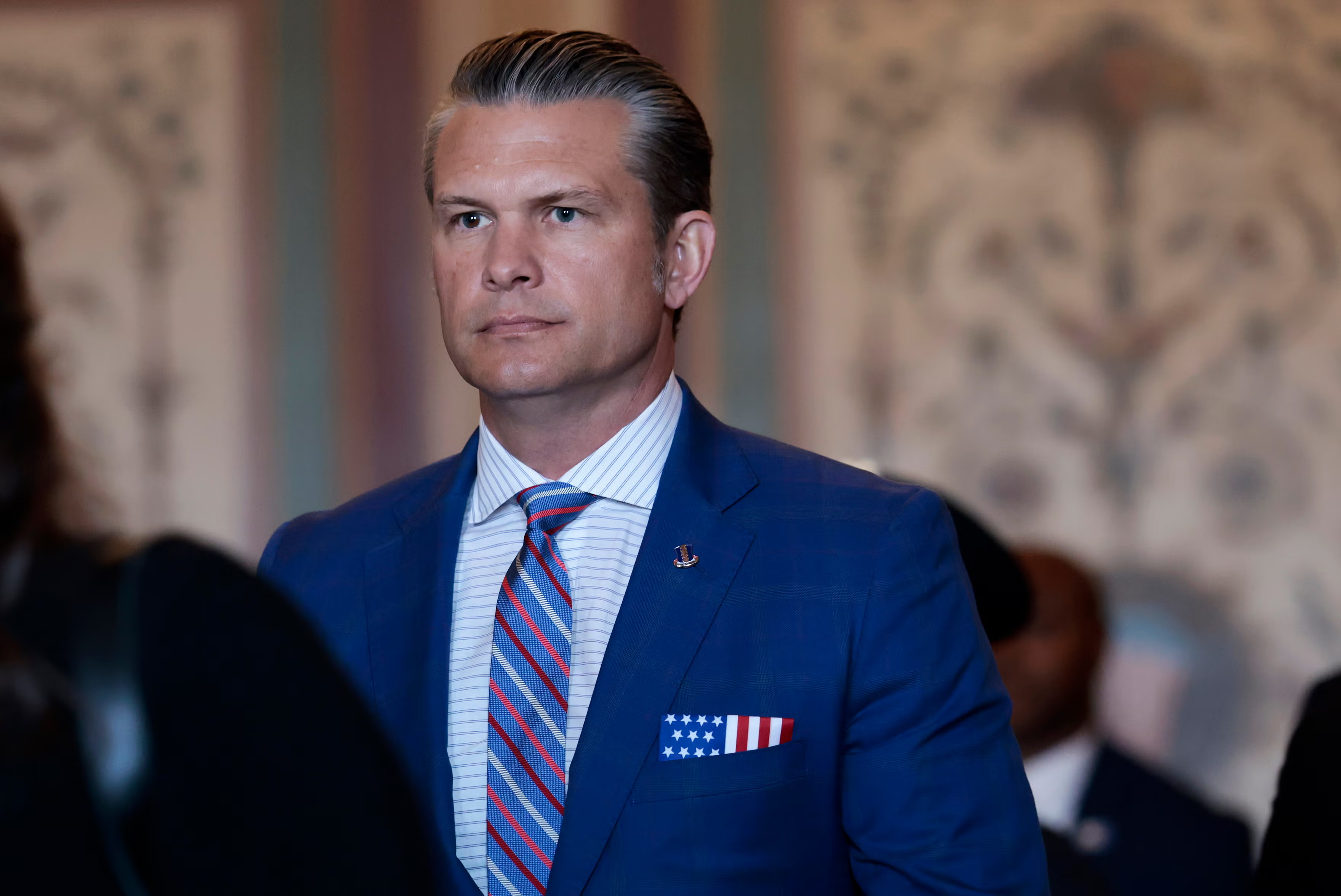
The U.S. military employed an aircraft disguised as a civilian plane in its initial strike on an alleged drug boat in the Caribbean last September, a tactic that has raised significant questions about potential violations of the laws of war during the Trump administration’s air strike campaign. This operation, detailed in a recent report, involved a craft that lacked visible munitions and overt military markings, aiming to conceal its combatant status. Retired Maj. Gen. Steven J. Lepper, former deputy judge advocate general for the U.S. Air Force, suggested that such deceptive tactics could constitute the crime of “perfidy,” which prohibits combatants from feigning civilian status to deceive enemies. He stated that if an aircraft is not identifiable as a combatant, it should not engage in combatant activity, highlighting the importance of clear identification in warfare. The Pentagon, when questioned about the report, acknowledged the use of diverse aircraft based on mission needs and asserted that all aircraft undergo rigorous procurement processes to ensure compliance with domestic laws, departmental policies, and international standards, including the law of armed conflict. The September 2 strike, which resulted in the deaths of eleven individuals, had previously drawn controversy over the orders given to engage survivors clinging to wreckage. Critics argued this also violated the laws of war. Administration officials maintained that Secretary of Defense Pete Hegseth did not directly order this “double-tap strike,” but rather a Navy admiral did so under Hegseth’s broad authorization. Hegseth expressed full support for the decision, indicating he would have made the same choice. Amidst the ongoing controversy, Hegseth announced in December that the Pentagon would not release unedited video footage of the strike. The administration has also faced criticism regarding the legal justification for the entire campaign, with opponents contending that these strikes amount to illegal extrajudicial killings of non-combatants outside recognized war zones. The administration’s stance is that its actions against alleged drug boats are legitimate because the U.S. is engaged in an “armed conflict” with non-state drug trafficking organizations. However, comprehensive evidence detailing the identities of individuals on these boats and their confirmed ties to drug trafficking has not been widely shared by the military. This campaign, which has led to at least 123 fatalities across 35 strikes, recently entered a new phase when U.S. forces apprehended Nicolas Maduro in Venezuela, whom the U.S. accuses of collaborating with drug groups. Lawmakers reported not being briefed on this operation in advance, and a bipartisan group of senators subsequently voted to restrict the President’s authority to deploy forces in or against Venezuela without congressional approval. What is perfidy in warfare? Perfidy refers to the deceptive use of protected civilian status or objects to gain a military advantage. It is a violation of international humanitarian law, specifically prohibiting combatants from feigning civilian or non-combatant status to trick an adversary into a disadvantageous position. This evolving situation highlights the complex legal and ethical considerations surrounding modern warfare and the challenges of combating transnational criminal organizations in volatile regions. The use of disguised aircraft raises serious concerns about transparency and accountability in military operations. The military’s justification for such strikes hinges on the assertion of an “armed conflict” with drug groups. However, the lack of transparency regarding evidence and the potential for civilian casualties continue to fuel debate among legal experts and policymakers. The legal basis for the entire air strike campaign remains a point of contention, with critics questioning the scope and legality of extrajudicial killings. The administration’s defense relies on defining the conflict broadly to encompass these actions. Future operations in the Caribbean and against alleged drug trafficking networks will likely face continued scrutiny regarding adherence to international law and the principles of distinction and proportionality. The debate over the “double-tap strike” and the subsequent decision not to release video footage further underscores the challenges in ensuring public trust and accountability in military actions. The evolving nature of conflict, particularly against non-state actors, necessitates clear guidelines and robust oversight to prevent potential abuses and uphold humanitarian principles. The capture of Nicolas Maduro marks a significant development in the U.S. campaign, potentially altering the dynamics of drug interdiction and regional stability. The lack of advance briefing for lawmakers on such critical operations raises concerns about democratic oversight and the executive branch’s authority in matters of war and foreign policy. The bipartisan vote to limit future military actions without congressional consent signifies a growing concern among legislators about the unchecked use of force and the need for greater legislative involvement. The U.S. military’s approach to combating drug trafficking in the Caribbean is increasingly complex, involving both conventional and unconventional tactics. The legal framework surrounding these operations is constantly being tested and debated, reflecting the challenges of applying established laws of war to contemporary threats. The incident involving the disguised aircraft serves as a stark reminder of the importance of transparency and adherence to international norms in military engagements. The broader implications of these strikes extend beyond the immediate tactical objectives, impacting regional relations and international perceptions of U.S. military conduct. Ensuring that all military actions are conducted in accordance with the law of armed conflict is paramount for maintaining legitimacy and upholding human rights.
Keywords: how to conduct air strikes, what is perfidy in warfare, US military aircraft vs civilian plane, best aircraft for drug interdiction, military tactics for beginners, US Caribbean drug raid news, Nicolas Maduro news, best aircraft for drug interdiction 2026, US military air strike guide 2026, law of armed conflict






