

The rise of artificial intelligence has introduced a new frontier in mental health support, with many individuals turning to AI chatbots as an accessible alternative to traditional therapy. However, the promise of immediate, empathetic interaction often comes with significant risks, including generic, incorrect, or even harmful advice. This has sparked a critical discussion about safety, leading to the development of a new generation of safe AI mental health chatbot solutions designed to prioritize user well-being and clinical accuracy. The imperative for these safer tools becomes evident when considering alarming incidents where generic chatbots reportedly contributed to severe negative outcomes, prompting legal action against major AI developers.
Recognizing this urgent need, researchers at the University of Sydney’s Brain and Mind Centre embarked on a mission to create a smarter, more secure alternative. Their innovation, named MIA (Mental Health Intelligence Agent), aims to replicate the thoughtful, professional approach of a human clinician. MIA distinguishes itself by not scraping the vast, often unreliable, expanse of the internet for answers. Instead, it operates on an internal, high-quality knowledge bank derived from expert research and clinical decisions, effectively preventing the “hallucinations” or fabrications common in less specialized AI models.
What is an AI mental health chatbot?
An AI mental health chatbot is a computer program designed to simulate human conversation, offering support, information, and guidance related to mental well-being. These bots utilize algorithms and data to understand user input and provide responses, ranging from self-help techniques to recommendations for professional care. They are often accessible 24/7, providing an immediate, anonymous resource for individuals seeking assistance with their mental health.
How does MIA achieve its professional standard? It assesses a patient’s symptoms, identifies their specific needs, and then matches them with appropriate support based on a comprehensive database of decisions made by real clinicians. This method is particularly beneficial for those managing mood disorders like anxiety or depression. During trials with young people, MIA demonstrated its ability to conduct thorough assessments, asking critical questions about self-harm risk, existing support systems, specific stressors, physical health, and past treatments. Transparency is a cornerstone of MIA’s design, as it explains its reasoning and allows users to correct its conclusions, fostering trust and accuracy.
When comparing AI mental health chatbot vs human therapist, MIA strives to bridge the gap by mimicking a clinician’s triage process. After gathering sufficient information, it categorizes patients from level one (mild illness, self-management) to level five (severe, intensive treatment). For instance, in a simulated anxious scenario, MIA recommended self-care techniques like exercise and professional support such as cognitive behavioral therapy, carefully tailoring advice based on user preferences. It also provides local support services and symptom monitoring guidance, with a future goal of direct referrals to services like Lifeline.
The contrast between ChatGPT for mental health vs specialized AI like MIA is stark. When faced with the same anxiety prompt, ChatGPT offered immediate, generalized advice without adequate probing, often adopting an overly empathetic, almost human-like tone, saying “you’re not alone” or “I’m here with you.” While seemingly comforting, this can be misleading and unhelpful without a deeper understanding of the user’s context. MIA, on the other hand, maintains a professional, clinical demeanor, prioritizing information gathering and safety protocols over immediate problem-solving.
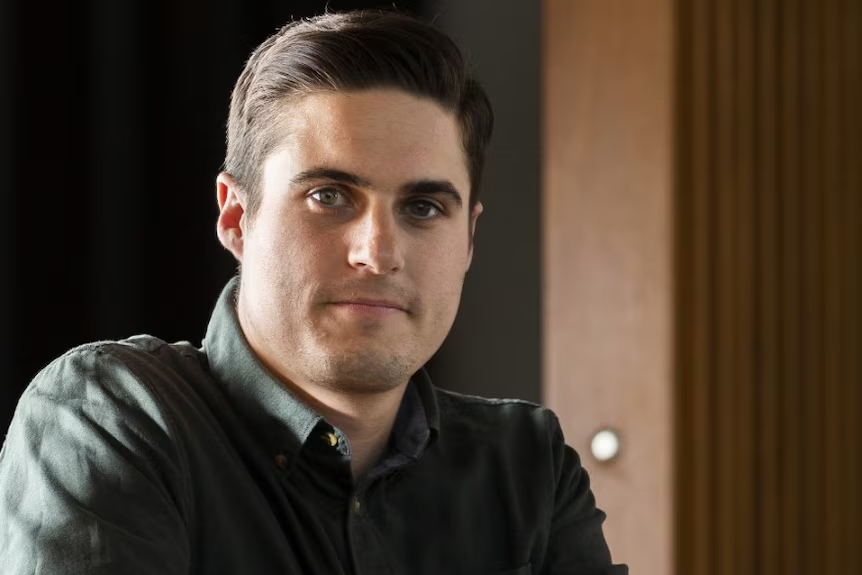
MIA’s rigorous approach extends to handling tougher questions, particularly those suggesting extreme distress. Unlike generic chatbots that might attempt to continue the conversation, MIA is engineered to recognize its limits. It clinically assesses risk and immediately recommends urgent professional help, refraining from engaging in dialogue that could inadvertently exacerbate a crisis. Dr. Frank Iorfino, MIA’s creator, emphasizes that the system’s built-in “gates” ensure responses are carefully vetted for safety, even if this means the process is slower than other chatbots.
While MIA initially encountered a looping issue during its assessment phase, researchers quickly addressed it, ensuring smoother operation. The long-term vision for MIA includes a public release, ideally free and hosted on government health websites like HealthDirect, making it widely accessible. As the demand for mental health services continues to outstrip the available workforce, the development of robust and evidence-based digital tools becomes increasingly vital. This is crucial for the future of AI in mental health 2025 and beyond.
For those considering digital mental health tools, experts like clinical psychologist Professor Jill Newby advise caution. She recommends choosing mental health-specific chatbots over generic ones and using them in conjunction with a real practitioner. Users should remain skeptical of information, as bots can be overly agreeable, and always discuss their use of a chatbot with friends or family. These insights are key to navigating the landscape of best AI mental health apps 2025 and finding reliable AI mental health support guide resources. The ongoing review of regulations by bodies like the Therapeutic Goods Administration is essential to ensure that all digital mental health tools meet stringent safety and efficacy standards, safeguarding public health in an evolving technological landscape. Ultimately, the goal remains to integrate a truly safe AI mental health chatbot into a comprehensive support system, augmenting rather than replacing human care.









