![[post_title]](https://samony.com.ng/wp-content/uploads/2025/12/1764998564_Ukraine-Russia-war-latest-Putin-risks-fresh-row-with-Trump-after-1024x683.jpeg?lm=6933BDAE)
Analyzing the Shifting Sands: Ukraine, Russia, and the Emerging World Order
The ongoing conflict between Ukraine and Russia remains a central point of global concern, impacting geopolitics, energy markets, and international alliances. Recent developments suggest a situation fraught with complexity, where simple solutions appear increasingly elusive.
Ukraine’s military stance, as articulated by General Syrskyi, remains firm: ceding territory for a “peace deal” is unacceptable. This resolve, however, exists amidst the realities of a protracted conflict, where battlefield dynamics shift constantly. The notion of a “just peace” hinging on current frontlines and subsequent negotiations sounds good in principle. Yet, achieving that feels like navigating a minefield of competing interests and entrenched positions. >
>
Putin’s moves on the international stage demonstrate a calculated strategy. His offer of uninterrupted fuel supplies to India, despite US tariffs, highlights the formation of alternative power blocs. Is this a direct challenge to the US dollar’s dominance in energy markets? Possibly. It’s a play for influence, securing allies and revenue streams irrespective of Western pressure. The US strategy of imposing tariffs seems to have the opposite effect as Russia finds alternative buyers that are not under US economic influence.
Modi’s assertion that India is “not neutral” but “for peace” is a masterclass in diplomatic ambiguity. India’s maintaining ties with Russia, a long-standing alliance, despite US pressure, underscores the multi-alignment strategy many nations are adopting. They are hedging their bets, refusing to be confined to rigid ideological camps. This makes predicting long-term global alignments even more tricky.
Reports of alleged atrocities, like the killing of a Ukrainian prisoner of war, paint a grim picture of the conflict’s human cost. While such reports demand thorough investigation and accountability, they also underscore the propaganda war raging alongside the physical one. Verifying information from the ground is incredibly challenging, and narratives are often shaped to sway public opinion.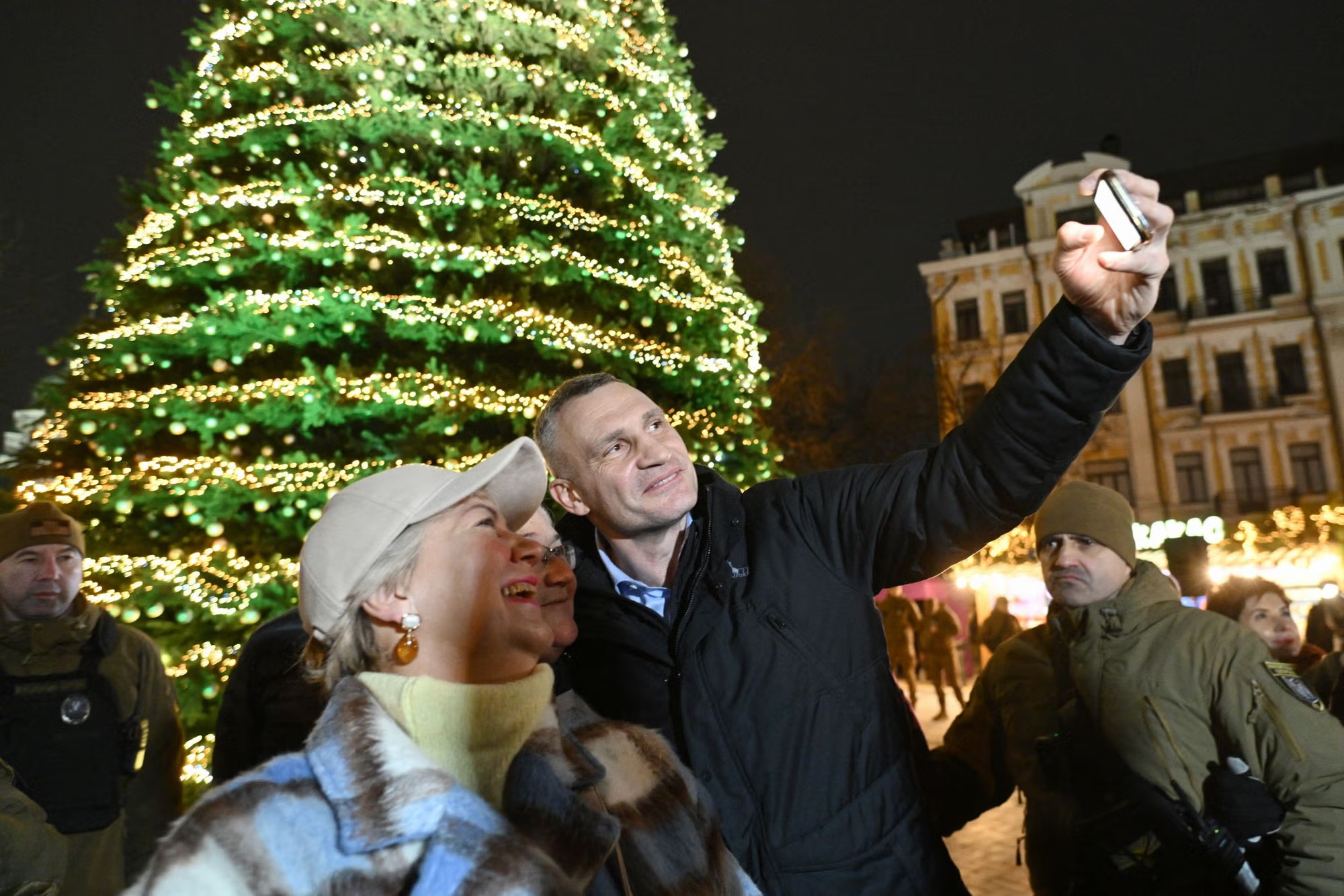 >
>
The US, under a Trump-led initiative, continues to pursue peace negotiations. The joint statements from US and Ukrainian negotiators emphasizing Russia’s role in achieving peace are carefully worded. They seem to place the onus on Moscow to demonstrate a genuine commitment. Trump’s involvement adds a layer of unpredictability, given his past pronouncements and transactional approach to foreign policy. We have seen that pressuring Kyiv and Moscow can produce an agreement. The success of the agreement will be determined by the negotiations.
The incident involving drones near Dublin Airport during Zelensky’s visit raises serious security concerns. Whether these were acts of espionage, sabotage, or simple provocation, they highlight the vulnerabilities present in even seemingly secure environments. Such incidents may escalate if not addressed swiftly.
The damage to the Chornobyl nuclear plant’s protective shield due to drone impact is deeply unsettling. The IAEA’s assessment that the structure has lost its primary safety functions should be a global wake-up call. It underscores the risks of conducting warfare near sensitive sites, and the potential for environmental catastrophes that could affect the entire region.
The images of Christmas celebrations in Kyiv are poignant, a testament to the resilience of the Ukrainian people amidst hardship. They also serve as a reminder that beyond the geopolitics and military strategies, real lives are being disrupted and redefined.
The meeting between Witkoff and Umerov signals ongoing diplomatic efforts, but the lack of specific details about the agenda suggests a cautious approach. Are these talks merely exploratory, or are they paving the way for more substantive negotiations? Time will tell.
Belgium’s reluctance to unlock frozen Russian assets for Ukraine reveals the internal divisions within Europe regarding financial responsibilities and risk. The EU’s struggle to find consensus on this issue could impede its ability to provide sustained financial support to Ukraine, potentially weakening Kyiv’s position in the long run.
From my perspective, having observed similar geopolitical dynamics unfold over the years, this conflict isn’t just about territory. It is about power, influence, and the re-writing of the global order. We are seeing the emergence of a multipolar world, where traditional alliances are being questioned, and new partnerships are forming. The path forward is uncertain, and the stakes are incredibly high. Finding a lasting resolution will require a combination of strategic diplomacy, economic pressure, and, most importantly, a willingness from all parties to compromise – something that seems increasingly difficult to achieve. What is clear is that this conflict will continue to reshape the world we live in for years to come.

![[post_title]](https://samony.com.ng/wp-content/uploads/2025/12/1764998564_Ukraine-Russia-war-latest-Putin-risks-fresh-row-with-Trump-after-300x200.jpeg?lm=6933BDA8 "Ukraine War Reshapes Global Order: A Complex Web of Power, Diplomacy, and Risk")
![[post_title]](https://samony.com.ng/wp-content/uploads/2025/12/High-Risk-for-Frostbite-Heart-Strain-and-Chronic-Conditions-300x169.jpg?lm=6933A071 "Polar Vortex Here? What You MUST Know to Stay Safe")

![[post_title]](https://samony.com.ng/wp-content/uploads/2025/12/Full-List-Of-Lawmakers-Who-Refused-To-Dump-PDP-For.jpg?lm=6933A187 "Rivers State: Defection Dynamics and Political Fortunes")

![[post_title]](https://samony.com.ng/wp-content/uploads/2025/12/Dangote-Speaks-On-Reducing-Price-Of-Petrol-After-Meeting-Tinubu.webp.webp "Dangote Speaks On Reducing Price Of Petrol After Meeting Tinubu")