

![[post_title]](https://samony.com.ng/wp-content/uploads/2025/12/Ukraine-Russia-war-live-Zelensky-hails-Trumps-efforts-to-end-war-1024x683.avif?lm=692D2105)
Analyzing the Shifting Sands of the Ukraine-Russia Conflict: A Critical Perspective
The situation in Ukraine remains a tangled web, even as we see potential shifts on the horizon. Recent developments suggest movement, perhaps even progress, toward a resolution to the ongoing conflict, but a healthy dose of skepticism is warranted.
It appears that efforts to broker a peace deal are underway, with President Trump reportedly optimistic about the current trajectory of negotiations. Secretary of State Rubio’s meeting with Ukrainian officials and his subsequent comments about “productive” talks signal a willingness to engage. Zelensky himself has voiced cautious optimism regarding discussions between Kyiv and Washington, specifically acknowledging Trump’s team’s involvement.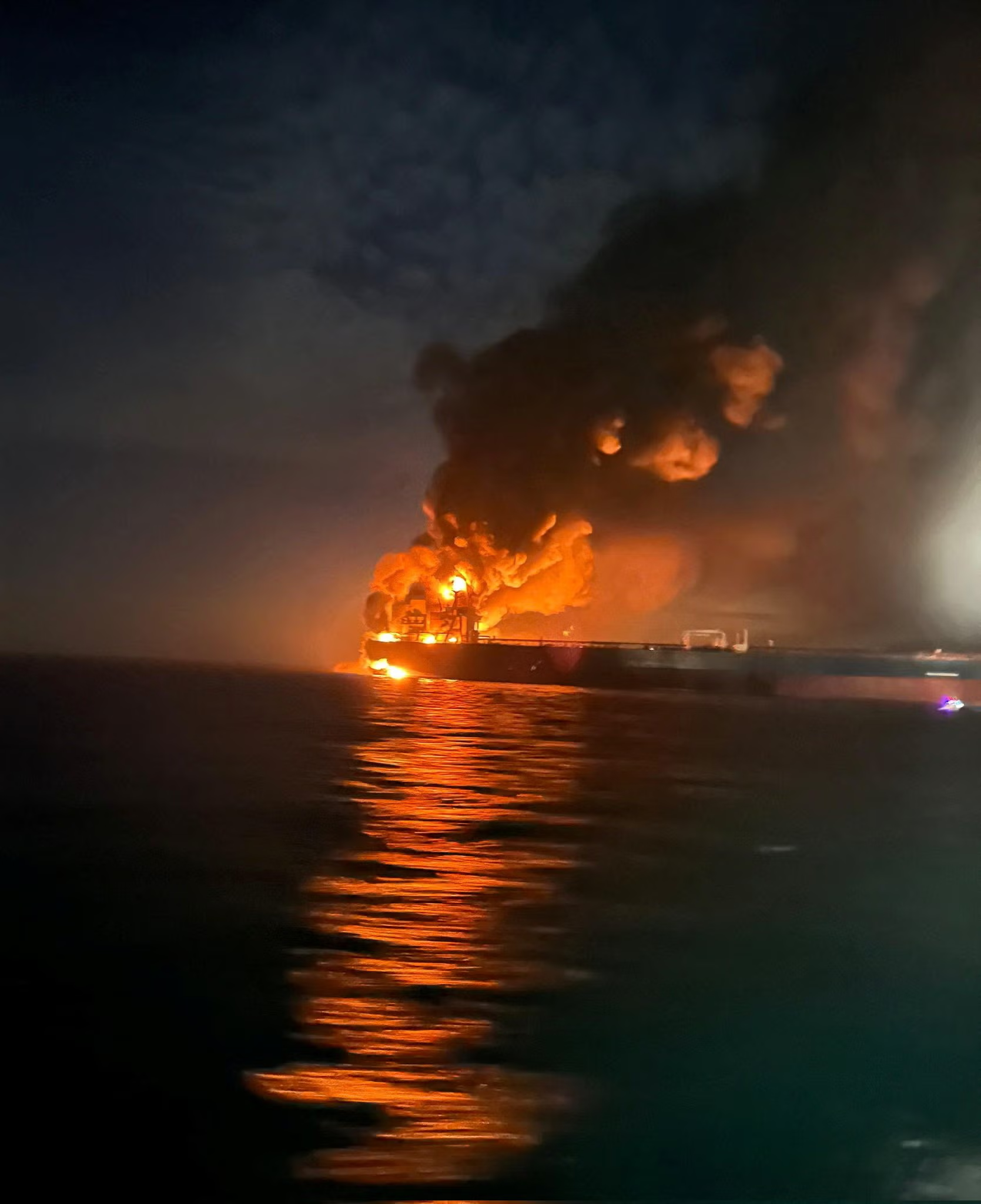 >
>
Yet, even amidst these seemingly positive pronouncements, the specter of continued violence looms large. Reports detail Russian drone and missile attacks, resulting in casualties and infrastructure damage. Ukraine, for its part, is actively targeting Russian assets, demonstrated by the naval drone strikes on tankers in the Black Sea. This tit-for-tat escalation underscores the immense difficulties in achieving a lasting ceasefire, never mind a comprehensive peace.
One intriguing, though slightly unsettling, detail is the revelation that the US peace plan supposedly “drew heavily” from a Russian-authored plan. This raises questions about the impartiality of the negotiation process and the extent to which Ukrainian interests are truly being prioritized. It’s a pattern I’ve observed before: powerful nations pushing for solutions that, while perhaps expedient, don’t fully address the core concerns of the weaker party.
Another potential sticking point lies in Trump’s mention of “difficult little problems” related to corruption in Ukraine. While tackling corruption is undoubtedly vital for long-term stability, weaponizing such allegations in the midst of peace negotiations could easily derail the process and undermine trust. This is classic negotiating behavior – introduce a side issue to gain leverage.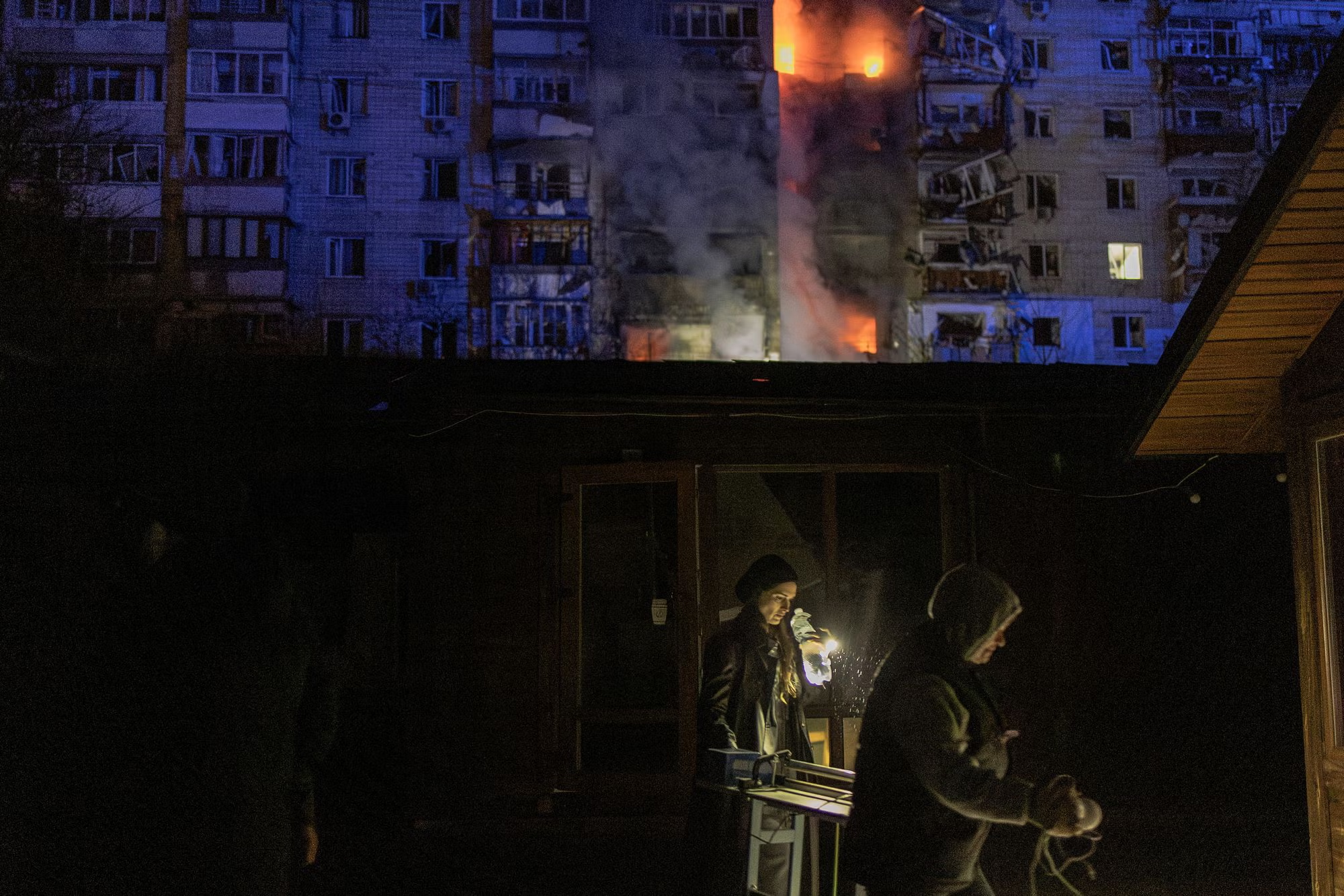 >
>
It’s worth noting Ukraine’s recent aggressive actions in the Black Sea. These attacks on Russia’s “shadow fleet” demonstrate a willingness to disrupt Russia’s economic lifeline, even at the risk of escalating the conflict. Turkey’s condemnation of these actions underscores the geopolitical complexities at play. The Black Sea is a crucial artery, and any disruption there sends ripples throughout the region.
Adding to the complexity, Zelensky’s first official visit to Ireland is slated for Monday. This trip, alongside the launch of the Ireland-Ukraine Economic Forum, emphasizes the ongoing efforts to solidify international support and forge stronger economic ties. It also serves as a potent reminder that Ukraine is actively seeking integration with the West, a key factor driving Russia’s initial aggression.
Still, some things simply do not add up. The flurry of diplomatic activity, while appearing promising, could simply be a smokescreen. The devil, as always, resides in the details of any proposed peace agreement. Who concedes what territory? What security guarantees are offered? What role will international actors play in enforcing the terms?
Given these facts, the road to peace remains fraught with peril. The interests of Russia, Ukraine, the United States, and Europe do not perfectly align, and each party likely has red lines that it will not cross. Whether these differences can be bridged through negotiation remains to be seen.
The use of sea drones by Ukraine is a critical development. It signifies an adaptation to the realities of the war. Ukraine, lacking a traditional navy to challenge Russia’s Black Sea dominance, innovates with unmanned systems. These drones target not only military assets but also the economic infrastructure sustaining Russia’s war effort, showing a calculated approach to disrupting the flow of resources. This, however, carries the danger of further escalation, pulling in other regional actors and broadening the conflict.
It’s important to remember that war is a complex interplay of military, economic, and political forces. Military offensives influence diplomatic negotiations, and economic pressures can reshape political calculations. In this context, Ukraine’s attacks on Russian tankers and port facilities in the Black Sea are not just isolated acts of aggression; they are strategic moves designed to improve their negotiating position.
The “shadow fleet” of tankers targeted by Ukraine is a key element in Russia’s ability to circumvent Western sanctions and sell its oil on the global market. By attacking these tankers, Ukraine directly challenges Russia’s financial capacity to wage war. The damage inflicted on these vessels disrupts the supply chain, raising shipping costs and reducing Russia’s profits from oil sales.
The strikes send a message, not only to Russia but also to other countries and companies involved in facilitating these shipments: there are risks to doing business with Russia in defiance of international sanctions. It is a tactic with the potential to force Russia to the negotiating table on less advantageous terms.
However, this strategy is not without risk. Russia could retaliate by intensifying its attacks on Ukrainian infrastructure, or by taking more aggressive action against ships operating in the Black Sea. This is where the role of international diplomacy becomes critical.
The involvement of the United States, particularly the Trump administration, adds another layer of complexity. Trump’s focus on brokering a deal, even if it means compromising on some of Ukraine’s demands, reflects his broader foreign policy priorities. A deal would certainly provide him with a political victory and allow him to claim credit for ending the conflict.
But a peace deal imposed on Ukraine, particularly one that fails to address its core security concerns, could lead to long-term instability and resentment. It’s a high-stakes gamble.
Ultimately, the success of any peace initiative will depend on the willingness of all parties to compromise and to prioritize de-escalation over maximalist demands. Whether that willingness exists is a question that will be answered in the coming weeks and months. For now, vigilance and a clear-eyed assessment of the situation are essential.


![[post_title]](https://samony.com.ng/wp-content/uploads/2025/12/Ukraine-Russia-war-live-Zelensky-hails-Trumps-efforts-to-end-war-300x200.avif?lm=692D2103 "Ukraine-Russia war live: Zelensky hails Trump’s efforts to end war and ‘preliminary results’ in Florida peace talks")
![[post_title]](https://samony.com.ng/wp-content/uploads/2025/12/1764563741_Do2dtun-accuses-US-embassy-of-enabling-ex-wife-to-relocate-kids-300x200.jpg?lm=692D1B20 "Dotun Accuses US Embassy of Child Relocation: Custody Fight Erupts")


![[post_title]](https://samony.com.ng/wp-content/uploads/2025/12/1764561601_Bandits-abduct-pastor-wife-parishioners-in-Kogi-300x124.jpg?lm=692D12C3 "Nigeria’s Banditry Crisis: From Reactive Measures to Root Cause Solutions")

![[post_title]](https://samony.com.ng/wp-content/uploads/2025/12/1764563342_Trump-insists-MRI-results-were-perfect-but-has-no-1024x538.jpg?lm=692D1990 "Decoding Political Health: From MRI Scans to Leadership Authenticity")
![[post_title]](https://samony.com.ng/wp-content/uploads/2025/12/1764564856_Glam-boxer-Ebonie-Cotton-suffers-awkward-wardrobe-malfunction-rival-cant-1024x538.jpg?lm=692D1F79 "Boxing’s New Equation: Talent Plus Narrative Equals Relevance")
