

Ukraine’s Drone Strikes on Russian “Shadow Fleet”: A Critical Look
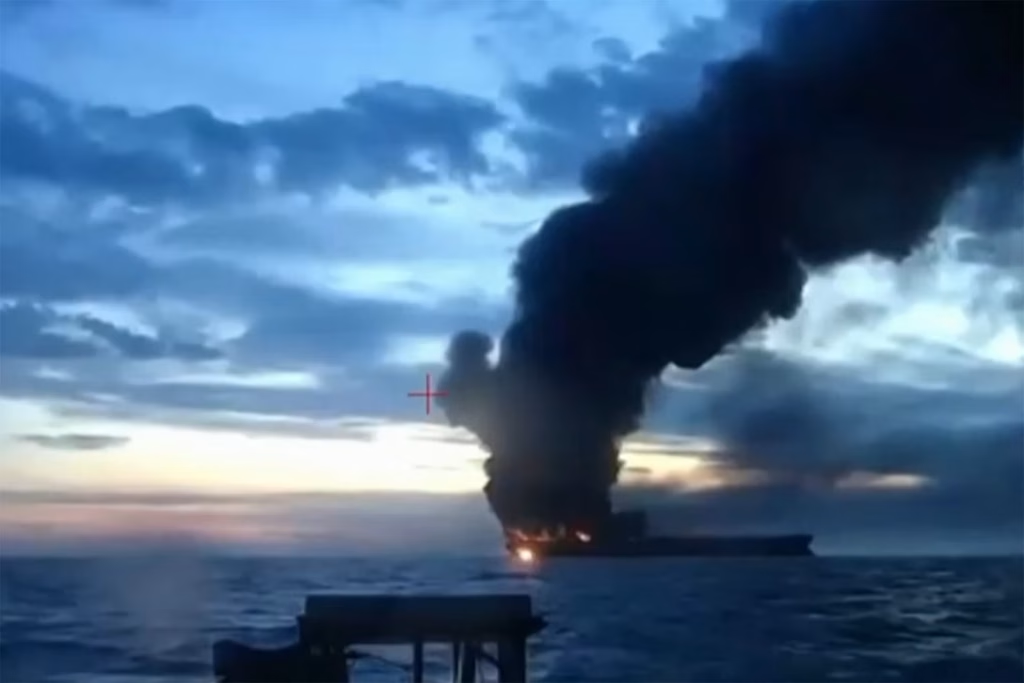
Reports surfaced recently that Ukraine used its Sea Baby drones to target Russian oil tankers, the Kairos and Virat, in the Black Sea. These vessels are allegedly part of Russia’s “shadow fleet,” designed to sidestep international sanctions. Details are still emerging, but the implications of this development are significant.
The attacks, occurring off the Turkish coast, prompted immediate rescue efforts. Thankfully, initial reports suggest all crew members are safe. A Ukrainian security services official, choosing to remain anonymous, even shared video footage apparently showing the tankers’ destruction. According to this source, these tankers were specifically targeted to undermine Russia’s ability to fund its war efforts, allegedly disabling vessels capable of transporting nearly $70 million worth of oil.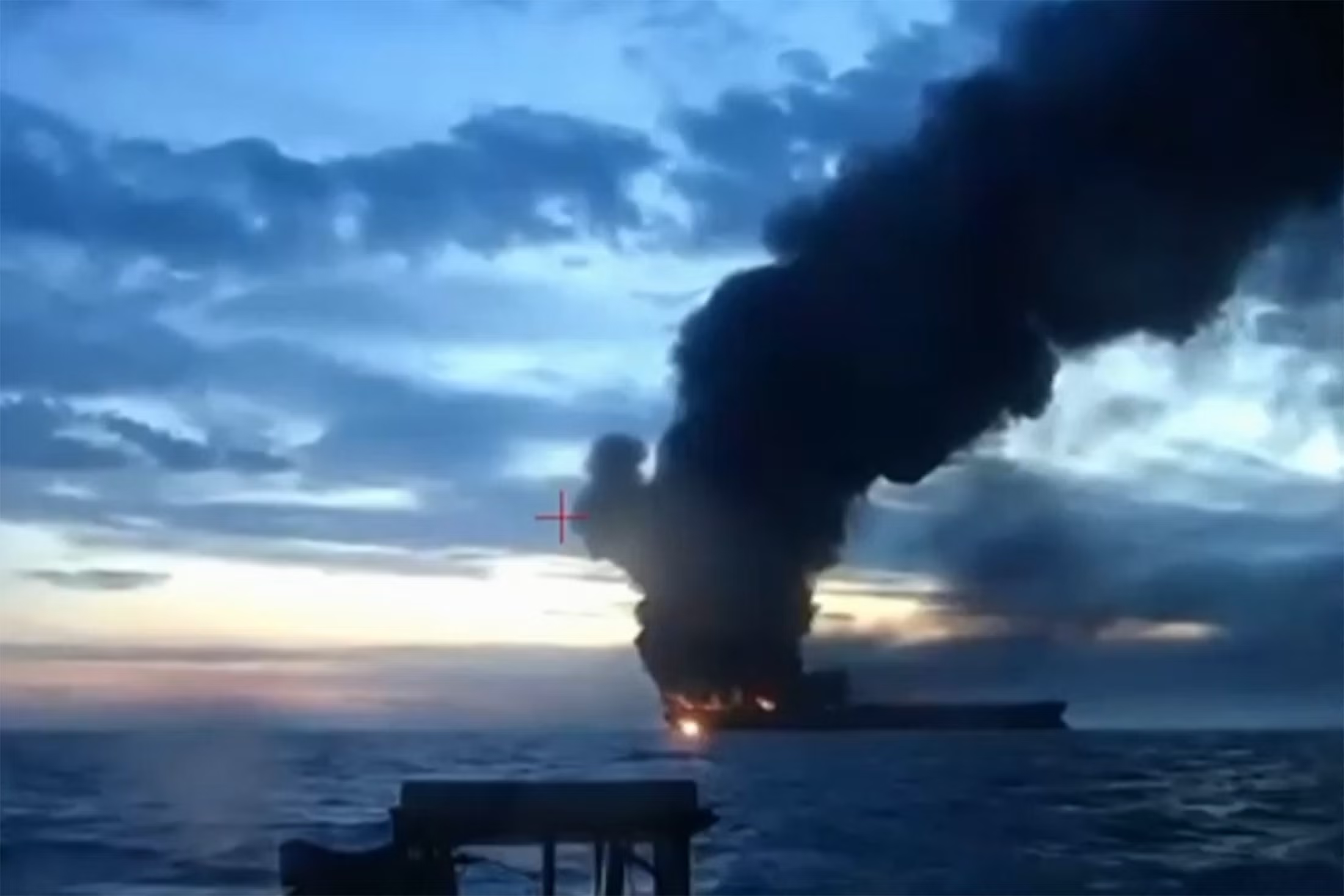 >
>
Now, it’s worth noting that Turkey’s Transport Minister initially floated the possibility of mines, missiles, or even another vessel as the cause of the incidents. He emphasized that the events occurred within Turkey’s exclusive economic zone. This highlights the delicate geopolitical situation and the need for careful investigation.
News reports indicate the Kairos, sailing from Egypt, caught fire and the 25 crew members evacuated. The Virat, while not ablaze, reportedly issued a distress call citing a “drone attack”.
This isn’t the first time Ukraine has struck at Russian shipping. They’ve had considerable success with marine drones. What makes this incident stand out is its location – further south in the Black Sea than previous operations.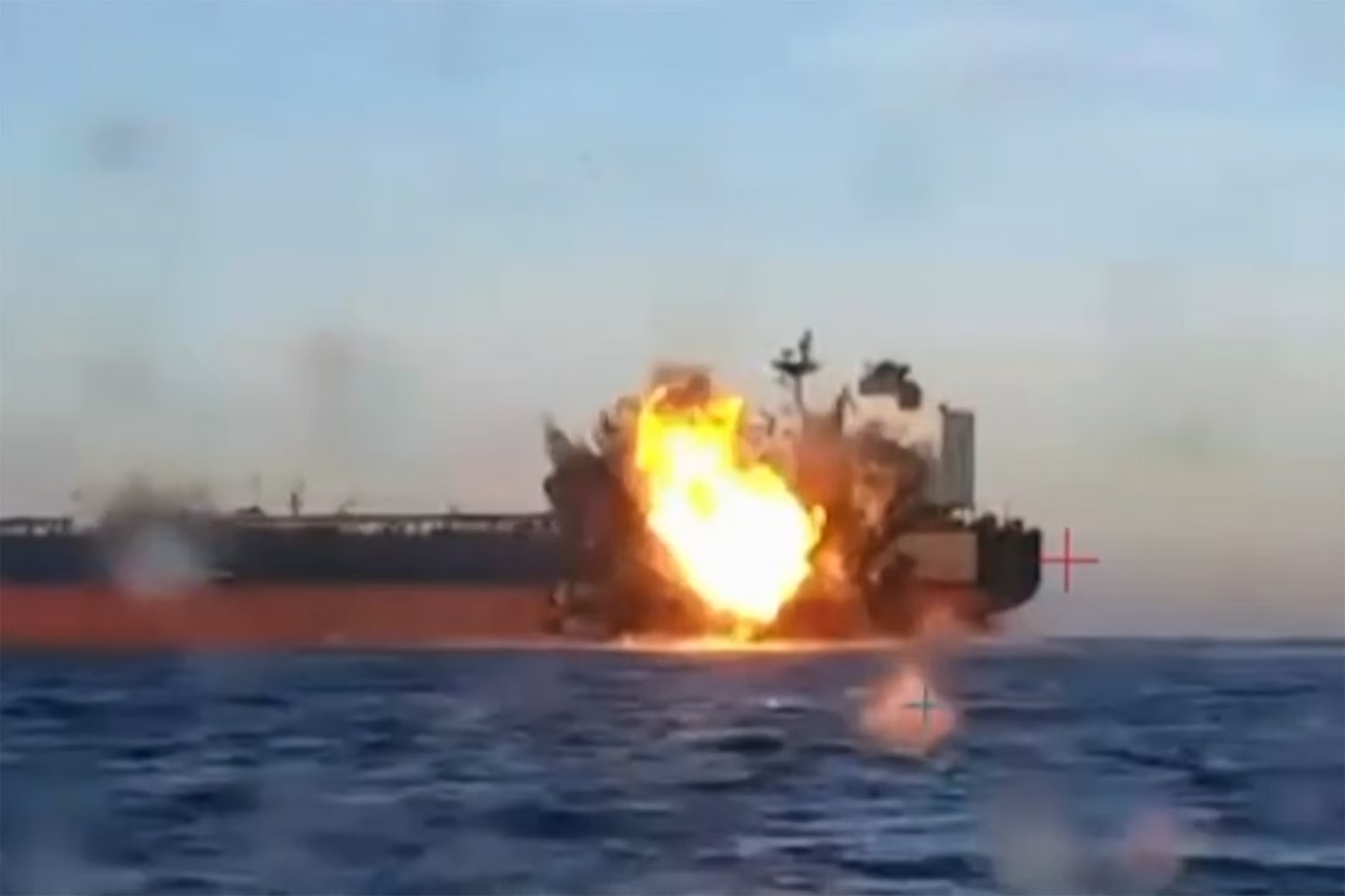 >
>
Database records reveal the tankers are indeed linked to sanctions evasion. Described as elements of a “shadow fleet,” they help Russia maintain revenue streams despite international pressure.
Looking closer, the Kairos, flagged in Gambia, was sanctioned by the EU, UK, and Switzerland. The Virat, sanctioned by the US, EU, Switzerland, UK, and Canada, is said to employ “irregular and high-risk shipping practices.” This certainly paints a picture of vessels operating outside established norms.
The bigger picture here isn’t just about two damaged tankers. It’s about the ongoing evolution of warfare and sanctions. Ukraine is adapting, using innovative technology to strike at Russia’s economic lifeline. For it to be effective requires the need to curtail Russia’s financial capabilities. This challenge could change the conflict’s dynamics.
The Independent report noted OpenSanctions’ claim that the “shadow tanker fleet continues to provide multibillion-dollar revenues for the Kremlin bypassing sanctions, disguising its activities under the flags of third countries, using complex schemes to conceal owners and poses significant environmental threats,” This complicates the idea of simply targeting Russian assets. It creates a murky world of shell companies, flags of convenience, and obscured ownership. Untangling it requires a global effort and a willingness to confront those facilitating sanctions evasion.
From my experience, these kinds of situations are rarely straightforward. We should remember that it is important to verify everything. Information emerges in phases, and initial reports can be misleading.
Still, if these reports are accurate, and Ukraine is successfully disrupting Russia’s “shadow fleet,” it marks a significant escalation. It raises questions about the future of maritime security in the Black Sea, the effectiveness of current sanctions, and the potential for further escalation.
Given these facts, expect increased scrutiny of shipping in the region. Insurance rates will likely rise, and companies may become more hesitant to deal with vessels suspected of sanctions evasion.
One potential consequence is that Russia could become even more reliant on alternative routes and methods to export its oil. This could involve higher costs, greater risks, and potentially, new alliances.
To that end, this incident serves as a stark reminder: the conflict in Ukraine is constantly changing, and its ripple effects extend far beyond the battlefield. The use of drones, the targeting of economic assets, and the complex web of sanctions evasion all point to a new era of warfare, where economic pressure and technological innovation play critical roles. We must carefully watch these developments to grasp the full impact.
Ultimately, this is not just a military or economic story. It is a human one. It affects the lives of people in Ukraine, Russia, and across the globe. Let’s hope that cool heads prevail, and a path to de-escalation can be found.

![[post_title]](https://samony.com.ng/wp-content/uploads/2025/11/Solskjaer-Reveals-Which-Surprising-English-Club-He-Nearly-Joined-Before-300x169.jpeg?lm=692B2500 "Solskjaer to Wolves?! The Transfer That Almost Changed Football.")
![[post_title]](https://samony.com.ng/wp-content/uploads/2025/11/Naira-ends-week-with-N710-gain-as-FPI-inflows-hit-300x171.png?lm=692B2110 "Is Nigeria’s Economy Finally Turning a Corner? A Reality Check on the Naira’s Rise")

![[post_title]](https://samony.com.ng/wp-content/uploads/2025/11/1764433510_Ecobank-Nigeria-launches-tender-offer-for-outstanding-2026-Eurobond-300x171.png?lm=692B1E67 "Ecobank Nigeria’s Eurobond Buyback: Strategic Move or Economic Signal?")
![[post_title]](https://samony.com.ng/wp-content/uploads/2025/11/1764433871_Moves-to-Manage-the-Soaring-Costs-of-Owning-a-Car-300x200.jpg?lm=692B1FD0 "Rising Car Costs: Smart Strategies for Owners to Save Money")

![[post_title]](https://samony.com.ng/wp-content/uploads/2025/11/Los-once-elegidos-por-Julian-Calero-para-enfrentarse-al-Athletic-1024x576.jpg?lm=692B23ED "Cutting Through the Noise: Real-World Takes on Industry’s Evolving Landscape")
![[post_title]](https://samony.com.ng/wp-content/uploads/2025/11/Solskjaer-Reveals-Which-Surprising-English-Club-He-Nearly-Joined-Before.jpeg?lm=692B24FF "Solskjaer to Wolves?! The Transfer That Almost Changed Football.")
