

![[post_title]](https://samony.com.ng/wp-content/uploads/2025/11/UK-will-not-tolerate-Chinese-spying-minister-says-after-MI5.jpg?lm=691D3E97)
UK Government Sounds Alarm Over Chinese Espionage: A Necessary Wake-Up Call?
The UK is ratcheting up its defenses against suspected Chinese spying. MI5 recently alerted Parliament to recruitment attempts via LinkedIn, prompting swift condemnation from Security Minister Dan Jarvis. He asserted the government’s intent to safeguard the nation’s affairs against “covert and calculated” interference. But is this just the tip of the iceberg?
The alleged tactics—fake LinkedIn profiles, offers of paid trips, and even cryptocurrency payments for information—mirror familiar patterns in the world of intelligence. These schemes target not just MPs, but also think tank employees, economists, and even parliamentary staff – those who might possess seemingly insignificant, yet potentially valuable, pieces of information. It’s a long game, aiming to cultivate relationships for future exploitation.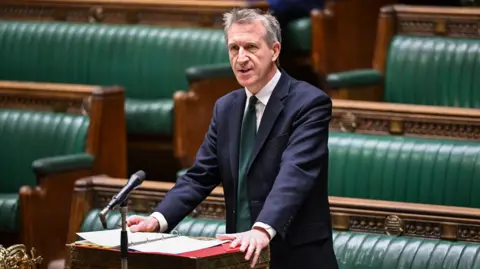 >
>
China’s embassy, naturally, decries the accusations as a “fabrication.” Yet, denials alone rarely tell the full story. The UK government plans a £170m investment in encrypted tech plus greater protection for UK universities. These measures should better secure sensitive data, but the effectiveness hinges on consistent implementation and vigilance.
It’s worth noting that this isn’t the first brush with alleged Chinese espionage. The 2022 MI5 warning regarding Christina Lee comes to mind. Past experience reveals that the Chinese state is believed to be collecting massive data sets on the UK population, including financial and health information. This suggests a broad approach to intelligence gathering.
There’s an argument to be made for adding China to the enhanced tier of the Foreign Influence Registration Scheme (FIRS), alongside Iran and Russia. Some officials are urging caution, perhaps mindful of the UK’s significant trade relationship with China. It’s a delicate balancing act: safeguarding national security without crippling economic ties. >
>
Still, as Sir Iain Duncan Smith points out, the government’s willingness to explicitly name China as a threat remains a sticking point. Maybe that’s because all countries, to some degree, engage in espionage. Perhaps, this situation simply reflects a shift in the global power dynamic that requires a bolder, more direct response. It appears the UK is trying to navigate that line. Only time will reveal if these new efforts will truly fortify against Chinese intelligence operations, or if this is merely a prelude to a more significant confrontation.

![[post_title]](https://samony.com.ng/wp-content/uploads/2025/12/Guardiola-sets-record-as-he-hits-150-Premier-League-wins-300x169.jpg?lm=69408B4C "Pep Guardiola Achieves New Premier League High-Scoring Victory Milestone")




![[post_title]](https://samony.com.ng/wp-content/uploads/2025/12/1765838036_Grimes-claims-ex-Elon-Musk-blocked-her-on-X-amid.jpeg?lm=69408CD4 "Grimes Alleges Elon Musk X Block in Ongoing Co-Parenting Privacy Saga")

![[post_title]](https://samony.com.ng/wp-content/uploads/2025/12/Guardiola-sets-record-as-he-hits-150-Premier-League-wins-1024x576.jpg?lm=69408B4C "Pep Guardiola Achieves New Premier League High-Scoring Victory Milestone")
