

![[post_title]](https://samony.com.ng/wp-content/uploads/2025/12/1765589770_TSA-is-providing-airline-passenger-data-to-ICE-to-aid.jpg?lm=693CC30A)
Reports indicate the Transportation Security Administration (TSA) is providing comprehensive airline passenger data to Immigration and Customs Enforcement (ICE) multiple times weekly, a move designed to bolster the Trump administration’s intensified deportation campaign. This revelation, first reported by The New York Times, suggests a significant expansion of inter-agency data sharing aimed at identifying and apprehending individuals for immigration enforcement. The program’s existence has been confirmed by the Department of Homeland Security (DHS), the parent agency for both the TSA and ICE, highlighting a deliberate strategy to leverage travel information.
The data exchange forms a critical component of President Trump’s broader initiative to carry out an unprecedented mass deportation drive across the United States. Officials familiar with the process suggest that individuals flagged through this data-sharing mechanism, when cross-referenced with ICE databases, exhibit a high rate of subsequent arrest and deportation. This systematic use of travel records marks a notable shift in how federal agencies collaborate on immigration matters, transforming routine security data into a tool for enforcement.
One documented instance illustrating the program’s impact involved Any Lucía López Belloza, a 19-year-old Honduran national. She was reportedly arrested at Boston Logan Airport last month and subsequently deported to her home country, which she had not visited since childhood. Her case, uncovered by The New York Times, exemplifies the direct consequences for individuals whose travel data is utilized in this manner, underscoring the operational reach of the new enforcement strategy.
The Department of Homeland Security has openly defended the data-sharing efforts, stating they are “nothing new” and part of a policy reversal from the previous administration. A DHS spokesperson confirmed that Secretary Noem’s actions rescinded a “horrendous Biden-era policy” that allegedly permitted “aliens in our country illegally to jet around our country and do so without identification.” The spokesperson further elaborated that under President Trump, “TSA and DHS will no longer tolerate this,” asserting that undocumented individuals “can no longer fly unless it is out of our country to self-deport.”
This policy represents a firm stance by the Trump administration on domestic air travel for individuals without legal status, effectively turning airports into potential choke points for immigration enforcement. The administration frames this as a necessary measure to uphold immigration laws and secure national borders, signaling a zero-tolerance approach to undocumented presence within the country. Critics, however, raise concerns about privacy implications and the potential for racial profiling.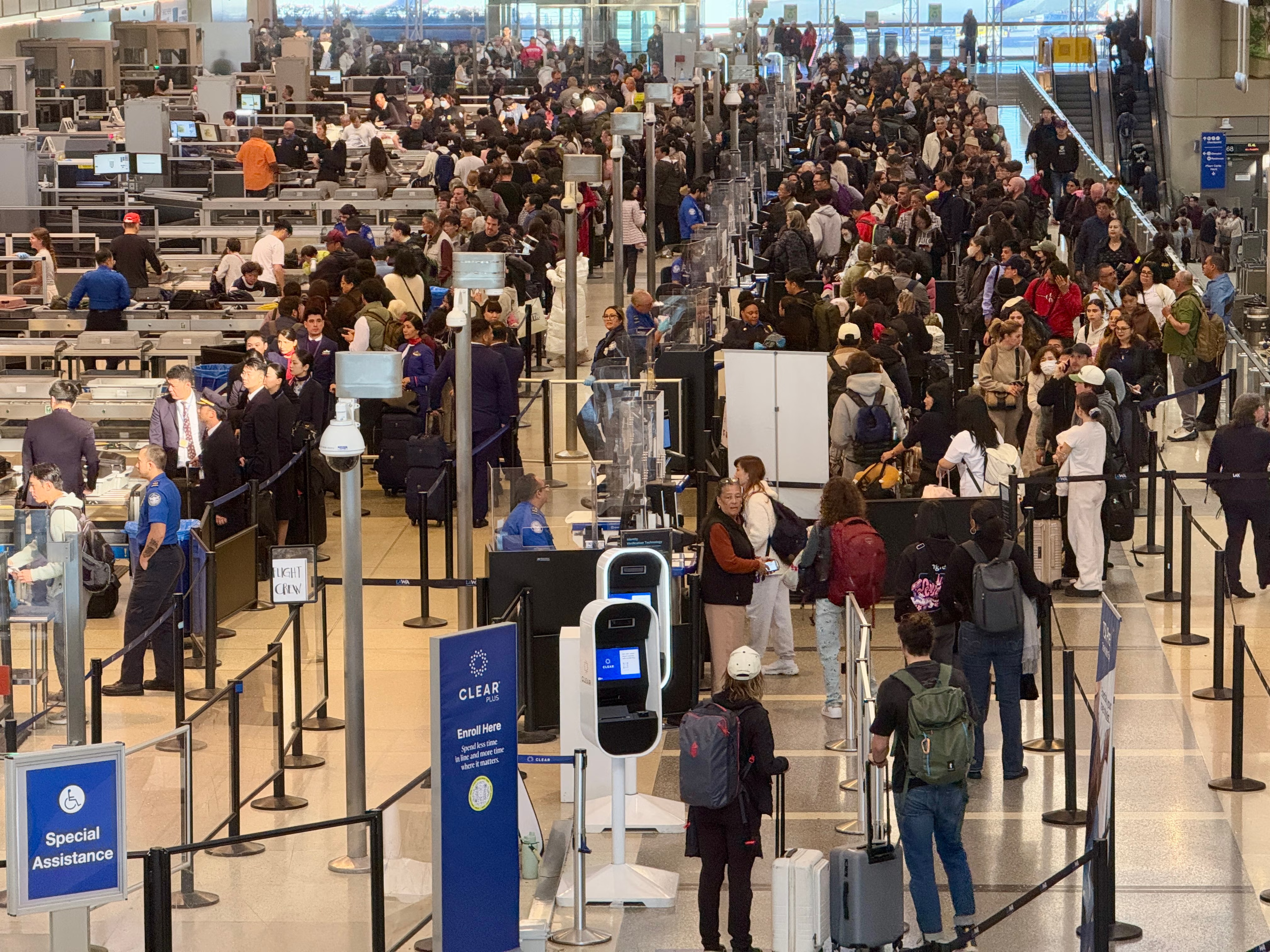
Beyond airline passenger data, the White House has reportedly broadened its use of federal information as a key weapon in its immigration campaign. The Department of Homeland Security now possesses access to personal data on nearly every American, a vast repository that can be mined for various enforcement purposes. This extensive data access allows for comprehensive tracking and identification, pushing the boundaries of government surveillance in the name of immigration control.
Further expanding its data-driven enforcement, the administration has reportedly threatened to withhold Supplemental Nutrition Assistance Program (SNAP) food benefits from primarily Democrat-run states if they fail to provide immigration data on recipients. This tactic extends the reach of immigration enforcement into social welfare programs, creating significant pressure on state governments. Such strategies indicate a willingness to leverage diverse federal resources to achieve immigration targets.
Additionally, reports suggest the White House has sought to access and utilize tax and Veterans Affairs data as part of its ongoing immigration initiatives. This pursuit of data from multiple federal agencies underscores a coordinated, multi-faceted approach to identify, locate, and process individuals for deportation. The strategy aims to create an inescapable web of information, making it increasingly difficult for undocumented individuals to reside or travel within the U.S. undetected.
The aggressive stance is also evidenced by the administration’s ambitious, though so far unmet, target of 3,000 immigration arrests per day. This daily quota reflects President Trump’s campaign promises to swiftly deport millions of people, positioning immigration enforcement as a top priority. The pressure on immigration agents to meet these targets is immense, driving the search for new methods and data streams to facilitate arrests.
In a related incident that highlights the heightened scrutiny at U.S. airports, Sami Hamdi, a U.K.-based political commentator and prominent pro-Palestinian activist, was detained by ICE for over two weeks at San Francisco International Airport last fall. Hamdi’s family reported he was held in poor conditions before voluntarily returning to London without a formal deportation order. While it remains unclear if the TSA data-sharing program directly led to his detention, his case illustrates the broader climate of intensified immigration checks at ports of entry.
Hamdi alleges his detention was politically motivated, claiming he was targeted for his views. This raises questions about the scope and potential misuse of immigration enforcement powers, especially when combined with extensive data access. The incident underscores concerns among civil liberties advocates regarding the implications of expanded data sharing for privacy and freedom of expression.
The systematic sharing of airline passenger data by the TSA with ICE, alongside the broader utilization of federal databases, marks a significant escalation in the Trump administration’s efforts to enforce immigration laws. It signals a strategic shift towards a data-driven approach to mass deportations, with profound implications for both undocumented individuals and the broader public’s privacy expectations.






