


Former President Donald Trump’s extensive alterations to the White House and controversial attempts to rename federal institutions and public landmarks have recently become a subject of public commentary, including critical observations from prominent comedians. These actions, ranging from significant redecorations of the Oval Office to the proposed renaming of the Kennedy Center, have sparked debate regarding executive authority, historical preservation, and the politicization of national symbols.
Comedians Joe Rogan and Tom Segura addressed these developments during a recent podcast episode, focusing particularly on what they described as increasingly “crazy” and “insane” efforts to reshape Washington’s iconic sites. Their discussion highlighted the proposed renaming of the John F. Kennedy Center for the Performing Arts to include Trump’s name, a move that has drawn considerable attention and raised questions about the appropriate recognition of presidential legacies.
The podcast delved into the installation of highly partisan plaques as part of a new “Presidential Walk of Fame” at the White House. These plaques reportedly contained critical remarks about past Democratic presidents and notably featured an automatic pen rather than a portrait of current President Joe Biden. Rogan expressed dismay at the nature of these additions, arguing that the White House should function more as a neutral historical museum.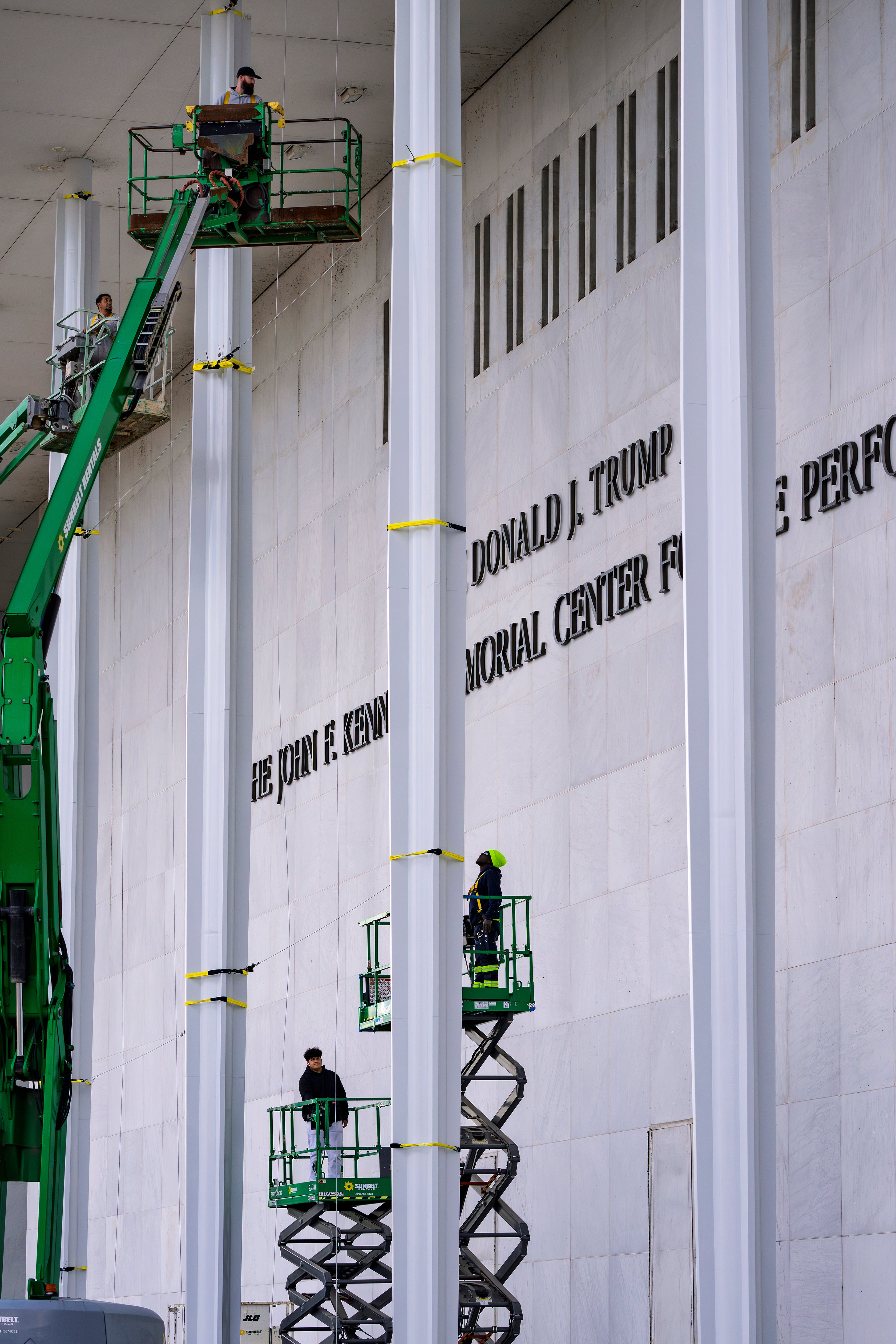
Rogan suggested that the Trump administration appeared to lack internal mechanisms for vetting or curtailing the former president’s more unconventional ideas. He posited that a robust advisory structure was necessary to temper such impulses, implying a perceived absence of checks and balances within the decision-making process for these symbolic changes to federal property and nomenclature.
Segura, commenting on the broader pattern of these actions, speculated that Trump’s age might be contributing to a perceived decline in his judgment. Rogan echoed this sentiment, suggesting that such mental shifts are not uncommon at advanced ages. This commentary reflects a common public discourse surrounding the mental acuity of political figures, particularly those in high office.
Beyond the specific instances highlighted by the comedians, the Trump administration demonstrated a consistent focus on redecorating and renaming. This included extensive gold-trim additions to the Oval Office and other prominent areas of the White House, alongside the demolition of sections of the East Wing to construct a new ballroom, signifying a deliberate effort to imprint a distinct aesthetic on the presidential residence.
The administration’s zeal for renaming extended to federal departments, often without clear legal authority. For instance, the White House reportedly insisted on referring to the Pentagon as the Department of War and issued an executive order to that effect. However, established legal precedent dictates that an act of Congress is required to officially rename a federal department, raising questions about the executive branch’s scope of power.
Another significant initiative was the introduction of a “Trump gold card” immigration program, designed to grant permanent residency to individuals willing to pay the government $1 million. Critics quickly argued that the former president lacked the unilateral authority to implement such a profound change to immigration law, a domain typically reserved for legislative action through Congress.
Further examples of renaming efforts included the State Department’s Institute of Peace, which was reportedly renamed the Donald J. Trump Institute of Peace. Allies of the former president have also reportedly advocated for his name to be featured on other high-profile public assets, such as the new Washington Commanders NFL stadium, Washington Dulles International Airport, and even a proposed $1 coin.
These collective actions underscore a broader pattern during the Trump presidency of asserting executive will over established protocols for naming, historical representation, and the use of federal property. The commentary from public figures like Rogan and Segura, while humorous, reflects a wider public and media fascination with the implications of these changes on national institutions and the balance of governmental powers.






