


The political landscape surrounding former US President Donald Trump and his “Make America Great Again” (MAGA) movement is exhibiting signs of internal division and an evolving struggle for future leadership, even as Trump remains a dominant force. Recent local election setbacks for the Republican Party and public remarks from within Trump’s circle suggest emerging fractures, prompting questions about the movement’s long-term cohesion and its direction beyond his direct influence.
Just weeks ago, President Trump reportedly speculated during a White House cabinet meeting that the next Republican presidential candidate in 2028 would likely be someone currently serving in his administration, explicitly stating it would “not be me.” This unexpected pronouncement, despite chants of “four more years” from supporters, underscores a growing awareness within the party of the need to consider a post-Trump future, even if his immediate political presence remains central.
These nascent divisions are manifesting in various forms. The Republican Party experienced a decline in support among minority and working-class voters in recent local elections, a demographic crucial to Trump’s 2024 victory. High-profile figures, such as Congresswoman Marjorie Taylor Greene, have publicly distanced themselves from some of Trump’s policies, accusing him of losing touch with the concerns of ordinary Americans, particularly on issues like cost-of-living and healthcare.
Observers suggest that the challenge of maintaining the broad coalition that propelled Trump to power is becoming increasingly complex. Potential successors, including Vice-President JD Vance, Secretary of State Marco Rubio, Secretary Robert F Kennedy Jr., and Homeland Security Secretary Kristi Noem, represent diverse ideological strands within the MAGA framework. Each, if they chose to run, would face the formidable task of uniting these disparate factions under a singular vision.
The Republican Party has undergone a fundamental transformation under Trump’s leadership, moving away from the “Reagan coalition” of free-market economics and international foreign affairs. Instead, its core principles, as articulated by long-time adviser Michael Anton, now emphasize “secure borders, economic nationalism and America-first foreign policy,” reflecting a significant ideological shift that presents both opportunities and challenges for future leaders.
Further insight into the evolving Republican base comes from a recent Manhattan Institute survey, which categorizes voters into “core Republicans” (65%) and “new entrant Republicans” (29%). The latter group, characterized as younger and more diverse, often holds views that diverge from traditional conservative orthodoxy, exhibiting more left-leaning stances on economic policy, and generally more liberal views on immigration and social issues.
Critically, the survey revealed that more than half of these “new entrant” Republicans believe political violence “is sometimes justified,” a stark contrast to just 20% of “core Republicans.” This segment also showed a higher propensity for conspiratorial thinking and less positive views of potential Trump heirs like Rubio and Vance, highlighting a deep ideological chasm that future Republican leaders must navigate.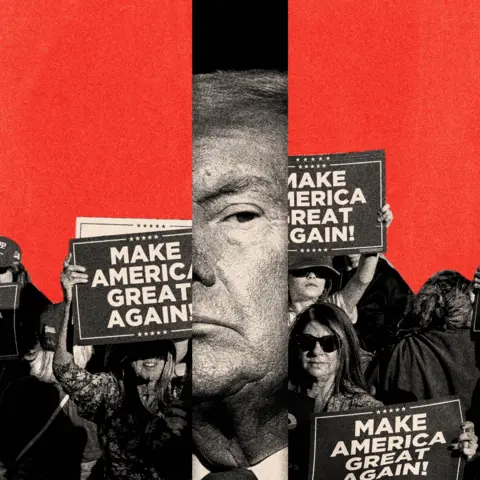
These findings help explain several high-profile internal clashes. The feud between Trump and Congresswoman Greene, for instance, escalated from disagreements over the release of Jeffrey Epstein files to broader critiques of Trump’s Middle East policy and domestic priorities. Similarly, billionaire Elon Musk, an early Trump supporter, has publicly criticized certain administration economic policies, including tariffs and government spending.
Another contentious issue involves the debate over the inclusion of far-right commentator Nick Fuentes, a Holocaust denier, within the conservative movement. This dispute has roiled influential conservative organizations and pitted prominent right-wing figures against each other, demonstrating the internal struggle for the movement’s ideological boundaries and mainstream acceptance.
Beyond internal feuds, the Republican Party has faced recent electoral struggles. Democrats secured comfortable victories in governorship races in Virginia and New Jersey, and in numerous special elections for state and local seats over the past year, Democrats have, on average, improved their margins significantly compared to national elections. These results raise concerns about the coalition’s ability to consistently deliver ballot-box victories without Trump at the top of the ticket.
Despite these immediate challenges, the broader phenomenon of “Trumpism” appears to be a foundational and enduring shift within American politics. Political analysts, such as Laura K. Field, author of Furious Minds: The Making of the Maga New Right, contend that this movement builds upon long-standing populist currents in the US, dating back decades to figures like Barry Goldwater and the Tea Party protests.
This perspective suggests that the changes wrought by Trump are deeply ingrained, rather than transient. The “old Republican order,” Field argues, is now largely a relic of the past, with little likelihood of regaining its former influence. Future Republican leaders, therefore, will not only contend with internal ideological divides but also inherit a transformed party whose identity is inextricably linked to the populist and nationalist tenets of the MAGA movement.

![[post_title]](https://samony.com.ng/wp-content/uploads/2025/12/Guardiola-sets-record-as-he-hits-150-Premier-League-wins-300x169.jpg?lm=69408B4C "Pep Guardiola Achieves New Premier League High-Scoring Victory Milestone")




![[post_title]](https://samony.com.ng/wp-content/uploads/2025/12/1765838036_Grimes-claims-ex-Elon-Musk-blocked-her-on-X-amid.jpeg?lm=69408CD4 "Grimes Alleges Elon Musk X Block in Ongoing Co-Parenting Privacy Saga")
![[post_title]](https://samony.com.ng/wp-content/uploads/2025/12/Guardiola-sets-record-as-he-hits-150-Premier-League-wins-1024x576.jpg?lm=69408B4C "Pep Guardiola Achieves New Premier League High-Scoring Victory Milestone")
