

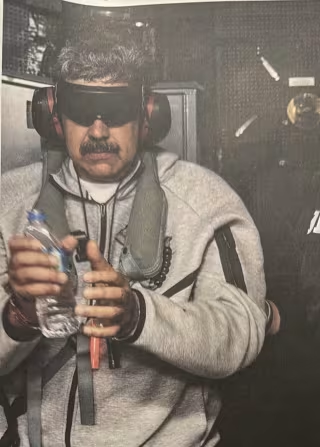
The recent dramatic events in Venezuela, culminating in the capture of President Nicolas Maduro, have brought the focus squarely on Trump Venezuela policy explained and its far-reaching implications. Following an extraordinary overnight attack by US forces, former President Donald Trump declared that the United States would oversee Venezuela’s operations until a peaceful transition could be established. This aggressive stance marks a significant escalation in US foreign policy towards the oil-rich South American nation, sparking both global condemnation and cautious optimism among some opposition factions. The move raises critical questions about sovereignty, international law, and the immediate future of Venezuela’s governance and economy.
The answer is multifaceted, but primarily, the US is intervening in Venezuela to secure its oil infrastructure and facilitate a transition from the Maduro regime, which it does not recognize. Donald Trump explicitly stated the US would “run the country” until a “safe, proper and judicious transition” could be established, citing national security and economic interests and asserting the American presence was already in place.
Why is US intervening in Venezuela with such a direct and forceful approach? Trump’s administration has long pursued a strategy of maximum pressure against Maduro, culminating in this unprecedented military operation. The capture of Maduro and his wife, Cilia Flores, who now face “narco-terrorism” charges in New York, signifies a decisive shift. The US president justified the action as a warning against threats to American sovereignty and a necessary step to curb drug flow, highlighting months of escalating pressure including naval deployments and anti-drug operations in the Caribbean.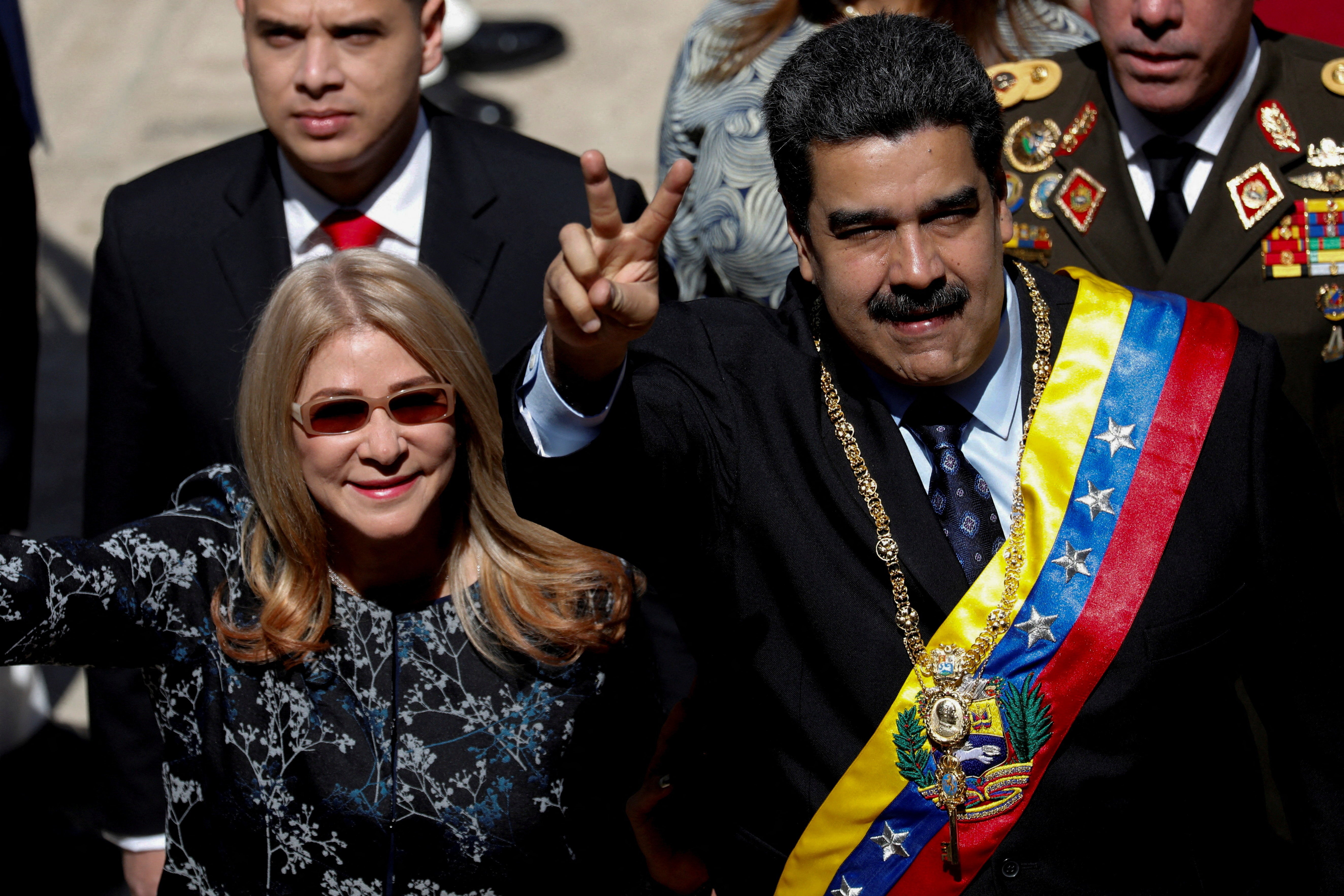
The overnight attack saw explosions and low-flying aircraft across Venezuela, with the government condemning it as an “imperialist attack” on civilian and military sites. Trump, speaking from Mar-a-Lago, boasted of an “extremely successful operation” and warned of further attacks if deemed necessary. He made it clear that US oil companies would be deployed to rebuild the country’s “badly broken” oil infrastructure, aiming to generate revenue for Venezuela under American oversight.
The legal basis for this audacious intervention remains unclear, drawing sharp criticism from various world leaders and even some US politicians. While many welcomed the end of the Maduro regime, the method of intervention has ignited a fierce debate over international law and national sovereignty. Allies of Venezuela, including Russia, Cuba, and Iran, swiftly condemned the strikes as a blatant violation, while Argentina’s President Javier Milei celebrated the news.
The complex political landscape surrounding Maduro vs opposition Venezuela has seen unexpected turns. Venezuelan citizens expressed deep concern over Trump’s declaration that the US would “run the country” and his apparent endorsement of Delcy Rodriguez, Maduro’s second-in-command, as an interim leader. This move puzzled many, as opposition figures like Nobel Prize winner Maria Corina Machado and Edmundo Gonzalez Urrutia, recognized by the Biden administration as the 2024 president-elect, were seemingly sidelined. Trump dismissed Machado as lacking “support or respect” and confirmed Secretary of State Marco Rubio’s conversation with Rodriguez, positioning her as a key figure in the transition.
Concerns among Venezuelans extend beyond political leadership to the nation’s vast natural resources. Ana Maria Diez, head of the Coalition of Venezuela, articulated fears that Trump’s repeated references to “our oil” when discussing Venezuelan reserves signify a potential exploitation of their national wealth. She emphasized that these resources belong to the Venezuelan people, who desperately need humanitarian aid and reconstruction, not external rule. The sudden Maduro capture news update has left many citizens apprehensive, stocking up on essentials amid fears of further instability.
What is the future of Venezuela after Maduro? This central question looms large for the nation and the region. The US aims to stabilize the country and rebuild its economy, particularly its oil sector, which has been in decline. However, the path to a legitimate, democratically elected government that truly reflects the will of the Venezuelan people remains fraught with challenges. The intervention has sparked both hope for change and profound anxiety about external control and the potential for prolonged instability.
The state of Venezuela oil infrastructure explained reveals decades of underinvestment and mismanagement, leading to a dramatic drop in production from its once-dominant levels. Trump’s plan to deploy “very large United States oil companies” signifies a strategic move to revive this sector, which holds the world’s largest proven oil reserves. This focus on economic control underlines the multifaceted nature of the US Venezuela conflict news today, which combines geopolitical strategy with resource interests and regional power dynamics.
Looking ahead, the Venezuela political outlook 2026 appears highly uncertain, marked by external influence and internal fragmentation. The immediate aftermath of Maduro’s capture will likely involve a period of intense negotiation and power struggles. For those seeking to understand the evolving dynamics, a US Venezuela relations guide 2026 would need to address the unprecedented nature of this intervention, the role of international bodies, and the resilience of Venezuelan civil society. The long-term stability hinges on whether the proposed transition genuinely empowers the Venezuelan people or merely replaces one form of control with another.
In summary, the audacious US intervention leading to Maduro’s capture has dramatically reshaped the discourse around Trump Venezuela policy explained. While lauded by some as a necessary step towards regime change, it has also provoked widespread concern over sovereignty and the precedent it sets for international relations. The path forward for Venezuela is complex, involving the rebuilding of its economy, the establishment of legitimate governance, and navigating the significant influence now exerted by the United States. The world watches to see if this intervention truly leads to a “safe, proper and judicious transition” for the Venezuelan people.








