


The Trump administration faced significant scrutiny for its use of official government social media accounts to disseminate overtly religious messages during the Christmas week. Senior officials and federal agencies, including the Department of Homeland Security and the White House, shared posts explicitly declaring Jesus as the nation’s savior and celebrating his birth, prompting swift warnings from First Amendment advocates who feared a serious erosion of the constitutional separation between church and state. This marked a notable departure from traditional generalized holiday greetings, drawing accusations of favoring a specific religion.
Among the specific instances, the Department of Homeland Security posted two videos on X with the caption “Christ is Born!” Another agency message stated, “we are blessed to share a nation and a Savior,” accompanying an 85-second video featuring American Christmas imagery. These posts were subsequently shared by the White House’s official accounts. Cabinet members also participated, with then-Defense Secretary Pete Hegseth writing, “Merry Christmas to all. Today we celebrate the birth of our Lord and Savior, Jesus Christ.”
Secretary of State Marco Rubio similarly shared, “the joyous message of Christmas is the hope of Eternal Life through Christ.” Agriculture Secretary Brooke Rollins claimed in a video that “the very best of the American spirit…flows from the very first Christmas, when God gave us the greatest gift possible: the gift of his son and our savior, Jesus Christ.” Education Secretary Linda McMahon wished families a day “filled with lasting memories as we celebrate the birth of our Savior,” while the Department of Labor’s official account declared, “Let Earth Receive Her King.”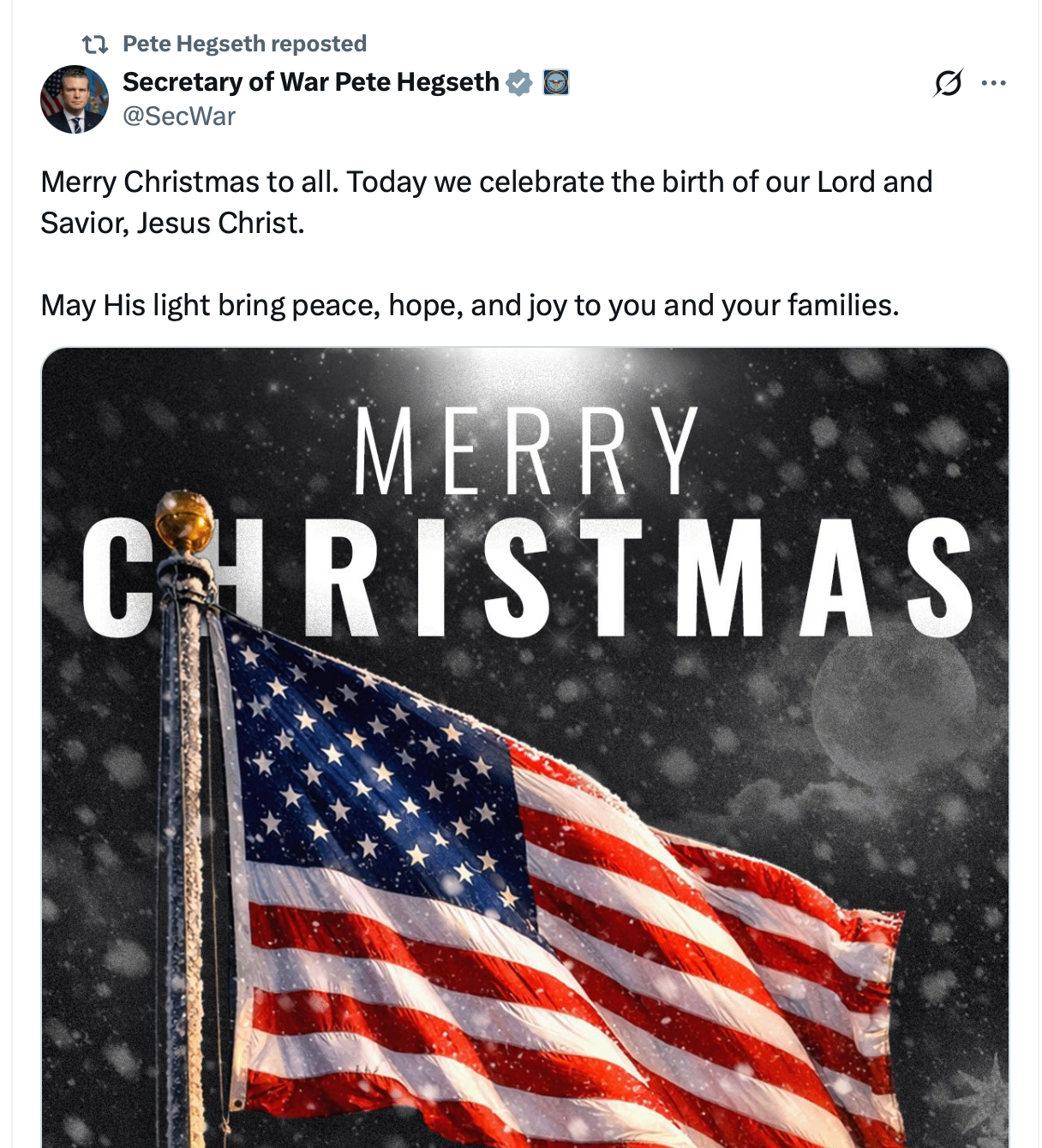
These messages immediately drew sharp criticism from religious freedom organizations and First Amendment proponents. Critics argued that such explicit endorsements of Christianity by government entities violated the First Amendment’s Establishment Clause, which prohibits the government from establishing a religion or favoring one over another. Thomas Jefferson’s concept of a “wall of separation between church and state” was frequently invoked as the guiding principle intended to prevent religious dominance in governance.
Rachel Laser, president of Americans United for Separation of Church and State, characterized the social media posts as “one more example of the Christian Nationalist rhetoric the Trump administration has disseminated since Day One in office.” She emphasized that the Constitution’s promise of church-state separation allows for religious diversity to flourish. Alex Howard, a former Homeland Security spokesperson, deemed the messages an “inappropriate use of official government channels,” while Alex Nowrasteh of the Cato Institute asserted that “Americans don’t share a religion. Our state is secular.”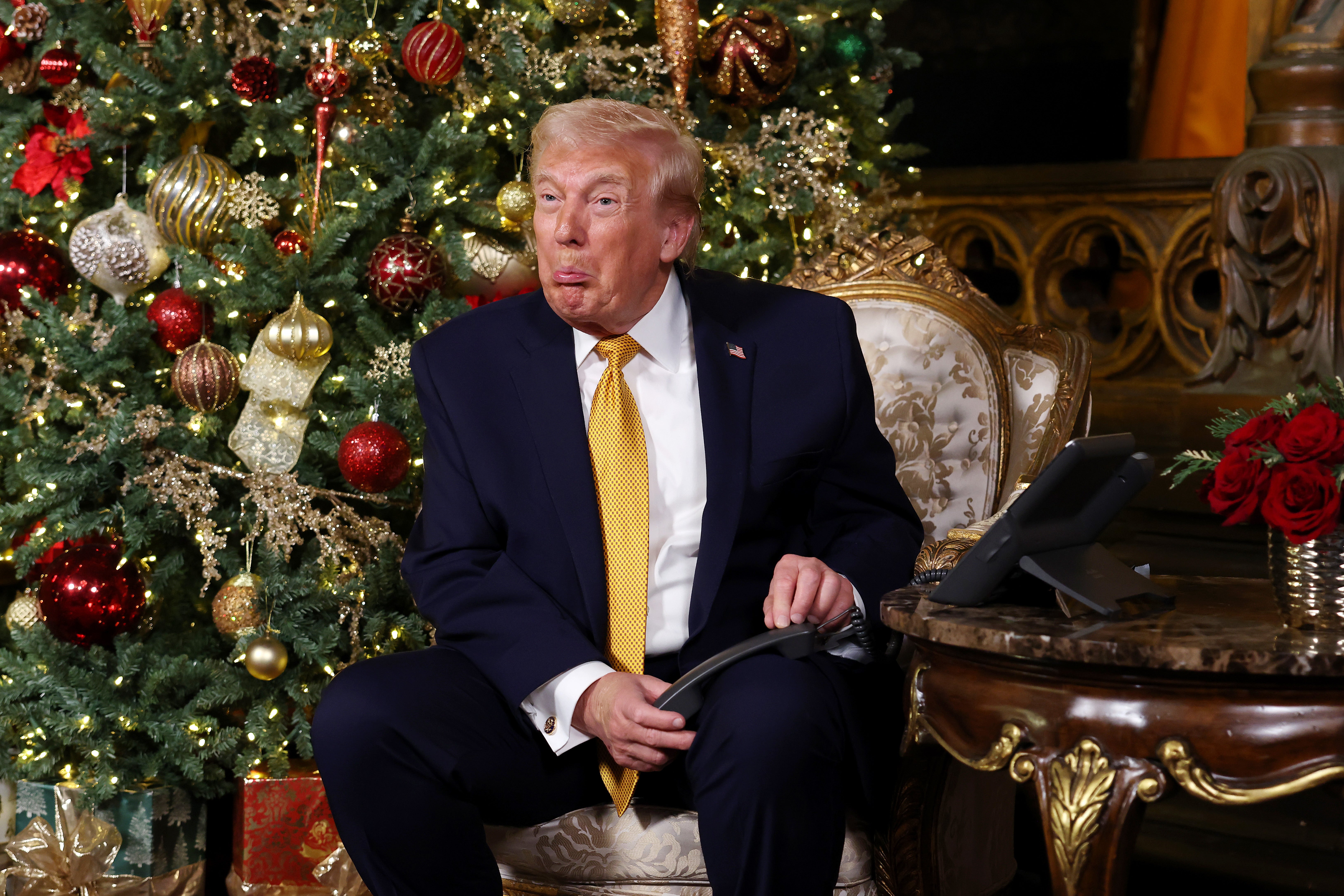
Beyond these specific holiday greetings, the Trump administration engaged in broader actions that critics interpreted as blurring the lines between church and state. In February, the president directed a Department of Justice task force to “fully prosecute anti-Christian violence and vandalism” and “defend the rights of Christians and religious believers nationwide.” He also established the Religious Liberty Commission within the Justice Department and appointed televangelist pastor Paula White-Cain as a senior adviser to the White House Faith Office.
The administration’s strong alignment with its evangelical base also coincided with increased efforts by right-wing religious groups to channel public funds towards religious organizations and education. The president had also repeatedly pledged to his evangelical supporters that his administration would work to repeal tax code provisions, such as the Johnson Amendment, which prohibit tax-exempt charitable organizations from endorsing or opposing political candidates, potentially altering decades of federal law designed to prevent churches from acting as political tools. The IRS later indicated it would allow churches to endorse candidates without losing their tax-exempt status.
The issue extended to the judiciary, with liberal Justice Sonia Sotomayor warning in 2022 that the Supreme Court, with its conservative majority, “continues to dismantle the wall of separation between church and state that the Framers fought to build.” She cautioned that the court appeared to treat the separation of church and state as a “constitutional slogan, not a constitutional commitment,” underscoring the ongoing legal and philosophical debate surrounding religious freedom and government neutrality in the United States.
Religious demographics in the United States provide additional context. Nearly two-thirds of Americans identify as Christian, according to the Pew Research Center, though this represents a significant decline over two decades. Concurrently, the proportion of Americans identifying with no religion has risen to 29 percent. Despite these shifts, evangelical Christians, comprising almost one in four Americans, played a pivotal role in Trump’s presidential elections, with approximately 80 percent of white evangelical voters supporting him in 2024.






