


The Tiwa Savage latest news cycle has once again highlighted the intense scrutiny faced by public figures. Award-winning Nigerian singer Tiwa Savage recently found herself at the center of a social media storm after a video surfaced showing her playfully dancing in public with her son, Jamil. Her subsequent clap back at a critic ignited a broader conversation about celebrity parenting, online judgment, and the boundaries of public life. This incident serves as a crucial case study in understanding the dynamics between stars and their audience and the pressures they endure.
The viral video captured Tiwa Savage outside a show, engaging in a brief, lighthearted moment of dancing. Her son, Jamil, was seen looking up at her, a seemingly innocuous interaction that quickly became fodder for online commentary. A user, @TheDamiForeign, reshared the clip with the remark, “Omo, why’s Tiwa Savage’s son frowning?”, implying discomfort or disapproval from the child, which sparked significant debate.
This seemingly innocent question quickly escalated, drawing widespread attention and sparking a deluge of opinions across various social media platforms. Many users weighed in on the appropriateness of Tiwa’s actions in front of her child, while others staunchly defended her, pointing out the subjective nature of interpreting a child’s facial expression. The incident rapidly became a flashpoint for discussing parental conduct in the digital age, demonstrating the instantaneous nature of online judgment.
What is celebrity parenting controversy? It refers to public debates and discussions, often fueled by social media, concerning the parenting choices and public behavior of famous individuals. These controversies typically arise when a celebrity’s actions with or around their children are perceived to deviate from societal norms or expectations, leading to widespread criticism and defense from various online communities.
So, why is Tiwa Savage trending in this particular context? Her trending status stems from the direct and unapologetic manner in which she addressed the criticism. Instead of ignoring the comment, Tiwa Savage confronted the user head-on, dismissing the criticism as a bid for “clout-chasing” and asserting that the “obsession with me is loud but your relevance is missing.” This defiant stance resonated with many who champion celebrities’ right to live authentically and push back against unwarranted judgment.
This brings us to the broader question of how do celebrities respond to criticism, especially when it involves their personal lives and children. Responses vary widely, from complete silence and ignoring the noise, to issuing formal statements, or, as in Tiwa’s case, engaging directly with critics on social media. The chosen method often dictates how quickly a controversy fades or intensifies, influencing public perception for weeks or even months, impacting brand deals and public appearances.
The ongoing struggle between celebrity privacy vs public life is a central theme in incidents like this. Public figures, by virtue of their fame and visibility, often find their private moments dissected and judged by millions. While they undoubtedly benefit from public adoration and media attention, they also contend with the constant erosion of personal boundaries, a trade-off that many find increasingly challenging to navigate in the age of ubiquitous smartphones and instant sharing, leading to mental health challenges.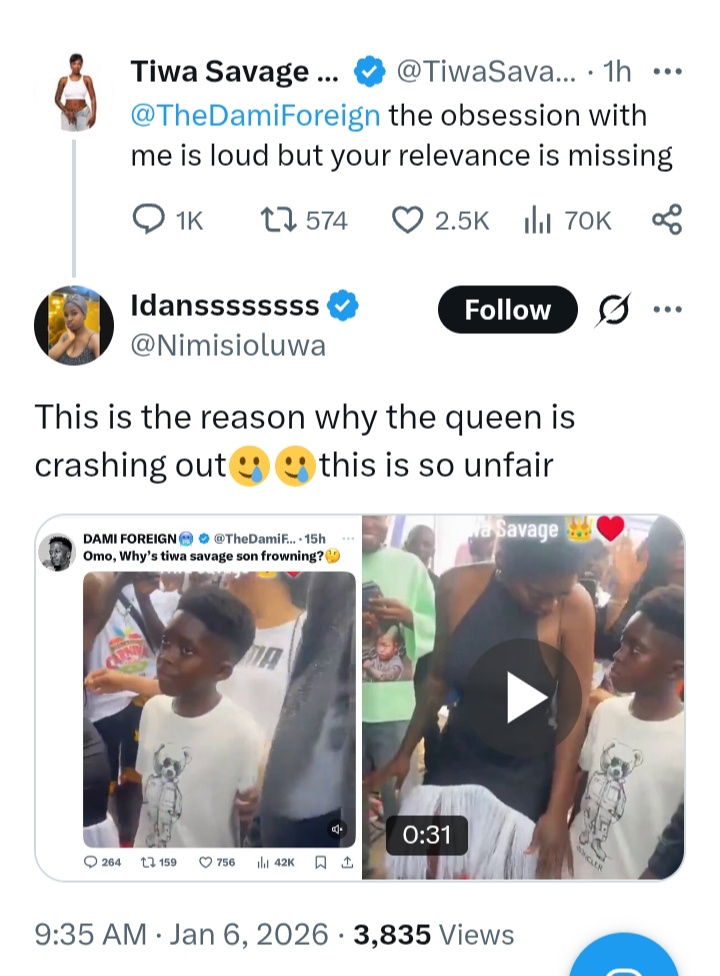
Another critical aspect is the tension between parental scrutiny vs freedom of expression. Society often holds parents, particularly mothers, to extremely high standards, especially when their actions are broadcast publicly for all to see. However, this intense scrutiny can often stifle a parent’s freedom to express themselves naturally, even in playful, innocent moments, for fear of public backlash and judgment, creating a chilling effect on authentic behavior and interaction with their own children.
For both celebrities and their followers, a comprehensive celebrity social media etiquette guide could prove invaluable in navigating these complex interactions. Such a guide would outline best practices for public figures in managing their online presence, including how to engage constructively with fans, respond strategically to criticism, and protect their family’s privacy. Conversely, it would also educate users on respectful online interaction, discouraging unwarranted judgment and fostering a more positive digital environment for everyone.
Understanding how to handle online backlash for public figures is crucial for their mental well-being and career longevity. Strategies often include developing a strong support system, taking periodic breaks from social media to preserve mental health, focusing on positive engagements, and, when necessary, engaging legal counsel to address harassment or defamation. Tiwa Savage’s direct approach, while effective for her brand, is just one of many ways public figures navigate these turbulent waters, often with a team of public relations experts.
As for the broader celebrity parenting controversy update, these incidents are not isolated. They reflect a growing societal trend where the lines between public and private life are increasingly blurred, and where traditional media narratives are often overshadowed by instant, unfiltered social media reactions. Each new controversy adds another layer to this complex and evolving discussion about fame, family, and public perception, often sparking significant academic and sociological interest in the topic.
Looking ahead, understanding celebrity social media trends 2026 will be vital for managing public image and personal brand longevity. We anticipate a continued emphasis on authenticity balanced with strategic content creation, potentially leading to new platforms or features designed to give public figures more control over their narratives. The demand for genuine connection will persist, but so will the challenges of online scrutiny, requiring innovative approaches to content and engagement.
Developing a robust parenting in the public eye 2026 guide will be essential for future generations of celebrity parents. This comprehensive guide would encompass legal considerations, psychological impacts on both parents and children, media training, and digital literacy skills, equipping them with the tools to navigate the unique pressures of raising children under constant public observation, ensuring both their well-being and their children’s healthy development.
Ultimately, the Tiwa Savage latest news regarding her public interaction and subsequent clap back underscores a continuous societal debate. It highlights the complexities of celebrity life, the pervasive power of social media, and the ongoing quest for balance between public expectation and personal freedom. As the digital landscape evolves, so too will the narratives surrounding public figures and their families, demanding constant adaptation and resilience.
This is the reason why the queen is crashing out🥲🥲this is so unfair pic.twitter.com/aoWcW5EXqA
— Idanssssssss (@Nimisioluwa) January 6, 2026







