

![[post_title]](https://samony.com.ng/wp-content/uploads/2025/12/1766003321_Tinubu-set-to-present-2026-budget-estimates-to-National-Assembly.webp-1024x729.webp)
President Bola Ahmed Tinubu is scheduled to present the 2026 Appropriation Bill, commonly known as the national budget, to a joint session of the National Assembly on Friday, December 19, 2025. This annual ritual marks a crucial step in Nigeria’s fiscal planning, outlining the government’s economic priorities and spending projections for the upcoming year. The presentation is a cornerstone of the nation’s democratic and governance processes, setting the stage for legislative scrutiny and eventual passage.
The formal notification of the President’s intent emerged through an official communication, indicating the Presidency’s advance preparations for the significant event. A letter, dated December 17, 2025, and signed by Adm. Essien Eyo Essien, Secretary for Human Resources and Staff Development on behalf of the Clerk to the National Assembly, Kamoru Ogunlana, detailed the arrangements. This preliminary communication ensures that federal lawmakers are duly informed and prepared for the President’s address.
President Tinubu, exercising his constitutional mandate as President and Commander-in-Chief of the Armed Forces of the Federal Republic of Nigeria, is slated to commence the budget presentation at 2:00 p.m. on the designated Friday. The event holds immense significance, as the budget serves as a blueprint for national development, impacting all sectors from infrastructure and education to healthcare and security. It reflects the government’s strategic vision for economic growth and stability.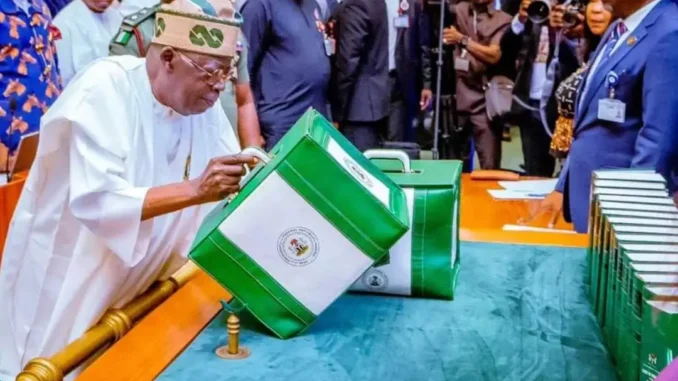
Anticipating the high-profile nature of the event, stringent security and access arrangements have been meticulously outlined for the National Assembly complex. The communication directed all accredited personnel to report to their duty posts by 11:00 a.m., with strict restrictions on access to the complex imposed thereafter. These measures are standard procedure for presidential appearances, ensuring the safety and seamless conduct of legislative proceedings.
Further logistical directives specified that most staff members, excluding key principal officers such as the Clerk, Deputy Clerk, Clerk of the House, Clerk of the Senate, and their deputies, must park their vehicles at designated annex locations or the new car park near the National Assembly Service (NASS) Gate. Non-accredited individuals have been advised to steer clear of the complex entirely, underscoring the heightened security posture for the budget presentation.
The presentation initiates a critical legislative phase where both the Senate and the House of Representatives will meticulously scrutinize the proposed Appropriation Bill. Lawmakers are expected to engage in extensive debates, committee hearings, and consultations to review the allocations, revenue projections, and policy frameworks embedded within the budget. This process allows for checks and balances, ensuring public funds are appropriated judiciously and align with national priorities.
The 2026 budget arrives at a pivotal moment for Nigeria, as the nation navigates complex economic realities, including inflation, currency fluctuations, and efforts to diversify its revenue base. Stakeholders, including economists, civil society organizations, and the general public, will keenly await the President’s speech for insights into the government’s strategies to foster sustainable growth, create employment, and improve living standards. The budget will likely reflect ongoing reforms and future development goals.
Annual budget presentations are a long-standing tradition in Nigeria’s democratic calendar, with past presidents utilizing the platform to articulate their administrations’ fiscal blueprints. The timely submission and subsequent passage of the Appropriation Bill are often seen as indicators of governmental efficiency and legislative harmony. Delays in past budget cycles have sometimes hampered project implementation and economic planning, making prompt action crucial.
The proposals within the 2026 budget will directly influence policy directions across various ministries, departments, and agencies. From significant capital projects aimed at enhancing infrastructure to recurrent expenditures ensuring the smooth functioning of government, every aspect of national life is touched by the budget. Its successful implementation is vital for achieving the developmental objectives outlined in the national strategic plans.
As the date approaches, anticipation builds within political circles and among the populace regarding the specifics of the 2026 fiscal plan. The legislative arm of government stands ready to embark on the rigorous process of deliberation, amendment, and eventual approval. The collaboration between the executive and legislative branches will be paramount in ensuring a budget that is both realistic and responsive to the needs of Nigerians.

![[post_title]](https://samony.com.ng/wp-content/uploads/2025/12/1766002527_Abroad-based-man-shares-response-from-old-friend-after-sending-him-300x157.jpg?lm=69430F61 "Friend’s Heartfelt Thanks for Small Gift Goes Viral")
![[post_title]](https://samony.com.ng/wp-content/uploads/2025/12/Zinedine-Zidane-Names-his-Greatest-Premier-League-11-of-All-300x169.jpeg?lm=69431130 "Zinedine Zidane Reveals His All-Time Premier League Dream Team")
![[post_title]](https://samony.com.ng/wp-content/uploads/2025/12/1766002162_First-Time-Homebuyers-Face-an-Affordability-Crisis-But-Some-Are-Finding-300x200.jpg?lm=69430DF4 "Young Buyers Navigate Housing Crisis with Family Aid and Cheaper Locations")
![[post_title]](https://samony.com.ng/wp-content/uploads/2025/12/Chipotle-is-giving-away-free-meals-to-festive-sweater-wearing-customers.jpg?lm=69430836 "Chipotle Rewards Festive Sweater Wearers with Free Entrées")
![[post_title]](https://samony.com.ng/wp-content/uploads/2025/12/Prostate-cancer-survivor-with-incontinence-speaks-out-about-lack-of-300x169.jpeg?lm=69430945 "Prostate Cancer Survivor Sparks Call for Men’s Sanitary Bins")


![[post_title]](https://samony.com.ng/wp-content/uploads/2025/12/1766003356_How-Big-Tech-Dominates-the-Market-1024x683.jpg?lm=6943129E "Big Tech’s Market Dominance: Mag 7 Power Explained")
![[post_title]](https://samony.com.ng/wp-content/uploads/2025/12/1766002527_Abroad-based-man-shares-response-from-old-friend-after-sending-him-1024x535.jpg?lm=69430F61 "Friend’s Heartfelt Thanks for Small Gift Goes Viral")
![[post_title]](https://samony.com.ng/wp-content/uploads/2025/12/Zinedine-Zidane-Names-his-Greatest-Premier-League-11-of-All.jpeg?lm=6943112D "Zinedine Zidane Reveals His All-Time Premier League Dream Team")
