

The Set-Piece Revolution: How Brentford Sparked a Premier League Arms Race
Arsenal’s meticulous preparation for their recent match wasn’t just about open play. It focused intently on neutralizing Brentford’s aerial threats from set-pieces. Their coach, Nicolas Jover, zeroes in on blocking key players, especially in crucial zones. It’s a game of inches, where the smallest coordinated detail can swing the outcome.
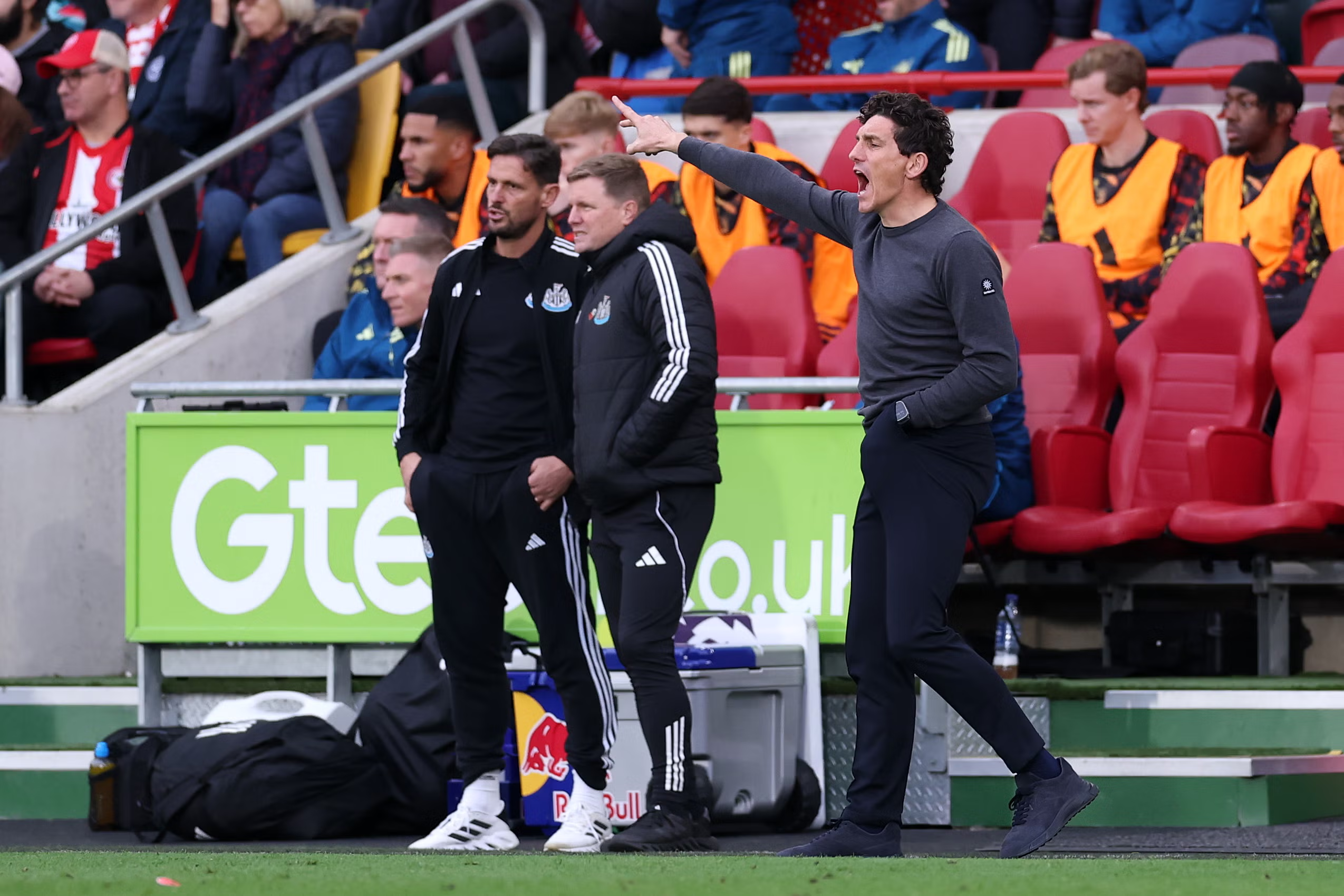
Yet, here’s the thing. Brentford practically wrote the playbook on this. They pioneered the application of data and science to the often-overlooked world of set-pieces. While they maintain a relatively low profile, there’s a quiet irritation within the club. Others are garnering praise for approaches Brentford originally designed. Their manager’s background in set-piece coaching makes their success even sweeter.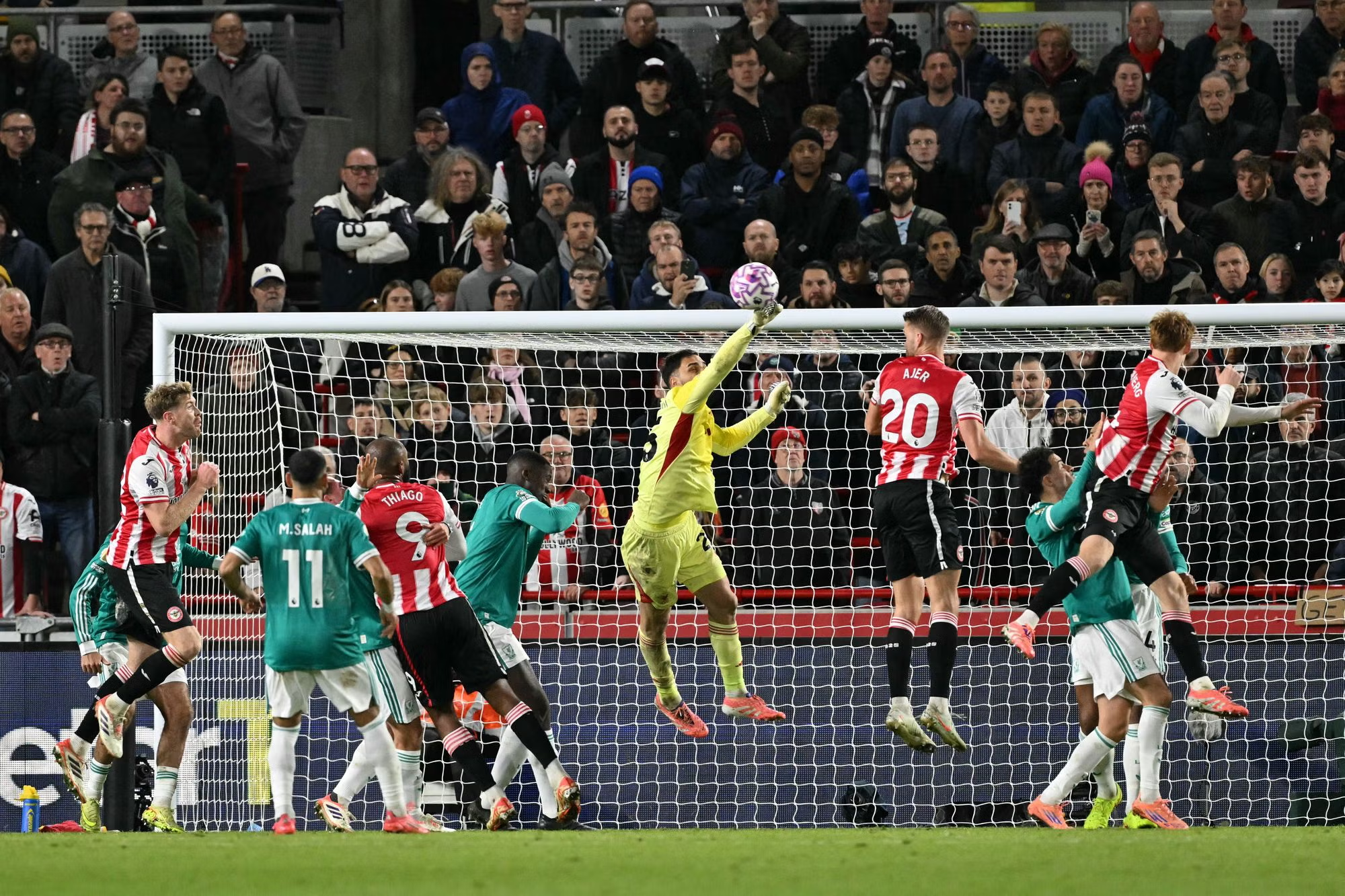 >
>
The upcoming game has symbolism. It’s a meeting between the innovators and those who arguably perfected the approach.
Word is, Arsenal’s innovation boils down to mastering a couple of near-unstoppable routines. That’s been the real differentiator. Mikel Arteta, known as a meticulous and statistically driven coach, adopted Brentford’s approach.
Consider the origins. Around 2014, Matthew Benham, owner of Brentford, also held a majority stake in Midtjylland. Both clubs realized set-pieces were ripe for optimization in a sport fixated on positional play. They saw it as “a winning edge.” >
>
They invested in specialized set-piece coaches, fundamentally rethinking this phase of the game. This approach birthed talents like Jover, now celebrated (and occasionally mocked) for his impact at Arsenal.
It’s worth noting that Ben Knapper, formerly at Arsenal, identified Jover. Arteta brought him to Manchester City. Though less prominent amidst City’s dominant open play, the potential impact of a well-timed header in tight title races wasn’t lost on them.
City fought to retain Jover when Arteta pursued him for Arsenal in 2021. His fame has risen. Arsenal fans chant his name, but rival fans ridicule this focus.
That leads to the bigger question: is the emphasis on set-pieces genuinely “good for football?”
Let’s face it: focusing on set-pieces isn’t always the most captivating spectacle. Historically, it’s been the domain of “small teams” lacking the resources for free-flowing attacking play. However, the Brentford model throws that thinking out the window. Why ignore a readily available advantage?
Arteta’s embrace of set-pieces stems from the increasing prevalence of massed defenses against his positional play. More corners and free kicks result. Why not exploit them? Exhaust opponents both in open play and dead-ball situations.
The numbers don’t lie. The weekend saw a season-equaling record of 14 set-piece goals in a single gameweek. This has occurred thrice, twice in the last few weeks, double the early-season figures.
It’s been observed that tactical innovations tend to lose their edge as they become widespread.
However, many within the industry believe that set-pieces offer lasting advantages. This comes down to a lack of resources and the slow adaptation of other clubs.
There’s a limited pool of top-tier set-piece coaches, resulting in the rise of figures like Austin McPhee and Bernardo Cueva.
McPhee joked about being just the Premier League’s third set-piece specialist upon joining Aston Villa, behind Arsenal and Brentford. An arms race is visibly unfolding.
Clubs who invest in these specialists are likely to reap the “winning edge.” The next stage involves perfecting two set-piece routines or creating “chaos,” as Andrews describes Brentford’s throw-ins.
It’s here that these coaches earn their recognition. They’re calculating player runs, neutralizing opponents, and maximizing opportunities to overwhelm the goalkeeper.
Yet, underneath it all lies fundamental football principles. None of this works without quality deliveries and players willing to attack the ball.
Brentford values the throw-ins of Kevin Schade and Michael Kayode. Arsenal trusts Declan Rice and Bukayo Saka for dead-ball delivery. After that, there are players like Gabriel, Jurrien Timber, and Mikel Merino charging with intent.
There’s another factor. Some suggest set-pieces are more effective because modern players are less accustomed to them. Academies prioritize playing with your feet, not battling in the air.
It’s not the same as the 80s or 00s, where center-backs were accustomed to physical battles. “The modern player is too manicured; they’re not hardened enough.”
Some felt Bayern Munich looked vulnerable defending corners against Arsenal. Arsenal’s reputation creates a fear factor, which serves as a distinct edge.
Brentford can withstand that pressure and retaliate.
Arteta could argue that Arsenal would then attempt to beat them on the ground. It’s not an either/or proposition. It’s about seeking every available advantage.

![[post_title]](https://samony.com.ng/wp-content/uploads/2025/12/1764619077_Giving-your-kid-a-smartphone-before-the-age-of-12-300x200.jpeg?lm=692DF348 "Early Smartphones: Untangling the Impact on Young Minds and Bodies")
![[post_title]](https://samony.com.ng/wp-content/uploads/2025/12/1764618292_Start-life-all-over-again-with-3K-Mother-of-two-300x157.jpg?lm=692DF037 "Rebuilding After “I Do”: The Unspoken Realities of Modern Marriage and Divorce")
![[post_title]](https://samony.com.ng/wp-content/uploads/2025/12/MKBHD-is-taking-down-his-wallpaper-app-300x158.png?lm=692DF067 "Panels: Creator Tech’s Hard Lessons")

![[post_title]](https://samony.com.ng/wp-content/uploads/2025/12/1764618150_Raisin-Savings-Bonus-Offer-Pays-Cash-Each-Quarter-300x169.jpg?lm=692DEFA9 "Raisin’s Quarterly Bonus: Is This Savings Deal Right For You?")



![[post_title]](https://samony.com.ng/wp-content/uploads/2025/12/1764619077_Giving-your-kid-a-smartphone-before-the-age-of-12-1024x683.jpeg?lm=692DF349 "Early Smartphones: Untangling the Impact on Young Minds and Bodies")
