


The Syrian Democratic Forces (SDF), a key US-backed alliance that was instrumental in fighting the Islamic State group, is reportedly set to integrate into the Syrian army. This significant development comes after a series of recent setbacks for the Kurdish-led organization. The religiously and ethnically diverse SDF faced a major defeat recently when Syrian government forces reclaimed substantial territory in the country’s northeast, which was previously under SDF control, following intense clashes. With SDF fighters now largely confined to Hassakeh province, this latest development under interim President Ahmad al-Sharaa could signal the end of Syrian Kurdish aspirations for an autonomous region in northeast Syria, historically known as Rojava or Western Kurdistan. At their peak, these forces commanded influence over almost a quarter of Syria.
What is the Syrian Democratic Forces (SDF)?
The Syrian Democratic Forces (SDF) is a multi-ethnic and multi-sectarian alliance operating in northern and eastern Syria. It was formed in 2015 with the support of the United States to combat the Islamic State (IS) group. While predominantly Kurdish-led by the People’s Protection Units (YPG), it also includes Arab, Turkmen, and Christian fighters, aiming for a unified Syrian opposition.
Before the Syrian civil war escalated in 2011, Kurds represented roughly 10 percent of Syria’s total population of 23 million. Upon its establishment in 2015, the SDF was composed of ethnic Arab, Kurdish, and Turkmen combatants, along with the Syriac Military Council, a prominent Christian militia in northeast Syria that includes Assyrians. However, the alliance was primarily spearheaded by the People’s Protection Units (YPG), the principal Kurdish fighting contingent. The prominent leadership role of Kurdish fighters within the SDF consistently raised concerns among the majority Sunni Arab factions and their regional allies, occasionally leading to internal conflicts. This dynamic has been a persistent challenge for the group’s cohesion and broader acceptance.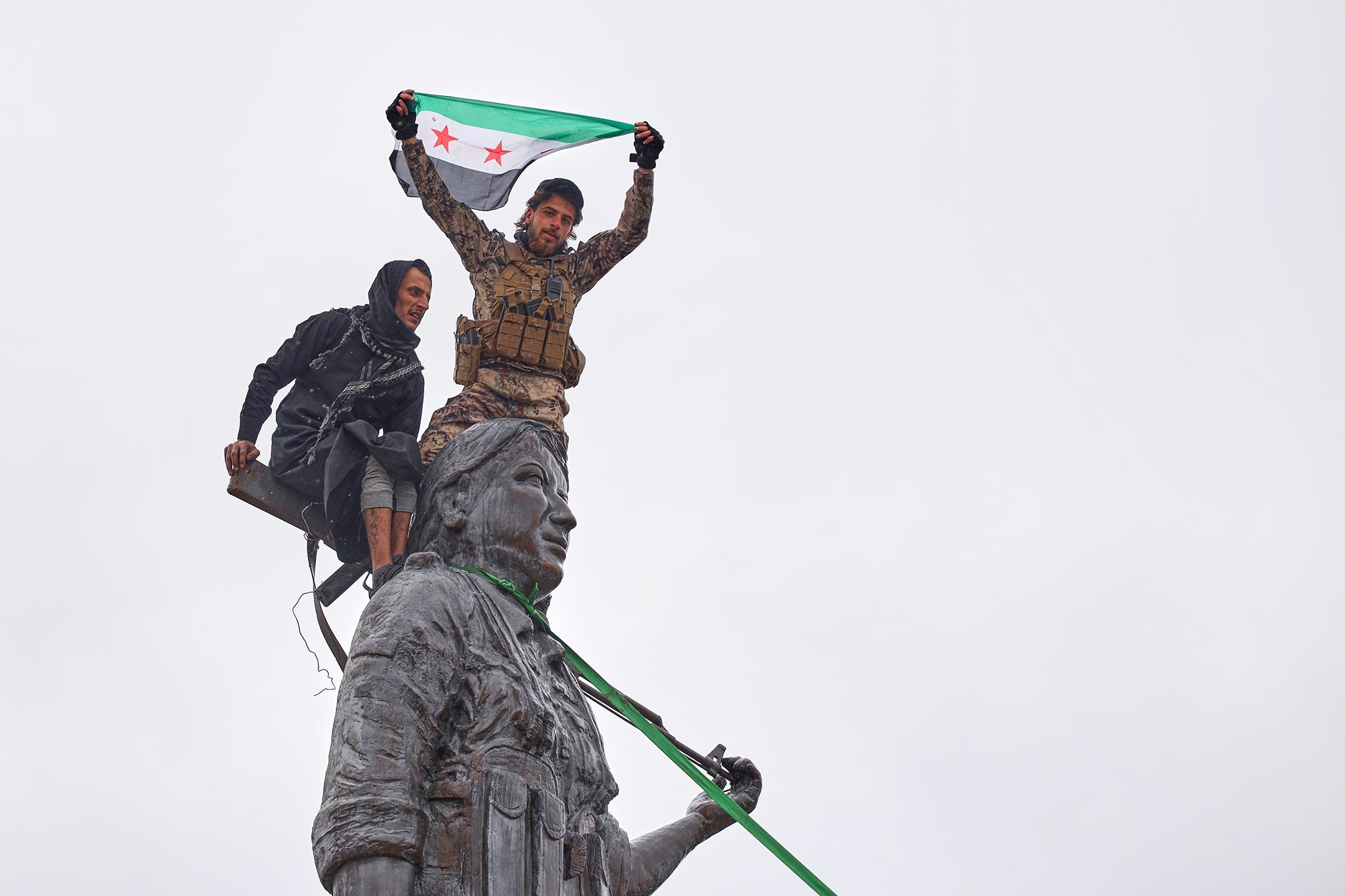
Post-Assad Era Dynamics
Many Syrian rebel groups that engaged in combat against former President Bashar Assad’s forces from 2011 until his removal in December 2024 have historically expressed opposition to the SDF. They perceived the SDF as a secessionist entity aiming to fragment Syria. Furthermore, while Turkey has been a significant supporter of Syrian rebels during Assad’s tenure, it views the YPG as an extension of the Kurdish Workers’ Party (PKK), which has been engaged in a protracted insurgency within Turkey. Following Assad’s fall in December 2024, relations between the country’s new leadership, headed by al-Sharaa, and the SDF remained strained. However, a surprising development occurred in March when SDF chief Mazloum Abdi visited Damascus and finalized an agreement with al-Sharaa. This agreement stipulated, among other provisions, that the SDF would integrate into the Syrian army by the end of 2025. Despite this agreement, significant discrepancies persisted regarding the specifics of the integration process.
In October, Abdi informed The Associated Press that the SDF had, in principle, reached an accord with the government concerning a plan to incorporate its fighters as a unified contingent within the national army. Abdi made a visit to Damascus in early January to further discuss the merger. At the time, state media reported a lack of “tangible results” from these discussions. Shortly thereafter, violent confrontations erupted between government forces in the northern city of Aleppo, prompting the SDF to withdraw from three neighborhoods they had occupied for years. Not long after this, the government initiated an offensive to seize two towns located east of Aleppo. This offensive subsequently escalated into a comprehensive military campaign that concluded on Sunday, with the government gaining control over a significant portion of the strategically vital northern province of Raqqa, bordering Turkey, and the eastern, oil-rich province of Deir el-Zour, which shares a border with Iraq.
A New Ceasefire Agreement
On Sunday night, Syria’s government declared a ceasefire, marking the conclusion of the most recent phase of hostilities with the SDF. The group now primarily holds territory in Hassakeh, an area with a substantial Kurdish population. Later that Sunday, the state-run news agency SANA broadcast images of al-Sharaa signing and holding the agreement. Abdi, who was slated to meet with the president in Damascus, was absent from these visuals, although his signature was present on the document. Al-Sharaa informed journalists that Abdi was unable to travel due to adverse weather conditions and was anticipated to arrive in the Syrian capital on Monday. According to the terms of the new agreement, SDF fighters are to be absorbed into the national army and police forces as individuals, rather than as a cohesive unit, which represents a setback to Abdi’s initial proposals. The Kurdish-led force will also be required to submit the names of commanders who will be assigned prominent military and managerial positions within the Syrian army and government. This integration aims to consolidate the government’s authority across the nation.
The SDF as an Integral Part of Syria
Al-Sharaa enacted a decree that officially recognizes Kurdish as a national language, alongside Arabic, and designates the Kurdish New Year as a national holiday. This measure is widely seen as an effort to placate the Kurdish minority. The new ceasefire was announced two days after this decree. The SDF, which was once estimated to command approximately 40,000 fighters and played a pivotal role in the victory against IS in March 2019, capturing the last remaining territory held by the extremists, is likely to be dissolved in the near future. This dissolution will occur as al-Sharaa strengthens his control over Syria, following the suppression of Assad’s Alawite minority sect in violent sectarian clashes that took place in March. A critical ongoing responsibility for the SDF is the management of prisons holding around 9,000 IS members, who have been detained for years without trial. The SDF also oversees the al-Hol and Roj camps in Hassakeh, which house tens of thousands of individuals, predominantly women and children associated with IS. The group issued a statement on Monday indicating that gunmen were assaulting the Shaddadeh prison, which reportedly holds thousands of IS members. Later, they reported repelling several attacks, noting that the prison had fallen out of their fighters’ control. Under the terms of the 14-point ceasefire, the authorities and protection forces responsible for the prisons and camps will be integrated into the government, which will assume “full charge” of the legal and security affairs of these facilities. No specific deadline has been established for this transition. The Syrian government has committed to continuing the fight against IS, especially as Syria is now a member of the US-led coalition actively engaged in combating extremist elements.
How to understand the SDF deal with Damascus?
The SDF deal with Damascus involves the integration of the Syrian Democratic Forces into the Syrian army. Key points include SDF fighters merging as individuals, not a cohesive unit, and the government taking full control of prisons and camps holding IS members. This agreement aims to consolidate President al-Sharaa’s authority and resolve the status of the Kurdish-led forces.
What is the future of the SDF in Syria?
The future of the SDF appears to be one of integration into the Syrian national army. This deal, brokered after significant military setbacks for the SDF, signifies a shift in power dynamics and a move towards greater centralization under the Syrian government. The SDF’s role in controlling prisons and camps holding IS members will also transition to the government.







