

![[post_title]](https://samony.com.ng/wp-content/uploads/2025/12/SteamOS-vs-Windows-on-dedicated-GPUs-Its-complicated-but-Windows-1024x576.jpeg?lm=69332D16)
SteamOS vs. Windows for Gaming in 2026: It’s Still Complicated
The debate rages on: for PC gaming, which reigns supreme, SteamOS or Windows? Fresh benchmarks comparing the two operating systems on dedicated GPUs paint a picture that is, well, nuanced. It isn’t a simple victory for either side. Having witnessed similar platform skirmishes over the years, I approached these results with a healthy dose of skepticism. Marketing departments love clean victories; reality, however, rarely cooperates.
The latest tests pit Windows 11 25H2 against SteamOS 3.9. Right off the bat, Windows seems to claim a slight edge with dedicated graphics cards. Games like Borderlands 3 see a noticeable performance bump – sometimes a hefty 20-30% – on Windows. That’s not insignificant. Forza Horizon 5 and Cyberpunk 2077, with ray tracing enabled, also give Windows a consistent lead, usually in the 15-20% ballpark.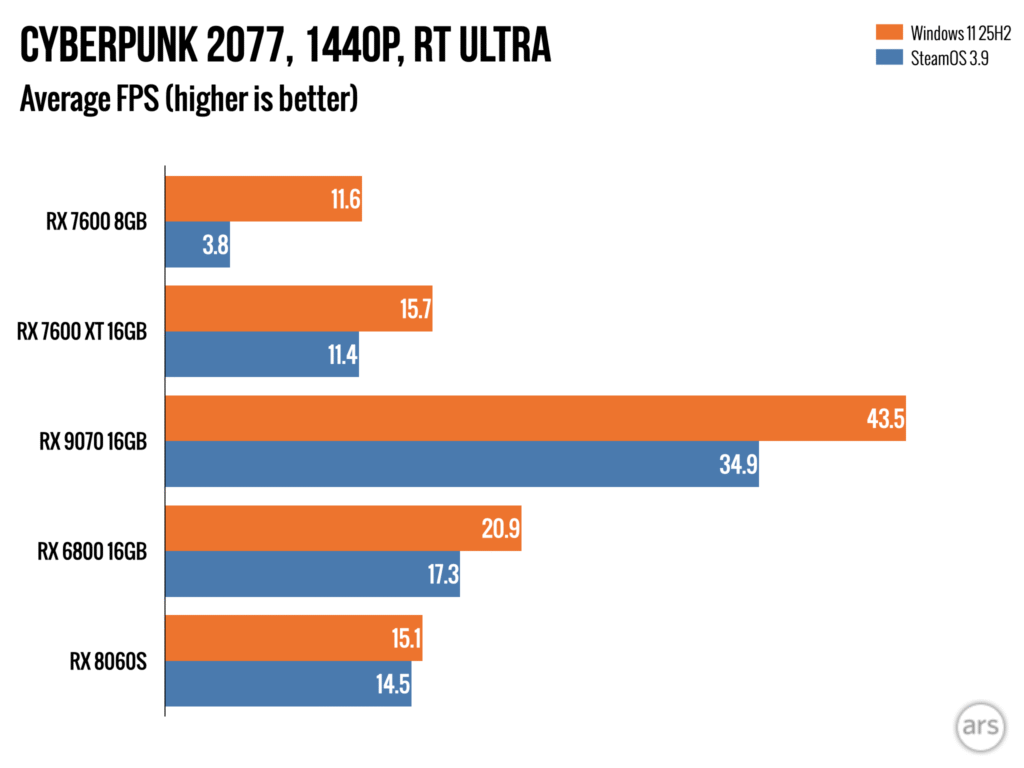 >
>
Yet, the story twists when looking at integrated graphics. The Radeon 780M and RX 8060S tell a different tale. It’s important to remember these are very different chips. The 8060S packs significantly more compute power and faster memory than the 780M. Still, SteamOS appears to stretch its legs, performing relatively better against Windows in these scenarios. Games where Windows and SteamOS traded blows on dedicated GPUs now show SteamOS inching ahead, even if only slightly.
Valve deserves credit. Performance on many titles proves more or less identical across both operating systems. Consider Cyberpunk 2077 (without ray tracing), Returnal (when not bottlenecked by the 7600’s VRAM), and Assassin’s Creed Valhalla. In these instances, both OS’s are neck and neck. Marginal differences in performance could easily be attributed to the margin of error.
So, what does this mean for gamers in 2026?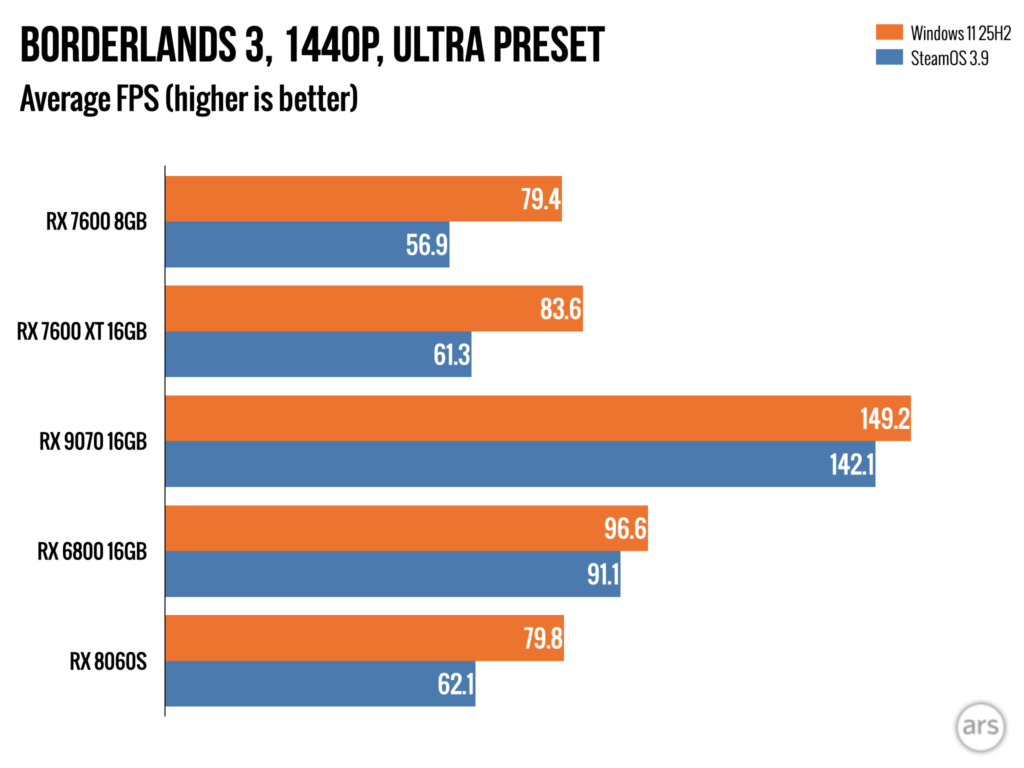 >
>
Windows:
Wider Compatibility: Let’s address the elephant in the room. Windows simply offers better compatibility with a broader range of games and applications. That’s a huge draw. Performance Peak: If raw performance is your only metric, Windows appears to nudge ahead, particularly with high-end, dedicated GPUs and demanding titles that leverage ray tracing. Driver Support: More mature and consistent driver support. This translates to fewer headaches for the average user.
SteamOS:
Integrated Graphics Optimization: SteamOS appears better optimized for integrated GPUs, delivering surprisingly competitive performance on handhelds and lower-powered devices. It is a promising sign. Ease of Use (for some): For those who live within the Steam ecosystem, SteamOS provides a streamlined, console-like experience. Boot up, select your game, and play. The interface is pretty straightforward. Open Source Advantage: The open-source nature of SteamOS potentially allows for greater customization and community-driven improvements down the line.
Challenges Remain:
Game Support on SteamOS: While the compatibility layer, Proton, has come a long way, some games still don’t run perfectly – or at all – on SteamOS. This is a real barrier. Driver Updates: While improving, driver updates on SteamOS haven’t always kept pace with Windows, potentially impacting performance on newer titles. The Anti-Cheat Conundrum: Some anti-cheat systems are notoriously difficult to implement on Linux-based systems like SteamOS. This can restrict access to some multiplayer games.
Personal Perspective
I’ve been tinkering with Linux-based gaming for years. Setting up games, troubleshooting compatibility issues, and wrestling with drivers used to be a badge of honor (or a sign of masochism, depending on your perspective). Today, Proton has dramatically simplified things. Yet, the occasional need to dive into the command line still arises.
For the average gamer who just wants things to work, Windows remains the safer bet. Nevertheless, SteamOS has undeniable appeal, especially for handheld consoles like the Steam Deck, Legion Go, and ROG Ally where a streamlined, gaming-focused experience trumps all else.
Looking Ahead
The performance differences are interesting, but they tell only part of the story. We must consider other factors, such as ease of use, game compatibility, and the overall user experience.
One key area to watch is the continued development of Proton. As Proton improves, the performance gap between Windows and SteamOS could narrow, potentially making SteamOS a more compelling alternative.
I’m also watching how game developers optimize their titles. If more developers prioritize Linux support, we could see a more level playing field in the future.
The Bottom Line
Ultimately, the best operating system for PC gaming in 2026 depends on your individual needs and preferences. Windows offers broader compatibility and generally leads on dedicated GPUs. SteamOS shines with integrated graphics and a streamlined experience. The situation is anything but simple. So, do your research, consider your priorities, and choose wisely.

![[post_title]](https://samony.com.ng/wp-content/uploads/2025/12/Landlord-dumps-kidnapped-tenants-belongings-outside-after-months-of-waiting-300x150.jpg?lm=69331AFD "Missing Tenant, Landlord’s Loss: Has Compassion Left the Rental Market?")
![[post_title]](https://samony.com.ng/wp-content/uploads/2025/12/1764955514_World-Cup-2026-draw-live-England-Scotland-and-hosts-USA-300x200.jpg?lm=6933157E "2026 World Cup Draw: Geopolitics and Growing Pains")
![[post_title]](https://samony.com.ng/wp-content/uploads/2025/12/Pressure-growing-on-Pete-Hegseth-as-GOP-and-Democrats-unite-300x200.jpg?lm=69331383 "Hegseth Under Fire: War Crime Accusations or Political Hit Job?")
![[post_title]](https://samony.com.ng/wp-content/uploads/2025/12/What-I-Told-My-Daughter-When-She-Said-She-Wants.webp "Beyond the Aisle: Redefining Wedding Value in a Changing Landscape")
![[post_title]](https://samony.com.ng/wp-content/uploads/2025/12/1764955183_Martin-Kemp-tells-how-wife-Shirlie-told-him-she-loved-300x158.jpg?lm=69331432 "The Enduring Power of “I Love You”: Authenticity, Family, and the Evolving Celebrity Landscape")


![[post_title]](https://samony.com.ng/wp-content/uploads/2025/12/Spurs-U19s-vs-Slavia-Prague-U19s-UEFA-Youth-League.jpg?lm=69331A85 "Tottenham Hotspur U19s vs. Slavia Prague U19s: How to Get Free Tickets")
![[post_title]](https://samony.com.ng/wp-content/uploads/2025/12/Landlord-dumps-kidnapped-tenants-belongings-outside-after-months-of-waiting-1024x512.jpg?lm=69331AFD "Missing Tenant, Landlord’s Loss: Has Compassion Left the Rental Market?")
![[post_title]](https://samony.com.ng/wp-content/uploads/2025/12/1764955514_World-Cup-2026-draw-live-England-Scotland-and-hosts-USA-1024x683.jpg?lm=6933157E "2026 World Cup Draw: Geopolitics and Growing Pains")
