


The ongoing Rivers State political crisis explained reached a pivotal moment recently, as a High Court in Port Harcourt issued an interim injunction that significantly alters the landscape of power. This crucial legal intervention has temporarily halted all impeachment proceedings against Governor Siminalayi Fubara and his deputy, Professor Ngozi Nma Odu, sending ripples through Nigeria’s political sphere. The court’s decision underscores the complex interplay between legislative power and judicial oversight in Nigeria’s democratic framework, aiming to stabilize a volatile political environment and provide clarity on the Rivers State political crisis explained.
For weeks, the political climate in Rivers State has been charged with tension, stemming from an apparent power struggle involving the Governor and elements within the State House of Assembly. The Assembly, led by Speaker Martin Amaewhule, had initiated moves widely perceived as steps towards impeachment. These actions had fueled public speculation and concern about the stability of governance in one of Nigeria’s most economically vital states. The court’s intervention provides a temporary reprieve and a chance for de-escalation, addressing a key aspect of the Rivers State political update.
What is an interim injunction in legal terms? An interim injunction is a temporary court order issued to prevent a party from taking a specific action until a further hearing can be held. In this instance, it legally bars the Chief Judge of Rivers State, Justice Simeon Chibuzor Amadi, from receiving or acting on any impeachment-related communication from the State House of Assembly, effectively freezing the impeachment process. This judicial tool aims to preserve the status quo and prevent irreparable harm while the substantive issues are deliberated.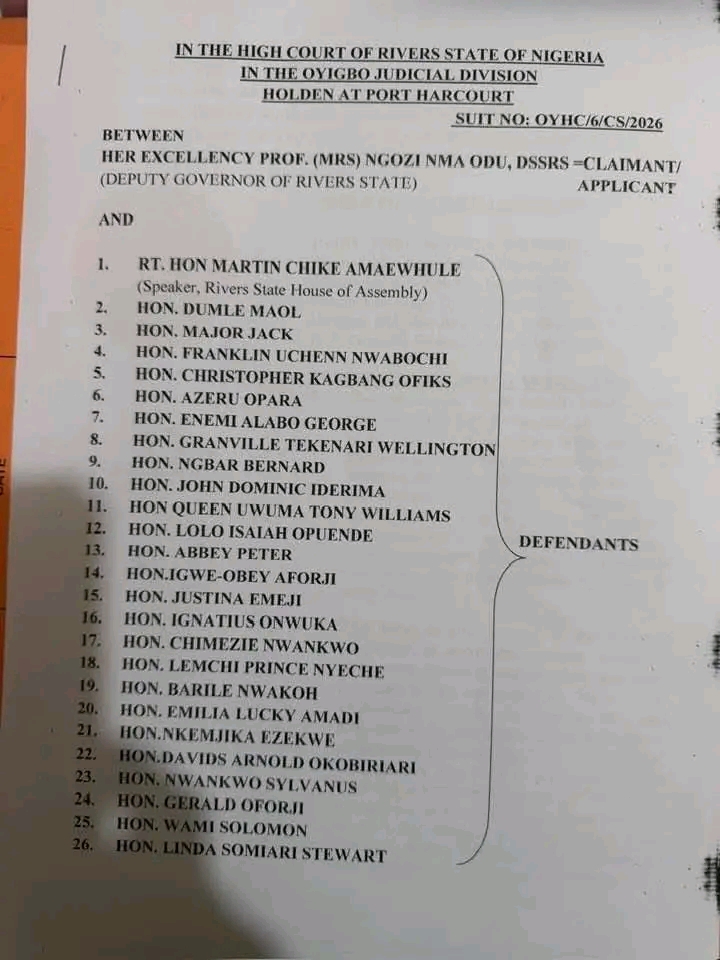
The distinction between an interim injunction vs permanent injunction is critical in understanding the court’s current ruling. While a permanent injunction is a final order, the interim injunction granted here is a provisional measure, effective for a limited period—in this case, seven days. It serves as a judicial pause button, allowing time for all parties to prepare their arguments for a more comprehensive hearing. This temporary nature highlights that the legal battle over the Rivers State governance is far from over, merely suspended, a key component of the broader Nigerian judicial system guide 2026.
The court’s ruling specifically restrained Speaker Martin Amaewhule and 32 other individuals, including members of the Assembly and the Clerk of the House, from proceeding with any impeachment steps. Justice F. A. Fiberesima, who presided over the matter, emphasized the need for due process and judicial review in such sensitive political matters. The Chief Judge, Justice Simeon Chibuzor Amadi, was explicitly barred from constituting any panel to investigate alleged misconduct against the governor, reinforcing the temporary halt to legislative actions and impacting the ongoing Governor Fubara news.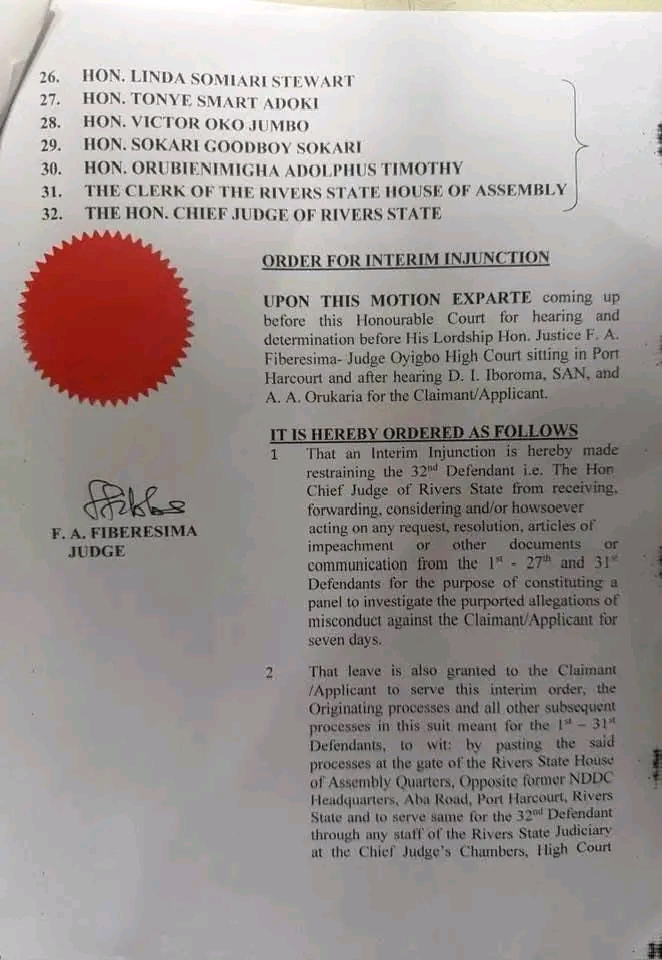
Understanding how to impeach a governor in Nigeria involves a multi-stage constitutional process designed to prevent arbitrary removal from office. Typically, it begins with a notice of gross misconduct supported by a specified number of Assembly members, followed by an investigation by a panel constituted by the Chief Judge. The panel’s findings then go back to the Assembly for a final resolution. This intricate Nigerian impeachment process guide highlights why judicial oversight, like the recent injunction, is often sought to ensure adherence to constitutional provisions and prevent political abuses, especially in the context of the Rivers State political crisis explained.
At the heart of the ongoing political turmoil is a discernible Fubara vs Wike power struggle. Governor Siminalayi Fubara, the incumbent, is widely seen as the political successor to his predecessor, Nyesom Wike, who now serves as the Minister of the Federal Capital Territory. However, a rift has developed between the two, leading to factionalism within the state’s political class and the Assembly. This internal party dynamics and personal rivalries often exacerbate legislative and executive tensions, making judicial intervention a frequent necessity in Nigeria’s political landscape.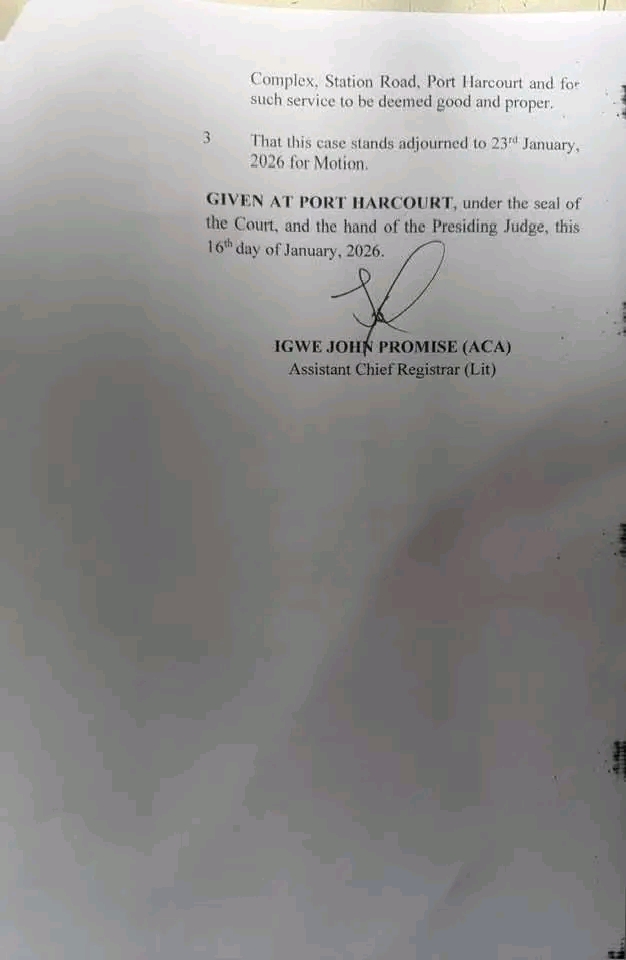
This latest development adds another layer to the continuous Governor Fubara news cycle and the broader Rivers State political update. The state has a history of intense political contests and legal challenges, making its political landscape particularly dynamic. Observers note that such legal battles are not uncommon in Nigerian politics, especially when executive and legislative arms of government find themselves at loggerheads over issues of power and control. The current situation perfectly illustrates the complexities of the Rivers State political crisis explained.
Looking ahead, the Rivers State political forecast 2026 remains uncertain. The court has adjourned the matter to January 23, 2026, for the hearing of the motion on notice, indicating that the legal sparring will continue. The outcome of this substantive hearing will undoubtedly shape the future of governance in Rivers State,









