

Analyzing Political Defections: A Critical Look at Rivers State
The news cycle revolves, as it often does, around political maneuvering. Recently, the reported “re-defection” of some Rivers State Assembly members from the PDP back to the APC has stirred the pot. Such moves always warrant a closer look, particularly their potential ramifications for Nigerian democracy.
The PDP’s reaction, labeling these lawmakers as “political puppets,” is hardly surprising. It’s standard practice for parties to decry defections, framing them as betrayals of the electorate and a mockery of democratic principles. Yet, are these just predictable political salvos, or do they hint at something deeper?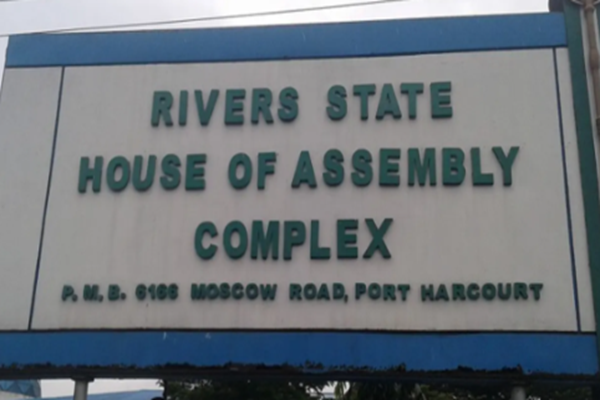 >
>
Frankly, seeing politicians switch parties isn’t new. We’ve observed this pattern repeatedly across different states and at the national level. The reasons are often a murky mix of ambition, shifting political winds, and the perceived benefits of aligning with the dominant power. What differs this time is the audacity and the blatant display, almost as if daring the opposition to react.
The PDP’s stated intention to pursue legal action based on constitutional provisions raises interesting questions. They aim to reclaim the mandate these lawmakers purportedly gained under the PDP banner. It is a familiar playbook, one often threatened but rarely fully executed with success. This challenge lies in proving that the lawmakers’ actions fundamentally negate the will of the voters who elected them. The legal terrain is complex, and the outcomes are rarely predictable.
Now, a skeptic might question the PDP’s motives here. Is this truly about upholding democratic principles, or is it more about regaining lost ground and punishing perceived disloyalty? Political parties, after all, are rarely paragons of selfless virtue. They are driven by a desire for power and influence.>
Given these facts, understanding the context is vital. Rivers State politics has often been characterized by intense rivalry and shifting alliances. Examining the underlying power dynamics, the individuals involved, and their respective motivations becomes critical to a thorough understanding of the situation. What promises were made? What grievances fueled this move? Such questions are often left unanswered in the immediate media coverage.
It’s worth noting that the impact of these defections extends beyond the immediate political landscape. Public trust in politicians and the political system erodes when these maneuvers are perceived as opportunistic and self-serving. When voters feel that their elected representatives are more beholden to personal gain than to the needs of their constituents, disillusionment sets in. This ultimately weakens the foundations of our democracy.
This challenge isn’t unique to Rivers State. Across Nigeria, the phenomenon of political defections raises fundamental questions about party discipline, ideological commitment, and the integrity of the electoral process. If party platforms become merely vehicles for personal advancement, rather than expressions of distinct political visions, then the very notion of representative democracy is undermined.
Looking ahead, several scenarios could play out. The legal challenge could drag on for months, even years, with uncertain results. The defecting lawmakers might solidify their positions within the APC, or they could face internal challenges and power struggles. Most importantly, the voters of Rivers State will ultimately render their judgment on these actions in future elections.
One lesson to derive here is that political stability relies on more than just legal frameworks. It requires a commitment to ethical conduct, a sense of public service, and a genuine desire to represent the interests of the people. Where these elements are lacking, defections and other forms of political maneuvering will continue to plague our system.
The PDP needs to do more than just issue statements and threaten legal action. They should reflect on what led to these defections in the first place. What did they do, or fail to do, that prompted these lawmakers to seek greener pastures elsewhere? Self-reflection, not just blaming others, is key to rebuilding trust and regaining lost ground.
To that end, observing how the APC integrates these new members into their fold will also be informative. Will they be fully embraced, or will they remain outsiders, viewed with suspicion by long-standing party members? The answers to these questions will offer valuable insights into the inner workings of the ruling party and its strategies for maintaining power.
The Rivers State situation acts as a microcosm of the broader challenges facing Nigerian democracy. Addressing these challenges requires a multi-pronged approach, involving legal reforms, enhanced civic education, and a renewed commitment to ethical leadership. Without these elements, defections will remain a recurring feature of our political landscape, undermining public trust and hindering progress.

![[post_title]](https://samony.com.ng/wp-content/uploads/2025/12/1765034981_Im-a-Celebrity-star-Aitchs-real-name-and-clever-meaning-300x158.jpg?lm=69344BE6 "From Aitch to AI: Navigating Authenticity in the Evolving Entertainment Landscape")
![[post_title]](https://samony.com.ng/wp-content/uploads/2025/12/1765034171_A-massive-Chinese-backed-port-could-push-the-Amazon-Rainforest-over-300x169.jpg?lm=693448BE "China’s Amazon Port: Is Development Worth the Risk to the Rainforest?")
![[post_title]](https://samony.com.ng/wp-content/uploads/2025/12/Championship-scores-LIVE-Updates-from-11-games-including-Derby-v-300x169.jpg?lm=69343666 "Charlton-Portsmouth Match Abandoned: Fan’s Medical Emergency Highlights Football’s Human Side")
![[post_title]](https://samony.com.ng/wp-content/uploads/2025/12/After-9-years-of-dating-lady-kneels-down-to-collect-300x157.jpg?lm=693436A3 "Decoding Viral Love: Unpacking Modern Relationship Anxieties and Gendered Expectations")


![[post_title]](https://samony.com.ng/wp-content/uploads/2025/12/1765034897_Why-Gonorrhoea-is-becoming-harder-to-treat.jpg?lm=69344B91 "Outpacing Super Gonorrhea: A Call for Vigilance Forged in Experience")
![[post_title]](https://samony.com.ng/wp-content/uploads/2025/12/1765034917_Catastrophic-Indonesia-flooding-death-toll-rises-to-900-1024x683.jpg?lm=69344BA8 "Indonesian Floods: Bridging the Disaster Divide Between Jakarta and Sumatra.")
![[post_title]](https://samony.com.ng/wp-content/uploads/2025/12/1765034981_Im-a-Celebrity-star-Aitchs-real-name-and-clever-meaning-1024x538.jpg?lm=69344BE6 "From Aitch to AI: Navigating Authenticity in the Evolving Entertainment Landscape")
