

Analyzing Political Shifts: Rivers State Defections and the Future of Nigerian Parties
The recent defection of Rivers State lawmakers from the PDP to the APC – it’s more than just local news. It highlights larger trends playing out across the Nigerian political landscape. Reading Nyesom Wike’s reaction, one gets a sense of the realpolitik at play, a seasoned politician acknowledging the inevitable consequences of internal strife.
Party politics in Nigeria have always been fluid. Loyalties often shift based on perceived opportunities and power dynamics, not necessarily ideological alignment. This latest move in Rivers State isn’t particularly shocking considering the PDP’s ongoing internal struggles. Wike’s commentary about the party being “fully factionalised” rings true to anyone who’s been following the back-and-forth. He points to constitutional provisions as justification, but let’s be clear: power and influence are the real drivers here.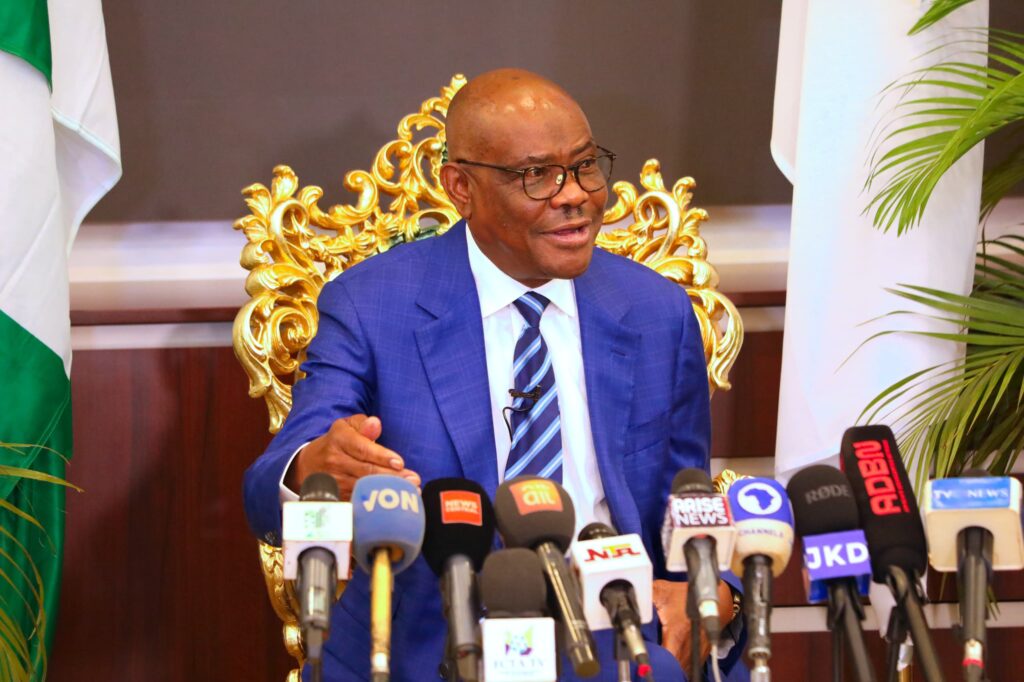 >
>
It’s worth noting that Wike himself remains in the PDP, at least for now. He downplays the significance of the defections, stating that “we still have about 10, and we will continue to work together.” This resilience could be genuine. It could also be a carefully crafted public posture, a chess move in a larger game. From my vantage point, having observed similar scenarios unfold, I suspect it’s a bit of both. Wike is a shrewd operator. He’s likely weighing his options and calculating his next move based on how the political winds blow.
The speed and ease with which these defections occur raises questions about party discipline and the underlying principles that bind members. Are these parties truly representative of distinct ideologies, or are they merely vehicles for individual ambition? In the Nigerian context, it’s often the latter. This impacts governance significantly, as policy decisions become less about serving the electorate and more about satisfying individual and factional interests.
Wike’s call for PDP leaders to address the crisis rings somewhat hollow, considering his own role in the party’s divisions over the years. He speaks of the party losing out if it doesn’t get its house in order. This is undoubtedly correct, but it lacks self-awareness. He’s been a major player in these political dramas for a long time. Is he genuinely concerned about the PDP’s future, or is he simply managing the narrative?>
The defection itself points to a larger, perhaps uncomfortable truth: Nigerian politics is often less about ideals and more about individuals maneuvering for position within a patronage system. The movement of lawmakers from one party to another often happens without any real explanation to their constituents. It underscores a disconnect between the governed and those who govern. This erodes trust in the political process and fuels cynicism among the electorate.
Consider the broader implications. If parties are so easily fractured and allegiances so easily switched, what does that say about the stability of the political system? What does it mean for long-term policy planning and the ability to address the country’s pressing challenges? These defections contribute to a sense of instability and uncertainty, making it difficult to attract foreign investment and implement meaningful reforms.
Also, Wike’s dismissal of the rumors about his arrest in France as “politically motivated lies” feels like a standard deflection. Whether the rumors are true or not is almost beside the point. The fact that such rumors circulate speaks volumes about the level of distrust and the willingness to believe negative narratives about political figures.
This situation highlights a pressing need for electoral reforms that promote greater accountability and transparency. Perhaps stricter rules governing defections, along with measures to strengthen party discipline and promote internal democracy, could help stabilize the political landscape. Perhaps citizens should demand more from their elected officials, holding them accountable for their actions and demanding that they prioritize the public interest over personal gain.
Looking ahead, the Rivers State defections are a symptom of a deeper malaise affecting Nigerian politics. They raise questions about the integrity of the party system, the motivations of political actors, and the state of the nation’s democracy. It would be wise to view these events with a critical eye, acknowledging the complexities and avoiding simplistic explanations. Only then can we begin to address the underlying issues and build a more stable and accountable political system. The long-term consequences of these defections for Rivers State, and for the wider political system, remain to be seen. However, one thing is certain: they serve as a reminder of the challenges facing Nigerian democracy and the urgent need for reform.

![[post_title]](https://samony.com.ng/wp-content/uploads/2025/12/What-is-SPF-and-how-is-sunscreens-sun-protection-factor-300x169.jpeg?lm=69332F2E "Australian Sunscreen Standards Under Fire: Are SPF Claims Reliable?")
![[post_title]](https://samony.com.ng/wp-content/uploads/2025/12/1764962269_Federal-judge-orders-Epstein-grand-jury-documents-unsealed-as-DOJ-300x200.jpeg?lm=69332FE0 "Epstein Documents Unsealed: Transparency or Obstruction?")
![[post_title]](https://samony.com.ng/wp-content/uploads/2025/12/1764962435_Star-says-Im-a-Celeb-stint-drove-him-back-to-300x158.jpg?lm=69333084 "Iain Lee’s Relapse After Reality TV: Time for Shows to Actually Care?")
![[post_title]](https://samony.com.ng/wp-content/uploads/2025/12/BREAKING-Full-draw-for-2026-World-Cup-group-stages-confirmed-300x169.jpg?lm=69333125 "2026 World Cup Draw: Initial Reactions and Open Questions")
![[post_title]](https://samony.com.ng/wp-content/uploads/2025/12/SteamOS-vs-Windows-on-dedicated-GPUs-Its-complicated-but-Windows-300x169.jpeg?lm=69332D16 "SteamOS vs. Windows Gaming: 2026 Performance Showdown")
![[post_title]](https://samony.com.ng/wp-content/uploads/2025/12/Spurs-U19s-vs-Slavia-Prague-U19s-UEFA-Youth-League-300x146.jpg?lm=69331A87 "Tottenham Hotspur U19s vs. Slavia Prague U19s: How to Get Free Tickets")


![[post_title]](https://samony.com.ng/wp-content/uploads/2025/12/What-is-SPF-and-how-is-sunscreens-sun-protection-factor.jpeg?lm=69332F2C "Australian Sunscreen Standards Under Fire: Are SPF Claims Reliable?")
![[post_title]](https://samony.com.ng/wp-content/uploads/2025/12/1764962269_Federal-judge-orders-Epstein-grand-jury-documents-unsealed-as-DOJ-1024x683.jpeg?lm=69332FE3 "Epstein Documents Unsealed: Transparency or Obstruction?")
