


Pulitzer Prize-winning journalist Peter Arnett, renowned for his fearless coverage of conflicts from the Vietnam War to the Gulf War, has died at the age of 91. US media outlets reported his passing on Wednesday in California, where he was receiving hospice care for prostate cancer. Arnett’s career spanned decades, establishing him as a household name through his impactful reporting for both the Associated Press (AP) and CNN, covering some of the most pivotal global events of the late 20th century.
Born in Riverton, New Zealand, in 1934, Arnett later naturalised as an American citizen and made southern California his home since 2014. He first gained widespread recognition for his intrepid work as a wire-service correspondent for the Associated Press in Vietnam. From 1962 until the war’s conclusion in 1975, Arnett frequently accompanied troops on dangerous missions, providing ground-level insights into the brutal realities of the conflict. His immersive reporting style often placed him directly in harm’s way, a testament to his dedication to capturing the unvarnished truth.
During a 2013 talk, Arnett recounted a chilling moment in Vietnam that underscored the constant peril. He described witnessing a soldier being shot just inches from his face while pausing to read a map. “As the colonel peered at it, I heard four loud shots as bullets tore through the map and into his chest, a few inches from my face,” Arnett told the American Library Association, adding, “He sank to the ground at my feet.” Such vivid personal accounts became a hallmark of his reporting, conveying the human cost of war to audiences worldwide.
Arnett transitioned from the Associated Press in 1981 to join CNN, where he would achieve global fame during the first Gulf War. He was one of a small contingent of Western journalists who chose to remain in Baghdad as the conflict escalated. His live broadcasts from the besieged city, often interrupted by missile strikes and air-raid sirens, offered unprecedented real-time perspectives on modern warfare, captivating millions of viewers and cementing his reputation as a tenacious correspondent.
His reporting from Iraq included a notable interview with then-President Saddam Hussein. Reflecting on this encounter in the Roanoke Times, Arnett stated his intention to be “as tough in my questioning as the situation would allow.” He wrote, “I was not intimidated by the prospect of encountering the man many had called ‘The Butcher of Baghdad.’ I figured he could do no worse to me than the constant bombing of Baghdad was threatening to do,” illustrating his unwavering journalistic resolve amidst extreme pressure.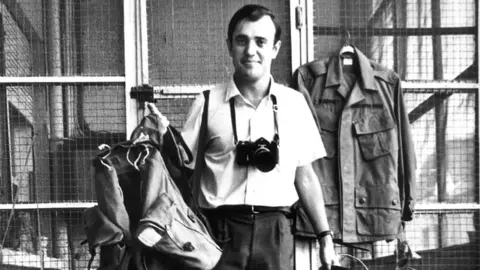
In 1997, Arnett achieved another significant journalistic coup, becoming the first Western reporter to interview Osama Bin Laden. This clandestine meeting took place at a secret hideout in Afghanistan, several years before the devastating 11 September 2001 attacks on the United States. During the interview, when asked about his future intentions, Bin Laden reportedly told Arnett, “You’ll see them and hear about them in the media, God willing,” a chilling premonition that would later resonate deeply.
Arnett’s career, while celebrated, also faced controversy. He later worked for NBC but was famously dismissed after an interview on Iraqi state television, where he was perceived as critical of US military strategy. Expressing his shock at the dismissal, Arnett was promptly hired by the Daily Mirror, reiterating his commitment to truthful reporting. “I report the truth of what is happening here in Baghdad and will not apologise for it,” he asserted in the UK paper, defending his objective stance.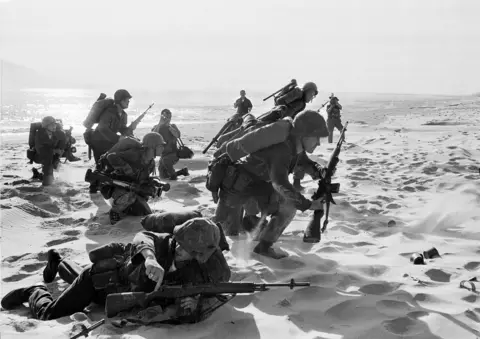
Tributes poured in following the announcement of his death. Edith Lederer, a former colleague still with the Associated Press, described Arnett as “one of the greatest war correspondents of his generation – intrepid, fearless, and a beautiful writer and storyteller.” She added that his reporting, both in print and on camera, would “remain a legacy for aspiring journalists and historians for generations to come,” underscoring his lasting impact on the field.
Nick Ut, a retired photographer who worked closely with Arnett in Vietnam, shared a poignant remembrance, calling him “like a brother.” Ut expressed the profound personal loss, stating, “His death will leave a big hole in my life.” Arnett is survived by his wife, Nina Nguyen, and their children, Andrew and Elsa, leaving behind a family and a distinguished professional legacy that redefined war reporting.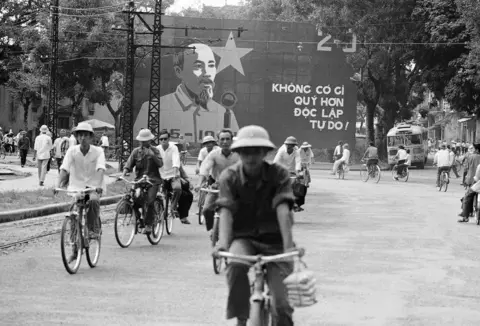

![[post_title]](https://samony.com.ng/wp-content/uploads/2025/12/Saudi-Arabia-a-E10-billion-rumor-and-Barcelonas-finances-back-300x156.jpg?lm=69440C57 "Saudi Arabia’s €10 Billion Barcelona Bid: Financial Hopes vs. Ownership Reality")
![[post_title]](https://samony.com.ng/wp-content/uploads/2025/12/French-doctor-jailed-for-poisoning-30-patients-including-children-300x169.jpeg?lm=69440CC3 "French Anaesthetist Jailed for Life Over Patient Poisonings in Besançon")
![[post_title]](https://samony.com.ng/wp-content/uploads/2025/12/1766067596_Exact-dates-you-can-snap-up-Christmas-vegetables-from-5p-300x158.jpg?lm=69440D8E "UK Supermarkets Slash Christmas Vegetable Prices to 5p")
![[post_title]](https://samony.com.ng/wp-content/uploads/2025/12/FAAN-Approves-Commencement-Of-Commercial-Flights-To-Ibadan-Airport-300x262.jpg?lm=69440A2B "Ibadan Airport Cleared for Commercial Flights After Upgrades")



![[post_title]](https://samony.com.ng/wp-content/uploads/2025/12/1766068018_Marc-Marquez-propels-MotoGP-to-record-figures-in-2025-1024x682.jpg?lm=69440F34 "Marc Marquez Drives MotoGP to Record Global Fan Engagement in 2025")
![[post_title]](https://samony.com.ng/wp-content/uploads/2025/12/Saudi-Arabia-a-E10-billion-rumor-and-Barcelonas-finances-back-1024x531.jpg?lm=69440C58 "Saudi Arabia’s €10 Billion Barcelona Bid: Financial Hopes vs. Ownership Reality")
![[post_title]](https://samony.com.ng/wp-content/uploads/2025/12/French-doctor-jailed-for-poisoning-30-patients-including-children.jpeg?lm=69440CC2 "French Anaesthetist Jailed for Life Over Patient Poisonings in Besançon")
