

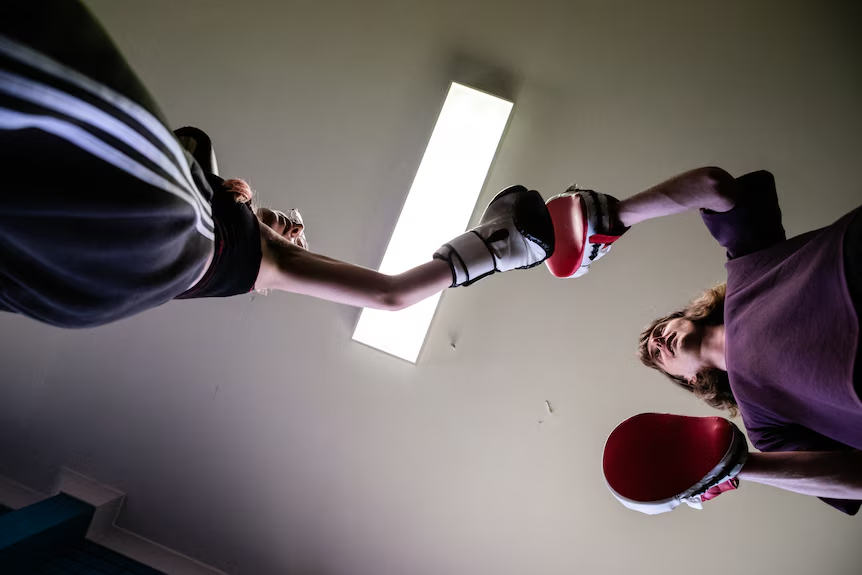
Perth, Australia – Amid mounting concerns over the pervasive impact of social isolation, a unique boxing initiative in Perth’s inner-west is actively addressing loneliness by cultivating a vital sense of community among its participants. The Boxing Project offers free monthly non-combat boxing sessions, specifically tailored for LGBTQIA+ individuals, though welcoming to all. This innovative approach provides a sanctuary where participants can build physical and psychological strength, fostering connections often absent in traditional fitness environments.
Recent research underscores the urgency of such initiatives. A Household, Income and Labour Dynamics in Australia (HILDA) survey revealed that young people aged 15 to 24 experience loneliness more acutely than any other demographic. These findings are corroborated by international studies from the US and UK, which consistently indicate that LGBTQIA+ individuals face a significantly higher risk of loneliness compared to their heterosexual counterparts, highlighting a critical vulnerability within this community.
Sonya Frossine, a regular participant, attests to the transformative power of the classes. She describes feeling like an outsider in conventional fitness settings but has never experienced that sentiment within The Boxing Project. Ms. Frossine emphasizes the profound value of social engagement, stating, “I just feel more confident walking out into the world, both on a physical and a psychological level.” She believes the project’s core message—that women and queer people are here to take up space, get stronger, and connect—is incredibly potent.
The queer-focused classes are the vision of instructor Amy Collins, who founded The Boxing Project in 2017 to empower women following the MeToo movement. Collins recognized that many gyms could be intimidating spaces and sought to create an environment where individuals could feel comfortable in their own skin while developing physical literacy skills. This led to the expansion of the project to specifically include and support the LGBTQIA+ community, tackling loneliness head-on.
Collins deliberately designed the sessions as a non-gendered space, acknowledging that sports and gym culture are often heavily gendered. “Here’s a space where I’m not checking anyone’s gender ID at the door,” Collins explains. This inclusive philosophy ensures that participants can engage authentically without fear of judgment, fostering a sense of belonging that is crucial for mental well-being and combating feelings of isolation. The absence of a fee also removes a potential barrier to participation, making connection more accessible.
The class structure is thoughtfully designed, combining physical activity with social interaction. Each session begins with 45 minutes of non-combat boxing, focusing on fitness and technique rather than sparring, and does not take place in a traditional ring. This is followed by a 45-minute group discussion, providing a dedicated space for participants to share their thoughts and experiences, further strengthening communal bonds. Ms. Frossine describes this segment as a valuable opportunity to discuss things that might otherwise remain unaddressed.
Dr. Robbie Eres, a clinical psychologist and lecturer at Deakin University specializing in loneliness among minority groups, highlights the severe health implications of social disconnection. He notes that one in three Australian adults experiences loneliness, with LGBTQIA+ individuals being four-and-a-half times more likely to report problematic levels. Dr. Eres warns that loneliness impacts physical health, contributing to cardiovascular disease and neurological conditions, and weakens immune responses. Mentally, it correlates with higher rates of depression, anxiety, self-harm, and suicidality.
Dr. Eres identifies several factors contributing to the disproportionate loneliness experienced by queer Australians, including a lack of family support, a diminished sense of belonging, and minority stress—the chronic stress associated with being part of a marginalized group. He also reiterates the particular vulnerability of younger Australians to loneliness, underscoring the need for targeted interventions and supportive communities like The Boxing Project.
For solutions, Dr. Eres advocates for forming social connections around place-based activities centered on shared interests, as well as strengthening existing relationships. He praises The Boxing Project’s model, noting that the combination of physical movement and facilitated discussion provides an excellent foundation for meaningful social connections. Such spaces offer a safe environment to practice social communication skills that are often taken for granted, addressing a fundamental need for human interaction.
Ultimately, The Boxing Project exemplifies a powerful community-led response to a growing public health crisis. By creating an inclusive, empowering, and non-judgmental space, it not only teaches physical skills but also cultivates vital social connections. Ms. Frossine encapsulates her experience with three words: “confident, powerful, connected,” highlighting the profound personal transformation and sense of belonging fostered by this unique initiative in the fight against loneliness.







