

![[post_title]](https://samony.com.ng/wp-content/uploads/2025/12/MAGA-conspiracy-theorist-and-Trump-influencer-Laura-Loomer-receives-credentials-1024x683.jpg?lm=692E4138)
The Pentagon press corps is undergoing a shakeup. It’s tough to miss, especially with the arrival of figures like Laura Loomer, a far-right influencer with strong ties to Trump. The story, at face value, involves desk assignments and credentialing. Yet, it hints at a bigger shift occurring within defense media coverage.
Mainstream news outlets, facing new restrictions, seemingly walked away from the Pentagon, creating space for others. Loomer promptly announced her arrival, even staking claim to a desk formerly occupied by The Washington Post. This, let’s be honest, had a certain theatrical flair. Others from RedState and Fearless Media also chimed in, leading to a rather public, slightly comical, clarification from those who previously held those positions.
It brings to mind the question: what does it really mean to have a desk at the Pentagon? Access, obviously. A physical presence. But does it guarantee influence, accuracy, or even a basic understanding of defense policy?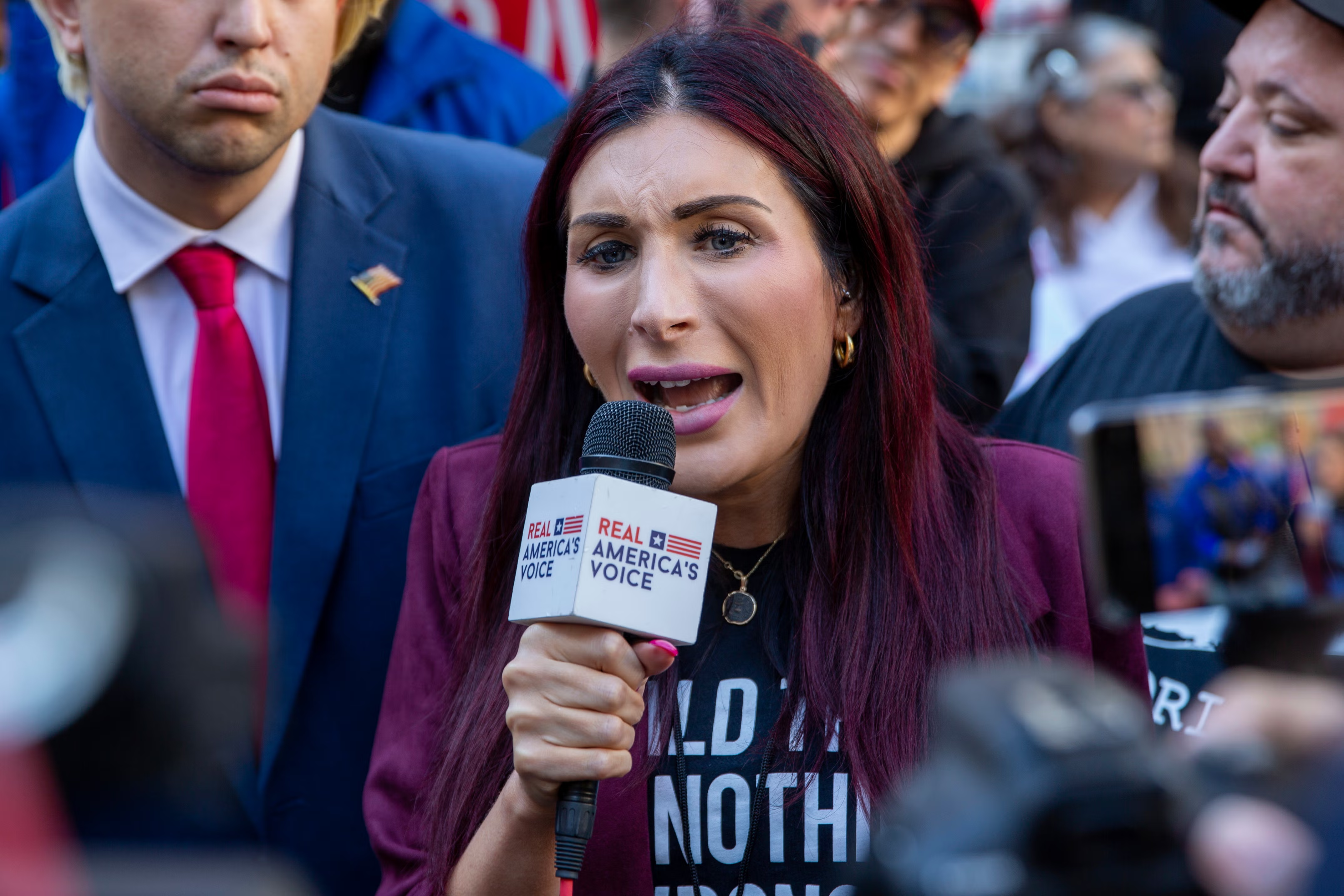 >
>
Skepticism is warranted. Some observers quickly criticized the shift, suggesting it amounts to installing a pro-Trump mouthpiece within the Pentagon press pool. Gov. Gavin Newsom even chimed in with a meme, underscoring the level of public attention, and perhaps ridicule, the situation invites.
This isn’t just about office space. It reflects a broader trend: the splintering of media, the rise of partisan outlets, and the increasing difficulty in defining objective journalism. It’s easy to get lost in the social media back-and-forth, the claims and counter-claims. The real substance to consider is:
The Pentagon’s stance on media access: What motivated the new restrictions that spurred the older press to walk away? The potential impact on defense reporting: What kind of information will now be emphasized, and what will be omitted? The role of influencers in shaping public perception: How will figures like Loomer use their platforms to frame defense narratives?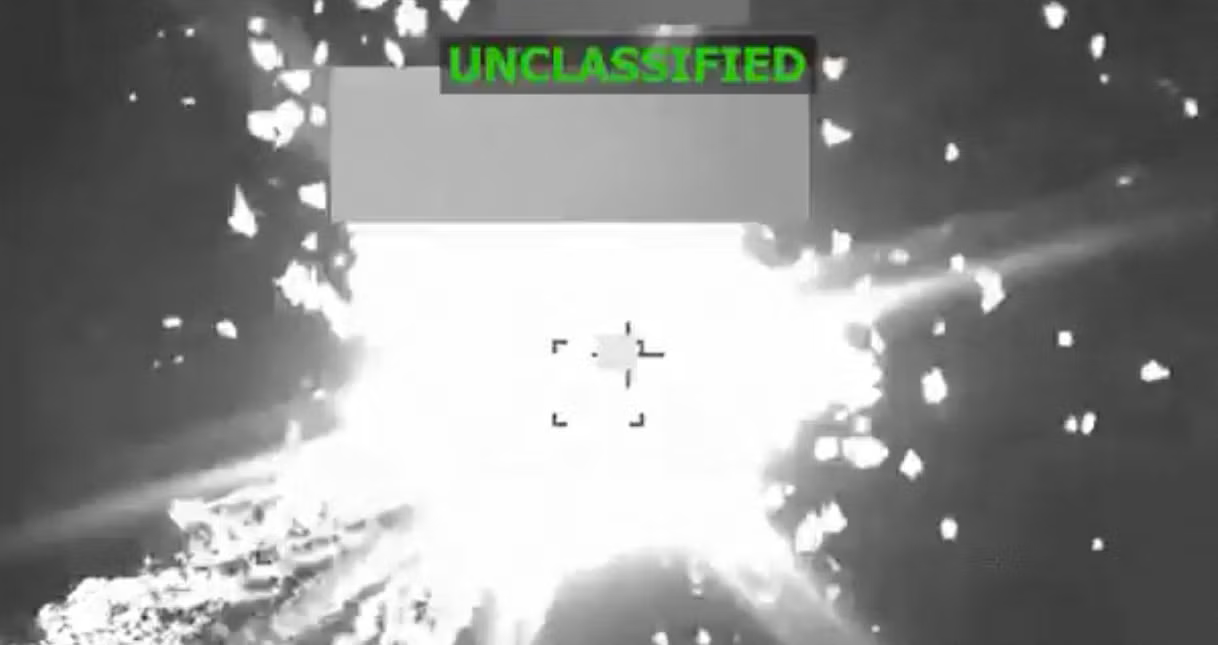 >
>
From my experience, these transitions rarely happen in a vacuum. They often coincide with significant policy shifts. Take, for example, the Trump administration’s aggressive posture in the Caribbean and Venezuela. The timing of these events suggests a careful curation of narrative, a desire to control the message surrounding potentially controversial military actions.
Now, none of this implies any sort of grand conspiracy. Rather, it reflects the pragmatic reality that governments, regardless of political leaning, seek to manage their public image, especially regarding defense matters. The injection of overtly partisan voices into that mix, though, certainly raises eyebrows.
Consider also the legal questions swirling around military operations, like the strike on a drug boat under Secretary Hegseth. When scrutiny intensifies, so does the pressure to control the flow of information. It’s a natural impulse.
This isn’t to single out any individual or outlet. The real takeaway is the need for critical media literacy. It’s more important than ever to consume news from diverse sources, to question motives, and to recognize that “truth” often exists somewhere between competing narratives. The Pentagon press room saga serves as a stark reminder of this reality.
The traditional media landscape is evolving. It’s getting harder to find objective, reliable coverage. Whether this shift at the Pentagon will lead to a more informed public discourse, or simply amplify partisan echo chambers, remains to be seen. I suspect, like most things, the outcome will be a bit of both. The challenge is discerning which is which.

![[post_title]](https://samony.com.ng/wp-content/uploads/2025/12/Disinformation-threat-to-democracy-EU-envoy-warns-300x182.png?lm=692E420B "Democracy Under Siege: Can Truth Win Against the Rising Tide of Disinformation?")

![[post_title]](https://samony.com.ng/wp-content/uploads/2025/12/The-Beats-Powerbeats-Pro-2-are-50-off-but-only-300x156.jpg?lm=692E3818 "Powerbeats Pro 2 in 2025: Still the King of Workout Earbuds? (Cyber Monday Deal Inside)")
![[post_title]](https://samony.com.ng/wp-content/uploads/2025/12/FBNQuest-Repossess-Nestoil-Assets-After-Appeal-Court-Ruling-300x169.jpg?lm=692E39F9 "Nestoil’s HQ Just Got Taken Over?! The Billion-Dollar Loan Drama Continues")
![[post_title]](https://samony.com.ng/wp-content/uploads/2025/12/Ive-found-the-best-beauty-deals-in-Amazons-Cyber-Monday-300x200.jpeg?lm=692E3AF1 "Cyber Monday Beauty: Beyond the Hype, Finding Real Value in Amazon’s Deals")


![[post_title]](https://samony.com.ng/wp-content/uploads/2025/12/Govees-smart-lamp-speaker-hybrids-45-off-which-is-1024x532.jpg?lm=692E4685 "Govee Lamp & JBL Speaker: Genius Combo or Cyber Monday Gimmick?")
![[post_title]](https://samony.com.ng/wp-content/uploads/2025/12/Disinformation-threat-to-democracy-EU-envoy-warns.png?lm=692E4209 "Democracy Under Siege: Can Truth Win Against the Rising Tide of Disinformation?")
