

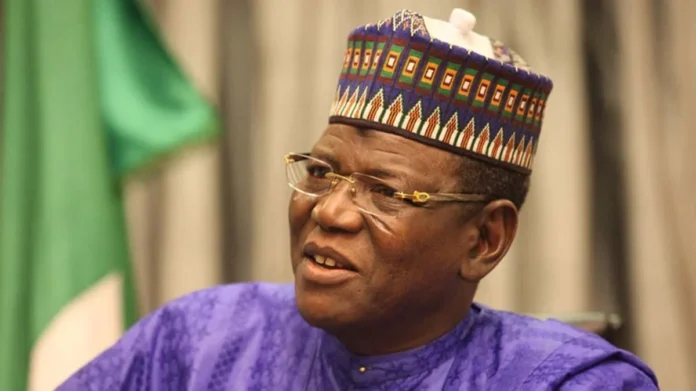
Sule Lamido’s PDP Chairmanship Bid: A Critical Look at Party Politics and Power Dynamics
The recent allegations by former Jigawa State Governor Sule Lamido regarding the Peoples Democratic Party (PDP) chairmanship race raise fundamental questions about internal party democracy and the influence of governors within Nigeria’s political landscape. Lamido claims PDP governors deliberately thwarted his ambition, refusing to issue him a nomination form and ignoring a court order that should have allowed him to contest. This isn’t just about one man’s thwarted ambition; it speaks to a potentially deeper malaise within the PDP.
It’s worth noting Lamido’s history within the PDP. He’s a founding member, a stalwart, and his voice carries weight. Therefore, his claims should not be dismissed out of hand, even if they appear self-serving. He suggests Bauchi State Governor Bala Mohammed, speaking for the governors’ forum, directly told him to step aside, fearing his independence. “My elder brother, you are stronger than us. If we make you chairman, we can’t influence you,” Lamido quotes Mohammed as saying. If true, this is a damning indictment. >
>
This challenge presents a picture of governors acting as gatekeepers, prioritizing their own power and influence over the democratic process within the party. It suggests a system where individual ambition is subservient to the collective will of a powerful, arguably self-serving, group. One wonders if this alleged behavior is an isolated incident, or a symptom of a broader trend within the PDP and perhaps, Nigerian politics in general.
Yet, it’s crucial to consider alternative perspectives. Governors, wielding significant financial and political power at the state level, often play a decisive role in party affairs. They can mobilize resources, influence delegates, and ultimately shape the outcome of internal elections. This isn’t necessarily nefarious; it can be seen as a pragmatic reality of Nigerian politics. Still, unchecked influence can stifle internal dissent and lead to a lack of accountability.
Lamido further alleges that the governors disregarded a court order compelling the PDP to include him in the race, choosing instead to appeal the decision. He rejects the outcome of the convention that produced Tanimu Turaki as national chairman, labeling the process “null and void.” These are strong words, suggesting a fundamental breakdown in trust and a deep sense of grievance. His call for intervention from senior party figures, including former President Olusegun Obasanjo, underscores the severity of the situation.>
Given these facts, several possibilities emerge. Perhaps the governors genuinely believed Lamido’s leadership would be detrimental to the party’s interests. Maybe they had legitimate concerns about his independence and ability to work collaboratively. Or, as Lamido suggests, they were simply protecting their own turf, unwilling to cede control to someone who might challenge their authority.
I’ve seen similar power plays in other political organizations. The desire to control the narrative, to protect vested interests, and to maintain the status quo is a common thread. What makes this particular situation noteworthy is the open accusation of blatant obstruction of a party member’s democratic right to contest for leadership.
The implications extend beyond the PDP. If a major political party, ostensibly committed to democratic principles, can be accused of such blatant manipulation, it raises concerns about the health of Nigeria’s democracy as a whole. It fuels cynicism and undermines public trust in the political process. The PDP needs to address these allegations transparently and decisively. A failure to do so will only further erode its credibility and weaken its position as a viable opposition party.
In any case, the Sule Lamido situation serves as a stark reminder of the complex power dynamics at play within Nigerian political parties. It highlights the tension between individual ambition, collective interests, and the principles of democratic governance. The PDP’s response to these allegations will be closely watched, not just by its members, but by all who care about the future of democracy in Nigeria. The need for strong, independent institutions within political parties cannot be overstated. Without them, the risk of manipulation and the suppression of dissenting voices will continue to undermine the integrity of the political process.

![[post_title]](https://samony.com.ng/wp-content/uploads/2025/12/Warriors-sign-Seth-Curry-for-remainder-of-season.jpeg "Warriors sign Seth Curry for remainder of season")
![[post_title]](https://samony.com.ng/wp-content/uploads/2025/12/1764745476_Ukraine-Russia-war-latest-Trump-envoys-fail-to-secure-peace-deal.jpeg "Ukraine-Russia war latest: Trump envoys fail to secure peace deal after Putin tells Europe he’s ready for war")
![[post_title]](https://samony.com.ng/wp-content/uploads/2025/12/1764744909_FG-Deploys-240-Solar-Powered-E-Tricycles-To-12-Universities.jpg "FG Deploys 240 Solar Powered E- Tricycles To 12 Universities :")
![[post_title]](https://samony.com.ng/wp-content/uploads/2025/12/1764744691_2027-Nasarawa-APC-governorship-aspirant-vows-to-prioritise-power-agriculture-if.jpg "2027: Nasarawa APC governorship aspirant vows to prioritise power, agriculture if…")
![[post_title]](https://samony.com.ng/wp-content/uploads/2025/12/1764744746_Chukwueze-Scores-Two-Iwobi-One-as-Nigerian-Duo-Nearly-Spark.jpeg "Chukwueze Scores Two, Iwobi One as Nigerian Duo Nearly Spark Famous Fulham Comeback")

![[post_title]](https://samony.com.ng/wp-content/uploads/2025/12/The-young-man-involved-in-the-attempted-Christmas-Day-bombing.jpeg "Nigerian Terrorism: Ideology’s Grip on Affluent Minds")
![[post_title]](https://samony.com.ng/wp-content/uploads/2025/12/1764747077_Over-15-years-Man-visits-secondary-school-to-check.jpg "Planting Seeds of Purpose: How Early Climate Action Shapes Lifelong Commitment")
