

Navigating the Evolving Landscape of Celebrity Remembrance: A Critical Look
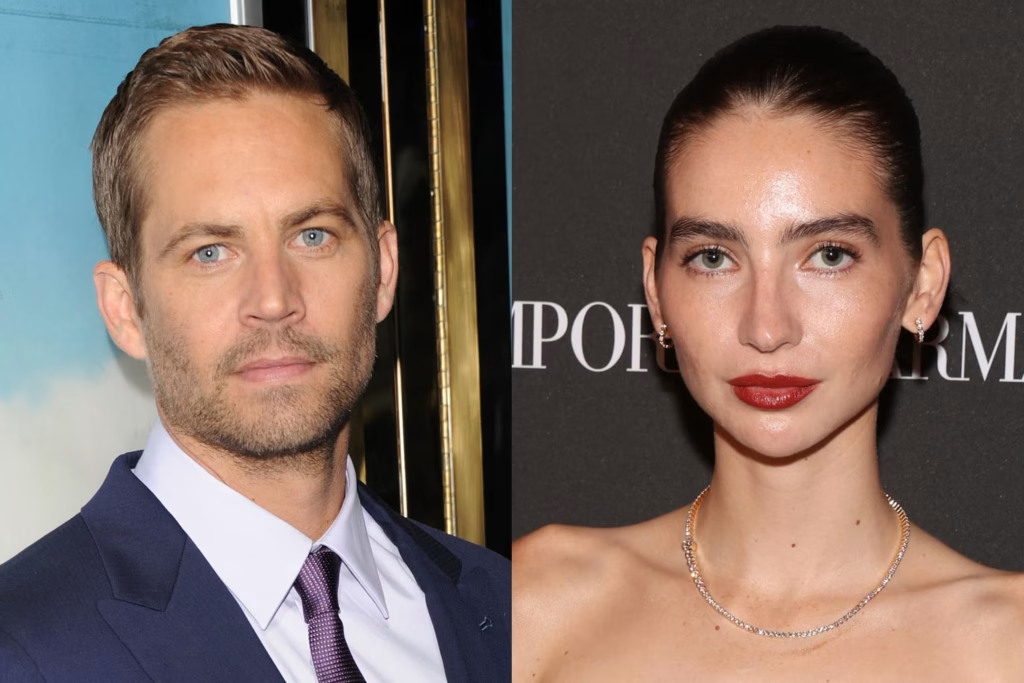
Anniversaries. They punctuate our lives, and the lives of celebrities, with sharp reminders of what was. Seeing Meadow Walker’s tribute to her father, Paul Walker, twelve years after his tragic passing, it prompts reflection beyond simple grief. It pushes us to consider the changing landscape of how we, as a culture, publicly process loss, especially when fame is involved.
There’s a performative aspect to grief, undeniably. Social media amplifies this, offering a stage for expressions of mourning that once remained private. Meadow’s Instagram post, raw with emotion, becomes a shared experience for fans, industry colleagues, and even casual observers. Vin Diesel’s tribute further reinforces this collective grieving, a digital echo of a loss that resonated deeply within the Fast & Furious franchise and beyond. >
>
Yet, this public display raises a question: where does genuine remembrance end and the marketing of legacy begin? It’s a blurred line, complicated by the very nature of Hollywood. Walker’s death occurred mid-production on Furious 7. The choice to use his brothers as stand-ins, and craft a touching on-screen farewell, was, by all accounts, handled with sensitivity. But it also undeniably fueled the film’s box office success. One wonders if Walker would approve the continuous talk of bringing his character back via CGI or other digital wizardry.
It’s worth dwelling on this for a moment. The Fast & Furious franchise represents a fascinating case study. It evolved from a relatively grounded action series about street racing to a globe-trotting spectacle of over-the-top stunts. The passing of a key player undoubtedly shifted the franchise’s trajectory, adding a layer of sentimentality and a constant need to honor Walker’s memory.
Consider Meadow Walker’s cameo in Fast X. On one hand, it’s a heartwarming gesture, a daughter paying tribute to her father by participating in the world he helped create. She grew up on those sets, it’s part of her story. It’s a poignant moment for both her and the fans. On the other hand, it is difficult to shake the feeling it also serves a marketing purpose, drawing on the emotional connection fans have with Walker’s legacy to boost the film’s profile.>
Given these facts, one might ask, is it inherently wrong to capitalize on such a legacy? Maybe not. The Fast & Furious franchise, at its core, is about family, loyalty, and overcoming adversity. Keeping Walker’s memory alive through subtle nods and appearances arguably aligns with these themes. The challenge, however, lies in maintaining authenticity and avoiding exploitation.
It’s worth noting how other entertainment properties grapple with similar situations. The passing of Chadwick Boseman created a unique predicament for Marvel Studios. His iconic portrayal of Black Panther left a void that could never truly be filled. The decision to not recast the role in Black Panther: Wakanda Forever was lauded by some, criticized by others. There are no easy answers.
The entertainment industry thrives on nostalgia, on our emotional connections to characters and actors. The death of a beloved performer amplifies this dynamic. Yet, we have a responsibility as viewers to engage critically. Are we celebrating a legacy, or are we being manipulated by marketing? The answer, often, is a complex mix of both.
In any case, this constant cycle of remembrance, grief, and commercialization will likely continue. Social media ensures it. What was once a private family affair is now broadcast worldwide. The line between genuine tribute and calculated promotion will likely blur further.
Still, it remains crucial to approach these moments with a healthy dose of skepticism, appreciating the genuine emotion while recognizing the commercial forces at play. Paul Walker’s legacy extends beyond the silver screen. It lives on in his daughter, in the memories of his friends and family, and in the impact he had on the lives of his fans. That’s what should truly endure.

![[post_title]](https://samony.com.ng/wp-content/uploads/2025/12/Soundcores-Space-One-headphones-are-a-Cyber-Monday-steal-at-300x156.jpg?lm=692DA8E2 "Anker Soundcore Space One: Budget Headphones Deliver Premium Value, Especially on Cyber Monday")
![[post_title]](https://samony.com.ng/wp-content/uploads/2025/12/1764598617_Children-aged-8-and-9-among-four-killed-in-gang-related-300x200.jpg?lm=692DA35C "Stockton Shooting: Is it really “terrorism,” or a symptom of something deeper?")
![[post_title]](https://samony.com.ng/wp-content/uploads/2025/12/Prof-Offiong-assumes-office-as-12th-UNICAL-VC-300x154.jpg?lm=692DA36E "UNICAL’s New VC: Challenges and Hopes for the Future")
![[post_title]](https://samony.com.ng/wp-content/uploads/2025/12/Preview-Samsunspor-vs-Alanyaspor-prediction-team-news-lineups.net2Fuploads2F20252F112Ffotojet-15-692b2-300x171.webp?lm=692DA28A "Preview: Samsunspor vs Alanyaspor – prediction, team news, lineups")


![[post_title]](https://samony.com.ng/wp-content/uploads/2025/12/I-didnt-inherit-my-fathers-money-I-built-everything-from-1024x512.jpg?lm=692DA851 "Dangote’s Rise: Inheritance vs. Ambition in Africa’s Business Empire")
![[post_title]](https://samony.com.ng/wp-content/uploads/2025/12/World-Health-Organization-recommends-Ozempic-style-medications-as-long-term-obesity-treatments.jpeg?lm=692DA9B3 "Ozempic for Everyone? WHO’s Bold Obesity Plan Sparks Debate")
![[post_title]](https://samony.com.ng/wp-content/uploads/2025/12/Soundcores-Space-One-headphones-are-a-Cyber-Monday-steal-at-1024x532.jpg?lm=692DA8E2 "Anker Soundcore Space One: Budget Headphones Deliver Premium Value, Especially on Cyber Monday")
