

![[post_title]](https://samony.com.ng/wp-content/uploads/2025/11/1764115020_Oklahoma-court-tosses-lawsuit-over-Bibles-in-the-classroom-after-1024x683.jpg?lm=6926424D)
Oklahoma Bible Mandate Tossed: A Look at Shifting Education Policies
The recent Oklahoma Supreme Court dismissal of a lawsuit challenging the Bible mandate in schools raises some interesting questions about the direction of education policy, especially in states with strong cultural and religious identities. The court shelved the case simply because state education officials declared the mandate unenforceable. They essentially said, “Never mind,” and the court accepted that.
Here’s the deal: former State Superintendent Ryan Walters, known for his controversial stances, had pushed for integrating the Bible into the curriculum. He justified it as essential for understanding Western civilization and American founding principles. Think of it as history and literature lessons with a biblical twist. But the move ignited fierce opposition.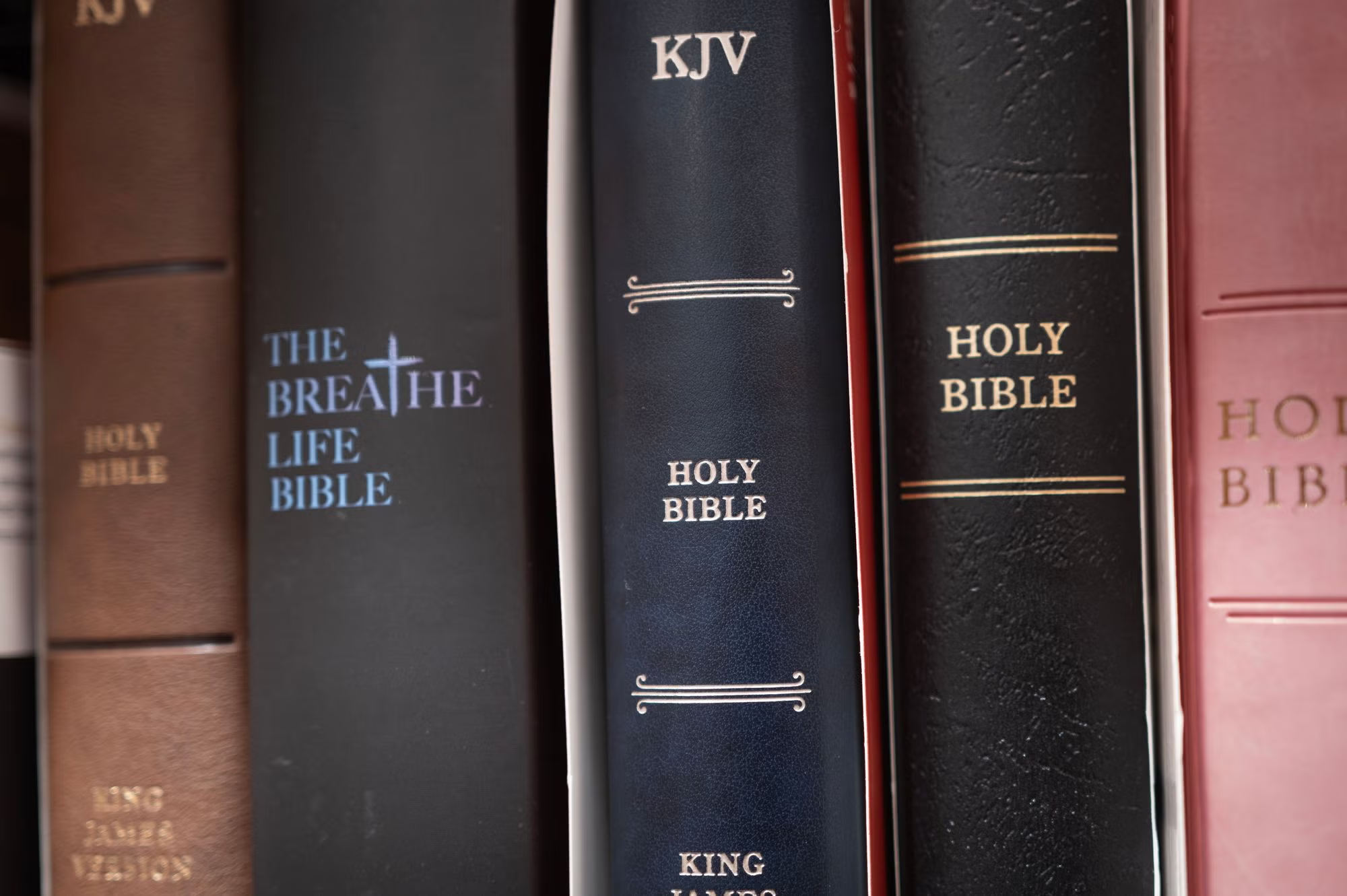 >
>
This opposition culminated in a lawsuit from residents who argued it violated the separation of church and state enshrined in Oklahoma’s constitution. Heavy hitters like the ACLU and Americans United for Separation of Church and State backed the legal challenge. It looked like a textbook clash between religious freedom and secular governance.
Yet, the plot thickened. Walters resigned, and his successor, Superintendent Lindel Fields, quickly moved to nullify Walters’ directives. Those directives included Bible purchases and biblically-based character education material. All of this was reversed. Fields stated the directives were no longer valid. The Court then dismissed the lawsuit because the matter was considered moot, essentially, a closed case.
This whole situation offers a valuable glimpse into how education policy can be shaped by political winds. What seemed like a firm directive suddenly evaporated with a change in leadership. It makes you wonder how stable these policies are in the first place, when a simple resignation can undo so much.>
Now, some might hail this as a victory for secularism. Others might lament the perceived sidelining of religious values. The attorneys involved in the lawsuit against the Bible mandate lauded the decision, emphasizing the importance of families, not politicians, deciding how children engage with the Bible. In their view, it was a win for local control and parental rights.
Still, it’s crucial to look at this with a critical eye. Dismissing the lawsuit on a technicality, rather than addressing the constitutional questions head-on, leaves a door open. What’s to stop a future superintendent with similar views from trying to implement a similar mandate? The legal groundwork remains untested.
Having seen similar clashes in other states, this feels less like a resolution and more like a temporary pause. The underlying tensions around religion, education, and the role of government haven’t vanished.
It’s worth noting the official statement from the Oklahoma State Department of Education. They maintain Bibles are still accessible in schools, and educators and students will still have access to those resources. This suggests a desire to reassure those who favored the mandate that the Bible’s presence in schools isn’t being entirely erased.
This incident reveals the fluid nature of education policy, particularly when it intersects with deeply held beliefs. Changes in leadership, public opinion, and legal challenges all play a role. It shows that what may seem like a settled issue can quickly resurface, demanding renewed scrutiny and debate.
What lessons can we draw from this Oklahoma episode?
Policy Stability is Fragile: Education directives, particularly those touching on sensitive issues like religion, can be easily overturned with changes in leadership. Legal Challenges Serve as Checks: Lawsuits, even if dismissed on technicalities, can act as a deterrent against policies perceived as unconstitutional or discriminatory. Underlying Tensions Persist: Dismissing a lawsuit doesn’t erase the underlying societal divisions and ideological differences that fueled the controversy. Community Engagement is Key: The involvement of parents, educators, and community members is essential for shaping education policy that reflects diverse values and perspectives.
Looking ahead, it will be interesting to see if similar initiatives crop up in other states or if this Oklahoma case prompts a more cautious approach to integrating religion into public schools. The upcoming 2026 election for the next Oklahoma state superintendent will be crucial. Depending on who is elected, there could be another attempt to reinstate the mandate or similar educational initiatives. It certainly will be a pivotal election to watch. One thing is sure; this episode highlights the ever-present need for careful consideration, open dialogue, and respect for differing viewpoints when navigating the complex terrain of education policy.


![[post_title]](https://samony.com.ng/wp-content/uploads/2025/12/1764816647_Doctor-sentenced-to-over-2-years-in-prison-for-selling-300x200.jpg?lm=6930F70B "Ketamine, Addiction, and the Cracks in Our Care: A Systemic Failure Exposed")
![[post_title]](https://samony.com.ng/wp-content/uploads/2025/12/Folate-is-a-key-pregnancy-vitamin-but-not-all-supplements-300x169.jpeg?lm=6930F784 "Prenatal Vitamins: What Really Matters (And What’s Just Hype)")
![[post_title]](https://samony.com.ng/wp-content/uploads/2025/12/30m-Safe-School-probe-Senate-summons-govs-Edun-Education-Defence-300x182.jpeg?lm=6930F790 "$30 Million Vanished? Senate Grills Officials on Nigeria’s “Safe Schools” Promise.")
![[post_title]](https://samony.com.ng/wp-content/uploads/2025/12/Burna-Boy-pledges-to-cover-funeral-costs-for-children-killed-300x150.jpg?lm=6930F7DE "Burna Boy’s Pledge: Genuine Help, or Calculated Move?")

![[post_title]](https://samony.com.ng/wp-content/uploads/2025/12/CBN-Removes-Cash-Deposit-Limit-for-Bank-Customers-in-Nigeria.jpg?lm=6930FE80 "Nigeria’s new cash rules: CBN giveth, CBN taketh away?")
![[post_title]](https://samony.com.ng/wp-content/uploads/2025/12/INEC-Urges-Nigerians-To-Flag-Ineligible-Dead-Persons-As-Voter.jpg?lm=6930F8AE "Nigeria’s Voter Roll: Public Vigilance Alone Won’t Deliver Integrity")
