

il health and cowpea yields in Northern Nigeria are getting a boost. Soil Values, in partnership with the Centre for Dryland Agriculture (CDA), just wrapped up integrated soil fertility management training for farmers in Kano and Jigawa. The goal? To rejuvenate depleted soils and ramp up cowpea production amongst smallholders.
They set up demonstration plots near Takai, Kano, comparing inorganic fertilizers, traditional methods, organic approaches, and integrated soil fertility management (ISFM). One farmer, Ahmad Isa Falali, noted that the training transformed his cowpea farming. He spoke highly of the training. Learning about composting and nutrient management really opened his eyes.
Now, this isn’t just a feel-good story. It’s part of a ten-year project, backed by the Dutch government. The project aims to improve land utilization across Kano, Jigawa, and Bauchi through practical farmer training. It’s worth watching how this plays out long term.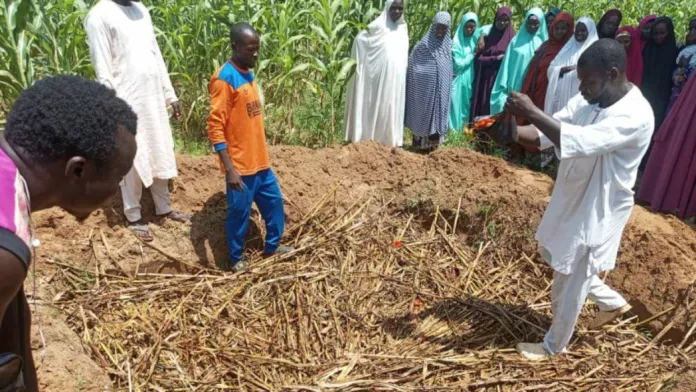 >
>
Rayya Abdullahi, one of the women who took part, expressed confidence in managing soil. That confidence, she hopes, will ripple outwards. She plans to disseminate her new understanding to other women. These initiatives help women in agriculture, yet consistent follow up is needed.
The Soil Values program, spearheaded by IFDC, SNV, and Wageningen University & Research, is a broad effort. It enlists other scientific groups: IITA, AGRA, ICRAF, ISRIC, and IWMI. The project seeks to shrink yield gaps and support soil recovery for improved outputs and food security.
They’re talking agroecology, inclusive markets, and creating a supportive landscape. Soil Values aims for holistic impact. The goal extends to two million hectares across Burkina Faso, Mali, Niger, and Northern Nigeria, impacting 1.5 million farmers. Women and youth receive priority.>
The funding is considerable, a 100 million euro investment. They intend to rehabilitate degraded land and provide aid to 1.5 million smallholder farmers. Nigeria specifically aims to restore 800,000 hectares, with 600,000 producers benefitting.
Programs like these aren’t new. We’ve seen similar projects before. The key question remains: Can they achieve lasting change on the ground and truly empower farmers in a sustainable way? This is a tall order, yet the potential payoff – for both food security and environmental health – is massive. Let’s observe how this unfolds.

![[post_title]](https://samony.com.ng/wp-content/uploads/2025/12/I-Have-A-Wife-And-Five-Children-Catholic-Father-Explains.jpeg?lm=69313106 "Authenticity’s Price: A Priest’s Journey and the Church’s Crossroads")
![[post_title]](https://samony.com.ng/wp-content/uploads/2025/12/FG-Applauds-Nollywoods-Global-Impact-At-15th-Zuma-International-Film-300x169.jpg?lm=69313157 "FG Applauds Nollywood’s Global Impact At 15th Zuma International Film Festival – Arise News")

![[post_title]](https://samony.com.ng/wp-content/uploads/2025/12/1764831706_FG-pegs-6485bpd-oil-benchmark-okays-N1-5121-exchange-rate-for-300x179.jpg?lm=693131DD "Nigeria’s 2026 Budget: A Deep Dive")
![[post_title]](https://samony.com.ng/wp-content/uploads/2025/12/Googles-Antigravity-AI-deleted-a-developers-drive-and-then-apologized.webp-300x169.webp "Google’s Antigravity AI Wipes Developer’s Drive, Sparking Autonomy Concerns")

![[post_title]](https://samony.com.ng/wp-content/uploads/2025/12/1764833148_See-A24-trailer-cast-and-release-date-1024x576.webp "A24’s “Mother Mary”: Hathaway & Coel’s Sinister Secret We Can’t Wait to Uncover")
![[post_title]](https://samony.com.ng/wp-content/uploads/2025/12/1764833232_My-CEO-summoned-me-for-eating-in-the-same-restaurant-1024x555.jpg?lm=693137D4 "CEO Saw You Dining Out? Why Workplace Power Still Feels So Awkward")
![[post_title]](https://samony.com.ng/wp-content/uploads/2025/12/FG-Applauds-Nollywoods-Global-Impact-At-15th-Zuma-International-Film-1024x576.jpg?lm=69313157 "FG Applauds Nollywood’s Global Impact At 15th Zuma International Film Festival – Arise News")
