

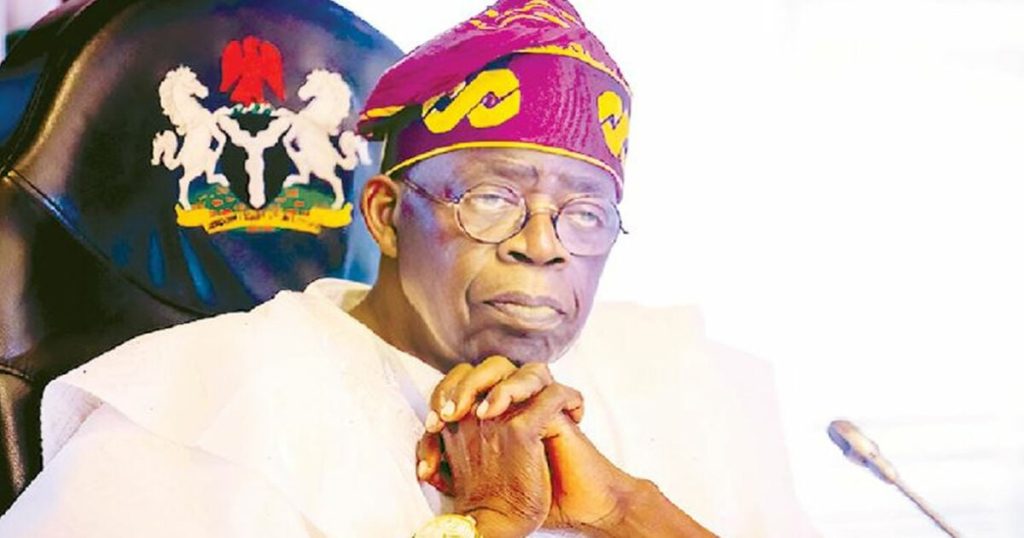
Nigeria’s Security Emergency: A Critical Look at Tinubu’s Response to Escalating Kidnappings
President Tinubu has declared a nationwide security emergency. News of this initiative comes amid a surge in kidnappings and terrorist actions, prompting calls for immediate action. Tinubu’s strategy encompasses expanded recruitment into security agencies and a push for state police legalization. But how effective will these measures really be?
The President’s move coincides with a rare pushback from the National Assembly. Lawmakers are scrutinizing the Federal Government’s practice of negotiating with bandits for hostage releases. They argue this tactic could embolden criminals, potentially intensifying the security crisis. Such discord underscores the complexity of crafting effective solutions to Nigeria’s security woes.
Specifically, criticism centers on alleged negotiations related to kidnappings in Kwara and Kebbi States. The withdrawal of troops from a school in Kebbi before a mass abduction has also sparked outrage. These incidents highlight potential intelligence failures or, worse, internal sabotage.
The situation is indeed dire. Recent attacks include the abduction of hundreds of students and teachers from schools in Niger and Kebbi States, along with an assault on a church in Kwara. Dozens have been killed. These events led to widespread school closures and heightened fear. It’s understandable that drastic measures are under consideration.
The government defends its negotiation strategy by citing the need to protect hostages. The Special Adviser on Information and Strategy explained that direct military action was avoided to prevent casualties among the kidnapped victims. It’s a reasonable argument on the surface, and points to the difficult moral calculus that must be performed in such situations.
Skeptics, including members of the National Assembly, question the long-term effectiveness of this approach. They worry that rewarding criminal behavior with negotiations could backfire, incentivizing further kidnappings. There is evidence from other countries that indicates negotiation only leads to more violence.
The Senate is urging collaboration with international partners to bolster Nigeria’s security capabilities. This signals a recognition that the country may need external assistance to tackle the crisis. Senate Leader Opeyemi Bamidele characterized the current wave of attacks as a “defining moment,” warning against complacency.
Within the Senate, there’s even been introspection about its own role. Senator Bamidele suggested a review of the Committee on Security and Intelligence. He made it clear that there’s room for improvement internally.
Not everyone is on board with the current administration’s approach, of course. Senator Enyinnaya Abaribe criticized attempts to deflect blame onto past administrations. He argues the current government must own its failures, particularly concerning the controversial troop withdrawal before the Kebbi school attack.
Even Senate President Godswill Akpabio has voiced concerns about intelligence failures and possible internal sabotage within security agencies. He questioned how bandits managed to strike despite security advisories issued to schools. These allegations, if true, point to systemic issues that need to be addressed.
Amidst the chaos, Senator Seriake Dickson cautioned against downplaying the severity of the situation. He accused some of his colleagues of prioritizing political correctness over decisive action. Emotions are clearly running high as the security landscape continues to deteriorate.
Despite the criticisms, some lawmakers are defending President Tinubu. Senator Adams Oshiomhole argued that the administration is working under immense pressure. He called for an investigation into the troop withdrawal in Kebbi.
Beyond the political wrangling, there are tangible steps being proposed. Some lawmakers are renewing calls for the death penalty for kidnappers. This demonstrates a desire for harsher deterrents.
Members of the House of Representatives have also voiced strong opposition to the government’s negotiation tactics. A coalition of lawmakers condemned what they view as a “betrayal of the Nigerian people.” They argue that dialogue with criminals rewards criminality and undermines state authority.
These representatives are drawing parallels with other countries, cautioning that negotiating with violent non-state actors has historically led to more violence, not peace. They’re calling for an immediate end to negotiations, along with a coordinated security operation to dismantle kidnapping networks.
Meanwhile, the African Democratic Congress (ADC) has also expressed concerns about secret deals with bandits. The party is demanding transparency and accountability regarding the release of abducted victims.
Former Vice President Atiku Abubakar has joined the chorus of critics. He questions the government’s decision to negotiate with terrorists instead of eliminating them. He argues this approach normalizes kidnapping and elevates criminals to the status of an “alternative government.”
President Tinubu is responding to the crisis with a multi-pronged approach. He has authorized increased recruitment into the police force and the military. He also approved the temporary use of NYSC camps for police training. This seems like a necessary short term solution.
Tinubu directed the DSS to deploy trained forest guards to combat terrorists and bandits hiding in forests. The strategy also includes calls for nationwide vigilance and citizen support. It sounds like a plan, but the proof is in the outcome.
In addition, Tinubu is urging the National Assembly to expedite the legalization of state police forces. This could lead to a more decentralized and responsive policing system. It would also open a can of worms, given that state governors could abuse such a force.
Finally, Tinubu is encouraging states to relocate boarding schools from remote areas and advising churches and mosques to request security cover. These are practical steps, but they also acknowledge the vulnerability of certain institutions.
The governor of Ogun State, Dapo Abiodun, echoed the call for state police. He argues this is no longer a negotiable component of true federalism and effective security. It makes sense, in theory.
In response to the President’s directive, the Police Service Commission and the Nigeria Police Force have launched a joint committee to oversee the recruitment of new personnel. This is a crucial step in bolstering the size and capacity of the police force.
In Abuja, authorities are launching a school intelligence network. The intent is to gather information and secure schools against potential attacks.
There is a tragic human cost in all of this. Two parents of abducted children have reportedly died. The Christian Association of Nigeria confirmed the deaths, underscoring the emotional toll of the crisis.
President Tinubu’s declaration of a security emergency signifies a recognition of the severity of the situation. Whether the proposed measures will be sufficient to address the root causes of insecurity remains to be seen. There are serious questions about strategy, accountability, and the long-term consequences of negotiating with criminals. This is a complex challenge that demands more than just quick fixes.
Keywords: Nigeria security emergency, Tinubu security response, escalating kidnappings Nigeria, state police legalization, bandit negotiations Nigeria, Kebbi kidnappings, school abductions Nigeria, security intelligence failures

![[post_title]](https://samony.com.ng/wp-content/uploads/2025/12/1764875122_Inside-Im-A-Celebrity-Aitchs-dating-history-as-rapper-sparks-300x158.jpg?lm=6931DB75 "Celebrity Dating: The “I’m a Celebrity” Publicity Machine")


![[post_title]](https://samony.com.ng/wp-content/uploads/2025/12/How-to-Break-a-Bad-Habit-11-Tips-and-Strategies-300x169.jpg?lm=6931DA31 "Work With Your Brain to Break Bad Habits")
![[post_title]](https://samony.com.ng/wp-content/uploads/2025/12/Pope-Leo-dissolves-one-of-Francis-final-acts-in-major-300x200.jpeg?lm=6931DAAB "Vatican Finances: Pope Leo Scraps Predecessor’s Plan – What’s Next?")
![[post_title]](https://samony.com.ng/wp-content/uploads/2025/12/In-1995-a-Netscape-employee-wrote-a-hack-in-10-300x169.jpg?lm=6931D870 "JavaScript’s Reign: How a 10-Day Hack Took Over the Web (And What’s Next)")

![[post_title]](https://samony.com.ng/wp-content/uploads/2025/12/1764876887_Mohbads-Widow-Wunmi-Issues-Fresh-Update-on-Her-DNA-Court.jpeg?lm=6931E259 "Mohbad’s Paternity Drama: Court Just Dropped a Major Ruling!")
![[post_title]](https://samony.com.ng/wp-content/uploads/2025/12/Syria-vs-Qatar-LIVE-Score-Updates-The-match-is-tie-1024x576.png?lm=6931E1DC "Syria Stuns Qatar: Was This Arab Cup Draw a Warning Sign?")
![[post_title]](https://samony.com.ng/wp-content/uploads/2025/12/1764875122_Inside-Im-A-Celebrity-Aitchs-dating-history-as-rapper-sparks-1024x538.jpg?lm=6931DB75 "Celebrity Dating: The “I’m a Celebrity” Publicity Machine")
