

![[post_title]](https://samony.com.ng/wp-content/uploads/2025/12/1765930249_The-NHS-is-in-the-middle-of-a-flu-catastrophe.jpeg?lm=6941F509)
Amidst a severe national flu outbreak, dubbed a ‘flunami,’ the UK’s National Health Service (NHS) is facing unprecedented pressure, with hospitals declaring critical incidents and children’s surgeries being postponed. The highly contagious H3N2 strain has led to a significant increase in hospital admissions, with thousands of patients admitted daily due to flu-related complications. Health officials warn the service is nearing collapse, especially with potential strikes by resident doctors looming.
The sheer volume of flu patients is overwhelming, with daily admissions equivalent to filling more than three entire hospital trusts. This crisis is particularly acute in paediatric intensive care units, where wards are full, and the capacity to move patients is severely limited. The situation has forced the cancellation of non-emergency operations for children, highlighting the immense strain on vital healthcare resources across the country.
Despite this backdrop of national healthcare emergency, one family’s experience on a children’s surgical ward painted a starkly different picture. A planned operation for seven-year-old Liberty, who was undergoing surgery for a relapsed club foot condition, was not only proceeded with but was accompanied by an unexpectedly positive and festive atmosphere.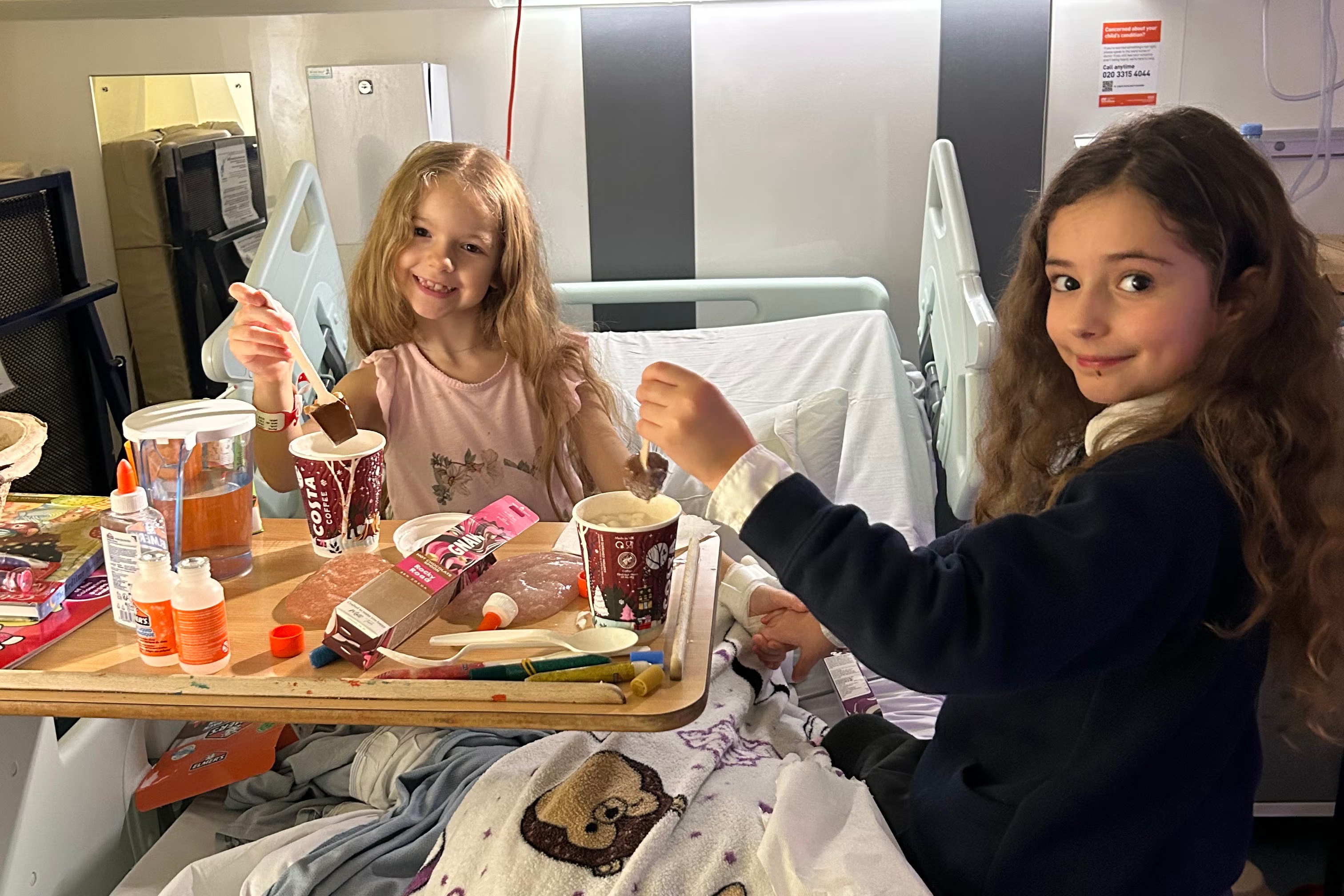
Liberty’s procedure, a tibialis anterior tendon transfer (TATT) to correct her foot’s muscle balance, was scheduled after months of waiting. Upon arrival at Chelsea and Westminster NHS hospital, the family braced for potential delays or cancellations due to the ongoing flu crisis. However, they were met with a remarkably calm and efficient environment on the dedicated children’s surgical ward.
The ward, recently redecorated with a space theme, was serene upon their arrival. Liberty was immediately engaged by a play assistant, provided with art supplies, and seen promptly by the surgical and anaesthetic team. The author noted the absence of visible stress among the medical staff, who continued their duties with professionalism and a reassuring demeanour, even when discussing the flu outbreak affecting other parts of the hospital.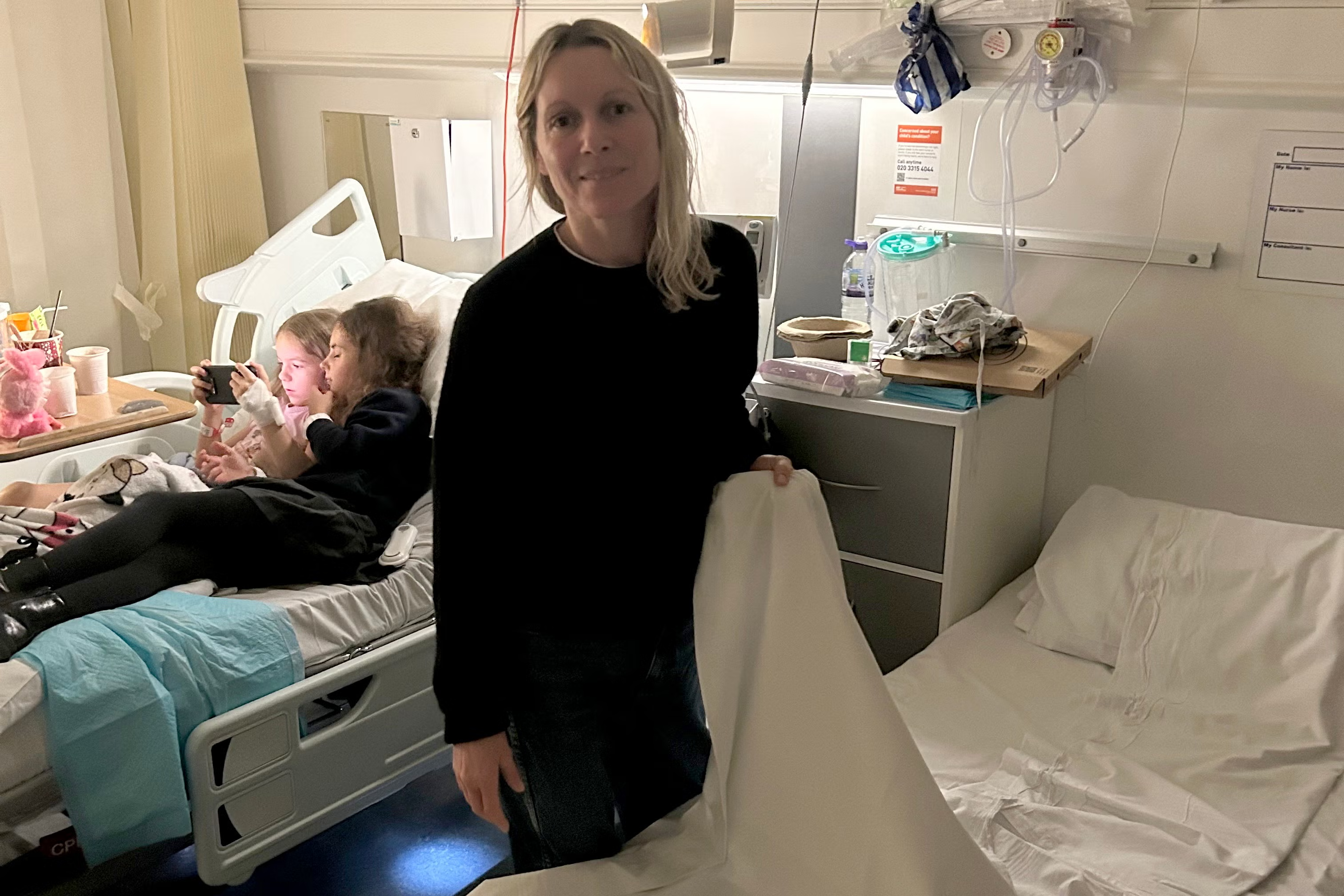
Following the successful operation, Liberty was moved to the recovery room, and then to a children’s dormitory. The ward staff went above and beyond to ensure Liberty’s comfort and recovery, transforming her hospital stay into a festive event. They facilitated arts and crafts activities, arranged for her best friend to visit, and even helped create a ‘slime party’ as part of her post-operation recovery.
As the ward staff decorated for Christmas, seemingly unfazed by the national health emergency, they continued to provide exceptional care. The author described the atmosphere as akin to a Montessori nursery, with dedicated play assistants and a constant stream of activities. Even a planned sleepover for Liberty and her friend was facilitated with extra bedding and treats, including hot chocolate and pizza.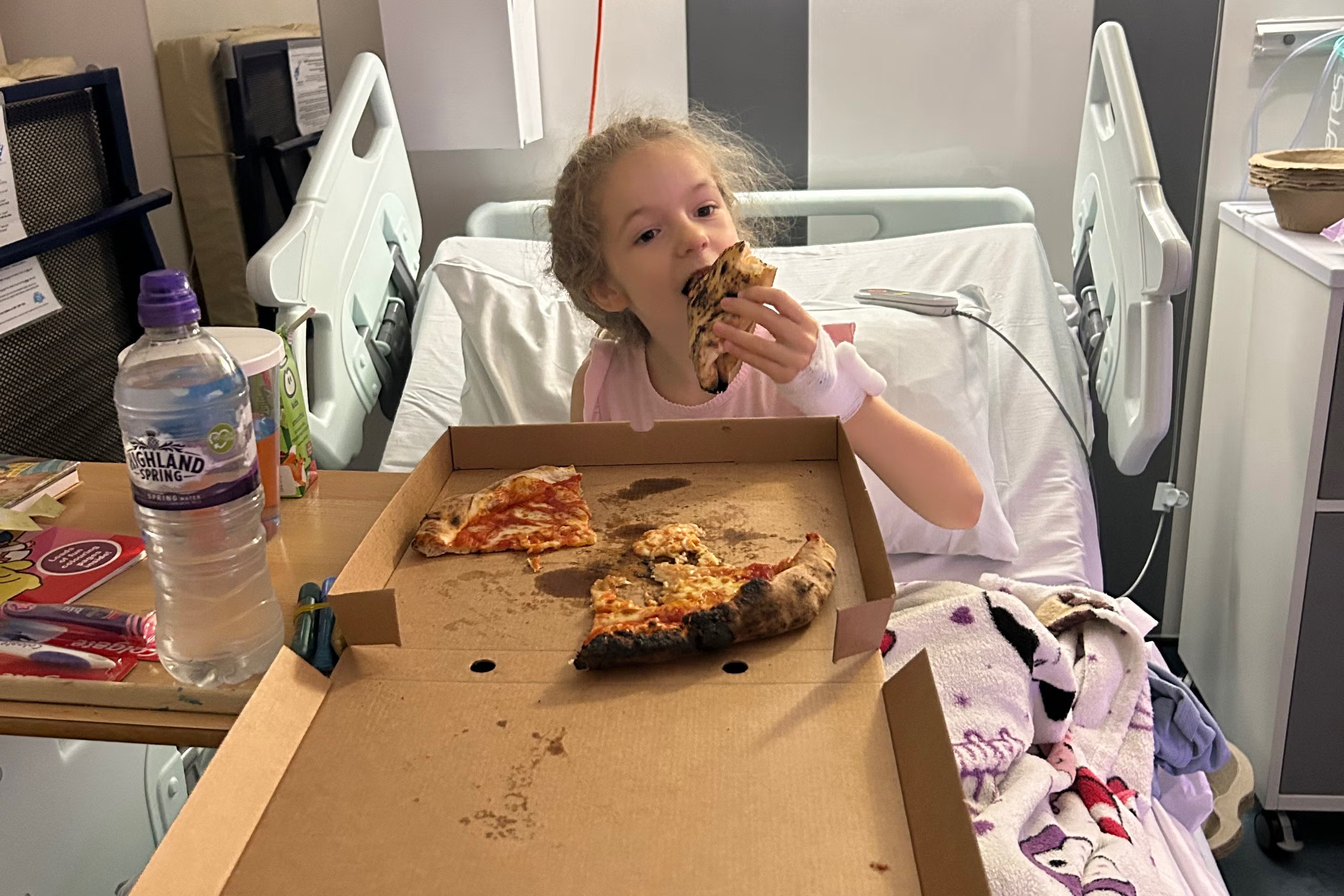
The family’s experience culminated in a swift and well-managed discharge process. The physiotherapist and a doctor providing a festive cast decoration arrived promptly, ensuring Liberty could leave the hospital without undue delay. This level of service, particularly the personalised and cheerful approach, stood in sharp contrast to the dire warnings of an NHS on the brink of collapse.
Reflecting on the experience, the author acknowledged that such a positive outcome might be a ‘postcode lottery,’ not universally replicable across the UK. However, the contrast between the national narrative of crisis and the personal experience of dedicated care and celebration for a child undergoing surgery was profound.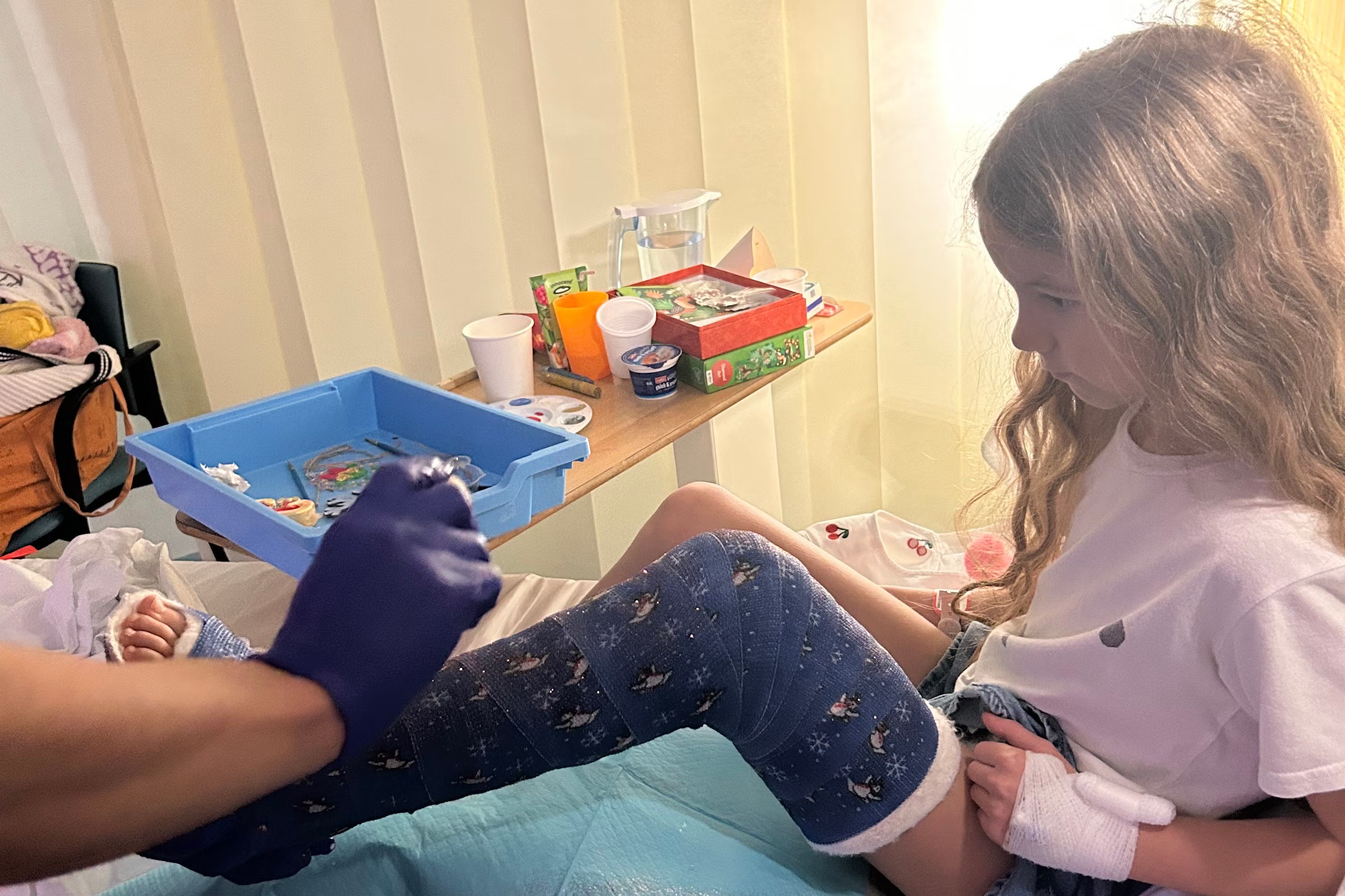
This account highlights the resilience and dedication of NHS staff who, despite immense systemic pressures from the ‘flunami,’ managed to create moments of joy and normalcy for young patients. It serves as a reminder of the exceptional care that can be provided within the health service, even during its most challenging periods, offering a glimmer of positivity amidst the ongoing crisis.

![[post_title]](https://samony.com.ng/wp-content/uploads/2025/12/1765928644_Police-Arrest-TikToker-Peller-Over-Reckless-Driving-Attempted-Su-icide-300x148.jpeg?lm=6941EEC5 "TikToker Peller Arrested For Reckless Driving After Live Stream Crash")
![[post_title]](https://samony.com.ng/wp-content/uploads/2025/12/FCT-traditional-rulers-community-leaders-vow-support-for-Tinubu-commend-300x225.jpg?lm=6941EF9C "FCT Leaders Pledge Support for Tinubu, Praise Minister Wike")


![[post_title]](https://samony.com.ng/wp-content/uploads/2025/12/Guadalajara-vs-Barcelona-Copa-del-Rey-Team-News-Preview-Lineups-300x156.jpg?lm=6941E559 "Barcelona Faces Guadalajara in Copa del Rey Round of 32")
![[post_title]](https://samony.com.ng/wp-content/uploads/2025/12/Samsung-releasing-new-Micro-RGB-TVs-in-2026-300x156.jpg?lm=6941E57E "Samsung Expands Micro LED TV Lineup to Smaller Sizes")

![[post_title]](https://samony.com.ng/wp-content/uploads/2025/12/1765929521_Erika-Kirk-describes-her-meeting-with-conspiracy-promoter-Candace-Owens.jpg?lm=6941F231 "Charlie Kirk Widow, Candace Owens Discuss Assassination Theories")
![[post_title]](https://samony.com.ng/wp-content/uploads/2025/12/1765928644_Police-Arrest-TikToker-Peller-Over-Reckless-Driving-Attempted-Su-icide.jpeg?lm=6941EEC4 "TikToker Peller Arrested For Reckless Driving After Live Stream Crash")
![[post_title]](https://samony.com.ng/wp-content/uploads/2025/12/FCT-traditional-rulers-community-leaders-vow-support-for-Tinubu-commend-1024x768.jpg?lm=6941EF9D "FCT Leaders Pledge Support for Tinubu, Praise Minister Wike")
