

![[post_title]](https://samony.com.ng/wp-content/uploads/2025/12/1765764949_NASCAR-US-news-Dale-Earnhardt-Jr-says-NASCARs-charter-settlement-1024x683.png?lm=693F6F57)
NASCAR’s recent antitrust settlement has been described by racing icon Dale Earnhardt Jr. as a silent yet fundamental transformation of the sport’s economic framework. Speaking on his popular podcast, Earnhardt articulated that the agreement elevates Cup Series charters from renewable licenses to what he considers permanent assets, akin to professional sports franchises. This shift, he suggests, locks in an unprecedented level of permanence and security for team ownership, fundamentally altering the competitive landscape and financial dynamics of stock car racing.
For years, Cup Series charters represented valuable but ultimately temporary entitlements, subject to NASCAR’s ultimate authority and requiring periodic renewal. The new settlement, however, effectively bestows perpetual status upon these charters, granting owners enduring rights that were previously absent. Earnhardt believes this newfound permanence is the pivotal change, setting a new precedent for the sport’s future and significantly impacting the perception and intrinsic worth of these coveted assets within the Cup Series ecosystem.
This grant of perpetual ownership is projected to dramatically inflate charter values, potentially pushing them into financial territories previously associated with major league sports franchises such as those in the NFL or NBA. Earnhardt noted that the Cup Series has, in essence, capped itself at 36 permanent “seats” at the highest level of competition. Ownership of these fixed positions now carries a long-term security previously unattainable, solidifying the investments of existing charter holders and creating a new benchmark for entry into the elite series.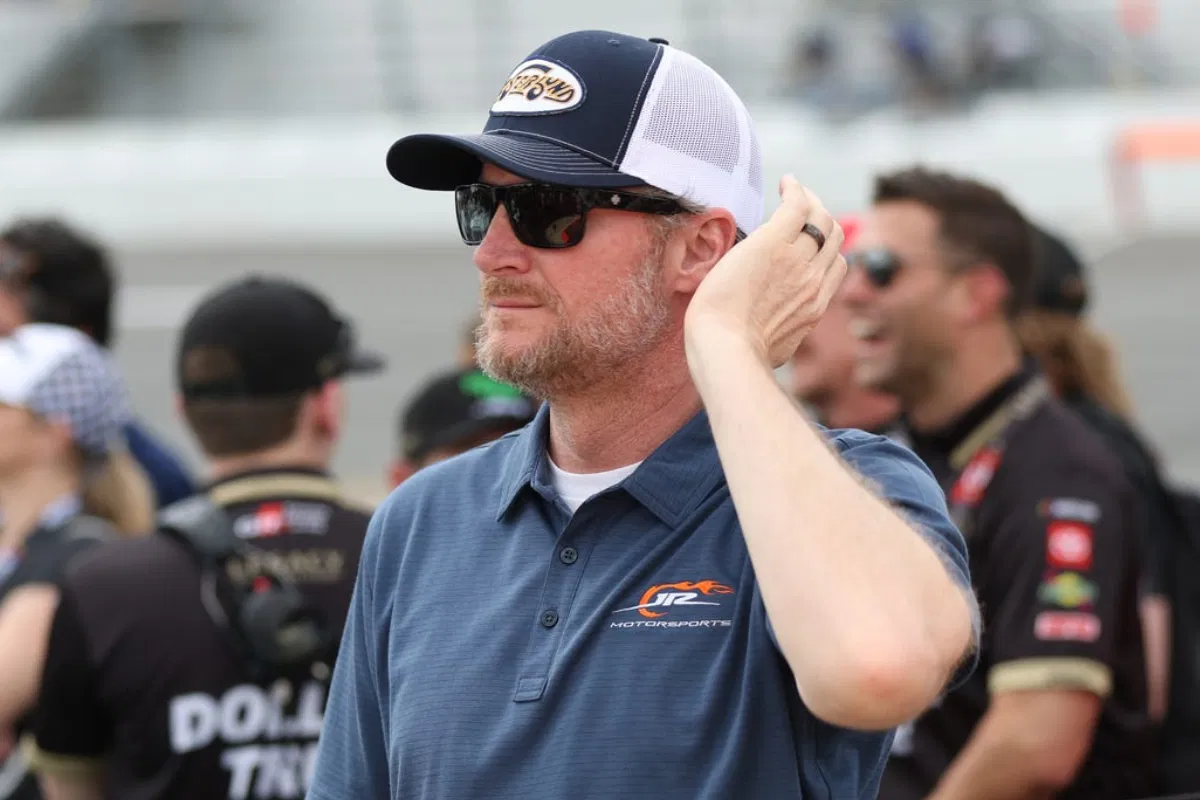
The enhanced security for current owners, however, comes with a significant trade-off, according to Earnhardt. NASCAR traditionally prided itself on its “open-door” philosophy, where ambitious teams with sufficient resources and competitive vehicles could theoretically ascend to the Cup Series. While acknowledging that this reality has been diminishing for some time, Earnhardt contends that the settlement might now almost entirely close that pathway, making independent entry without an existing charter an increasingly formidable, if not impossible, challenge for newcomers.
In practical terms, the economic barrier to entry for aspiring Cup Series teams has escalated considerably. Organizations already holding charters gain substantial stability and market leverage, while prospective owners face an increasingly expensive and highly restricted market. Earnhardt highlighted that this dynamic could severely impede new organizations from breaking into the sport’s top tier in the manner that many historical teams once did, fundamentally altering the traditional progression route for racing operations.
The implications of this shift are particularly pertinent to Earnhardt’s own JR Motorsports, which has openly explored a move to the Cup Series. Prior charter pricing and market uncertainties had consistently complicated these discussions. With charters now solidified as permanent assets, the financial hurdle has risen even higher, potentially placing Cup Series expansion beyond the reach of otherwise competitive and well-funded organizations, despite their proven track record in lower divisions of NASCAR.
The settlement itself resolved a high-profile antitrust lawsuit involving prominent teams 23XI Racing and Front Row Motorsports, bringing an end to a legal dispute that threatened to create further divisions within the sport. Publicly, many team owners have expressed satisfaction with the outcome, citing the benefits of long-term stability and enhanced unity for the Cup Series. Earnhardt, while not disputing these immediate advantages, primarily directs his focus towards the profound long-term concessions NASCAR may have made in the process.
Earnhardt’s analysis suggests that the Cup Series is inexorably moving towards a franchise-based model, regardless of whether the sport officially acknowledges it. This evolution may indeed benefit current owners and investors by solidifying their assets. However, it subtly reshapes NASCAR’s deeply ingrained identity. The aspirational “grassroots dream” of building a team from scratch and ascending to the sport’s pinnacle becomes significantly harder to market and achieve when the financial buy-in price begins to mirror that of a major professional sports league.
Crucially, Earnhardt underscored that the implications of this settlement are not easily reversible. It establishes a significant precedent, setting a definitive direction for NASCAR’s commercial future. While the sport gains undeniable stability and teams secure enhanced asset protection, the business aspect of stock car racing takes a decisive step towards a more mature, corporatized structure. The lingering question remains how much of NASCAR’s traditional spirit of openness and accessibility will endure in this new landscape. As Earnhardt perceives it, the Cup Series did not merely resolve a legal challenge; it may have quietly, yet definitively, franchised its future.

![[post_title]](https://samony.com.ng/wp-content/uploads/2025/12/1765764949_NASCAR-US-news-Dale-Earnhardt-Jr-says-NASCARs-charter-settlement-300x200.png?lm=693F6F57 "NASCAR Charter Settlement Redefines Sport, Says Earnhardt Jr.")
![[post_title]](https://samony.com.ng/wp-content/uploads/2025/12/1765765312_Amadeus-review-classical-music-is-Bach-and-better-than-ever-300x169.jpg?lm=693F70C1 "New Sky Series Amadeus Offers Fresh Look at Mozart-Salieri Rivalry")

![[post_title]](https://samony.com.ng/wp-content/uploads/2025/12/Vasco-bate-Fluminense-e-enfrenta-Corinthians-na-final-da-Copa-300x158.jpg?lm=693F6B21 "Vasco Reaches Copa do Brasil Final After Penalty Shootout Thriller")
![[post_title]](https://samony.com.ng/wp-content/uploads/2025/12/1765763309_I-am-at-Peace-and-Fully-Healed-DJ-Cuppy-Says-300x200.jpg?lm=693F68EF "DJ Cuppy Declares Peace, Healing, and Spiritual Focus")


![[post_title]](https://samony.com.ng/wp-content/uploads/2025/12/Allegations-of-A-Terrorist-Two-former-governors-fueling-insecurity.jpg?lm=693F75FC "Bandit Leader Accuses Ex-Governors of Fueling Northern Nigeria Insecurity")
![[post_title]](https://samony.com.ng/wp-content/uploads/2025/12/1765765312_Amadeus-review-classical-music-is-Bach-and-better-than-ever-1024x576.jpg?lm=693F70C1 "New Sky Series Amadeus Offers Fresh Look at Mozart-Salieri Rivalry")
