The future of in-car entertainment and control is evolving, and a recent collaboration between Meta and Garmin offers a compelling glimpse. Meta’s Neural Band, initially known as a companion for Ray-Ban smart glasses, is now being explored as a standalone input device for vehicle interfaces. This innovative technology promises to move beyond traditional touchscreens and voice commands, allowing drivers and passengers to interact with car systems using intuitive hand gestures.
At CES 2026, Garmin unveiled its Unified Cabin concept, a next-generation in-vehicle system designed to integrate a wide array of technologies. This includes advanced heads-up displays, main screens, dynamic lighting, ultra-wideband (UWB) capabilities, and crucially, new input methods like voice and hand gestures. The integration of Meta’s Neural Band into this concept showcases a significant step towards a more seamless and futuristic automotive interior.
During a demonstration, the potential of the Neural Band was evident. Even in a stationary concept car, users could control an electronic representation of the vehicle on the main screen, performing actions like spinning the car model and zooming in or out with pinch gestures. While basic, this interaction served as a powerful proof of concept for how these novel input methods can enhance the user experience within a vehicle.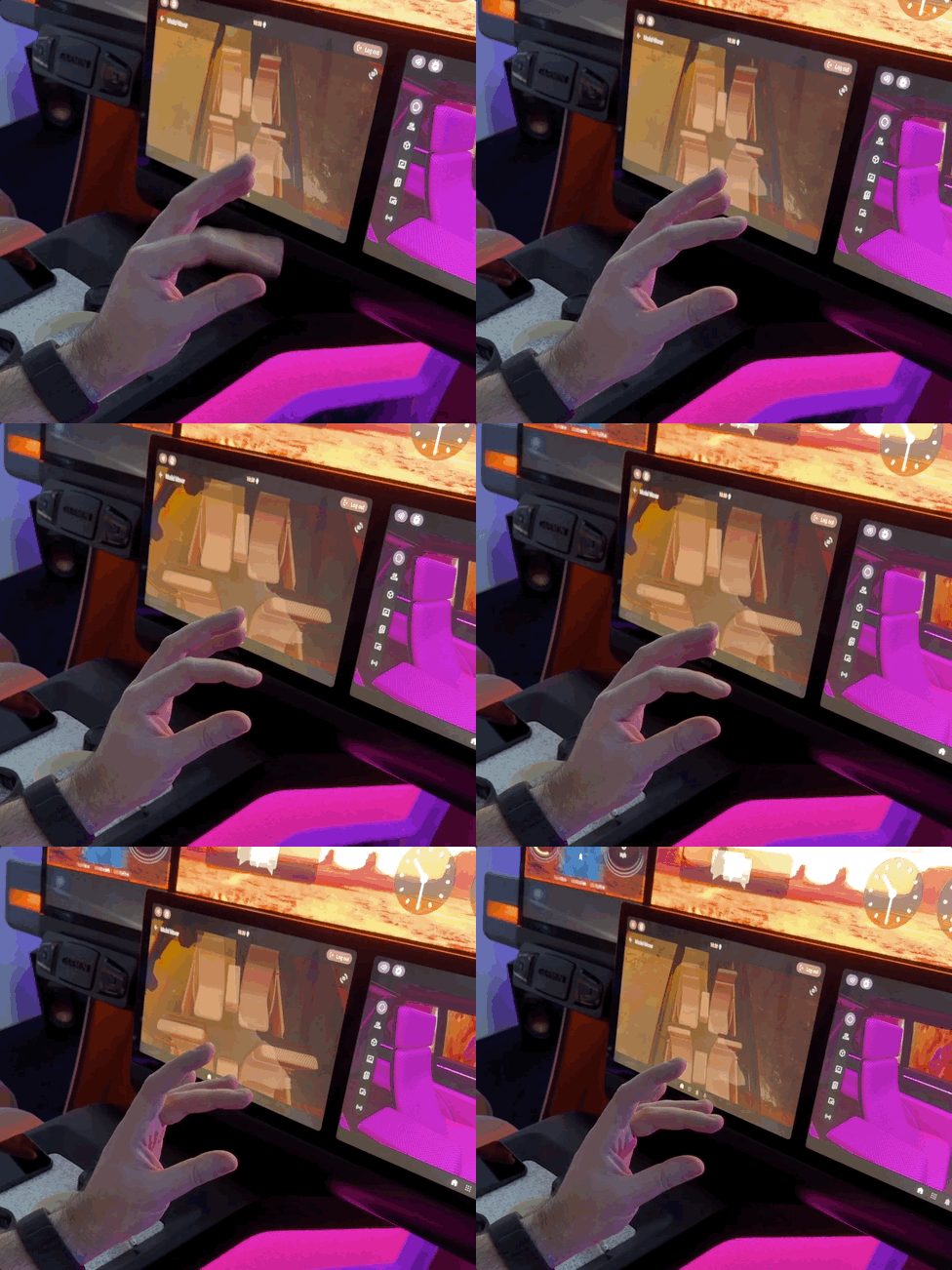
What is Meta’s Neural Band?
Meta’s Neural Band is a wearable device that reads subtle electrical signals from your wrist to interpret finger gestures and hand movements. This allows for contactless control of connected devices, eliminating the need to touch screens or even extend your hand fully. It provides feedback through haptic pulses, making the interaction feel more tangible.
The Unified Cabin concept envisions a future where interacting with your car’s system is as natural as using your hands in everyday life. Instead of relying solely on “Hey Google” commands or direct screen swipes, drivers could use gestures from a relaxed position, potentially even with hands resting comfortably.
This approach aims to reduce driver distraction by minimizing the need to take eyes off the road or hands off the wheel for extended periods. The Neural Band’s ability to detect gestures from a low position, like above the lap, suggests a more integrated and less intrusive control method.
While the demo car lacked a steering wheel, the potential for using the Neural Band with hands on the wheel is an interesting, albeit safety-sensitive, consideration for future development.
The underlying technology of the Meta Neural Band is quite ingenious. By sensing the electrical activity in your wrist muscles, it can translate specific movements into commands. This sophisticated sensing allows for a range of interactions, from simple swipes to more complex manipulations of on-screen elements.
Beyond gesture control, the Garmin Unified Cabin concept also highlighted the role of Ultra-Wideband (UWB) technology. UWB can precisely pinpoint the location of digital keys, whether they are in a fob, a phone, or potentially even a Neural Band. This enables features like personalized welcome lighting as you approach the vehicle and more accurate seat adjustments based on who is actually in the driver’s seat.
This precision is particularly useful in scenarios where multiple individuals have digital keys, ensuring the car correctly identifies the intended user and configures settings accordingly. Such advancements are crucial for creating a truly personalized and intuitive vehicle experience.
The collaboration between Meta and Garmin underscores a broader industry trend towards exploring new human-computer interaction paradigms within vehicles. The concept of the Neural Band being sold separately in the future opens up possibilities for its integration into a wider ecosystem of smart devices and vehicles.
It is exciting to see how technology companies are actively looking at future inputs that can enhance our interaction with cars. The Meta Neural Band, as a potential standalone product, could very well become a key component in the smart car of the future, offering a novel and efficient way to control vehicle functions.
This exploration into advanced interfaces is a testament to the ongoing innovation in automotive technology. As CES 2026 continues to showcase cutting-edge developments, the integration of technologies like the Neural Band signifies a move towards more intuitive and connected driving experiences.