

Manchester United has reported a net loss of £6.6 million for its first financial quarter, a significant downturn primarily attributed to reduced broadcasting revenue and ticket sales. This decline comes as the club navigates the complex financial implications of its performance in European competitions, highlighting the direct link between on-pitch success and fiscal health. The figures, covering the period ending September 30, mark a sharp contrast to the £1.4 million profit recorded in the same quarter of the previous year.
Total revenue for the quarter experienced a two per cent decline, reflecting the broader challenges faced by the club in maximising its commercial streams. However, the report also indicated some positive developments on the expenditure side. Player and staff wages saw an 8.2 per cent decrease, a direct consequence of recent job cuts and a strategic effort to streamline operations and reduce the overall cost base.
Chief Executive Officer Omar Berrada addressed the report, stating that “The difficult decisions we have made in the past year have resulted in a sustainably lower cost base and a more streamlined, effective organisation equipped to drive the club towards improved sporting and commercial performance over the long-term.” His comments underscore a concerted effort by the club’s leadership to implement structural changes aimed at fostering long-term stability and success.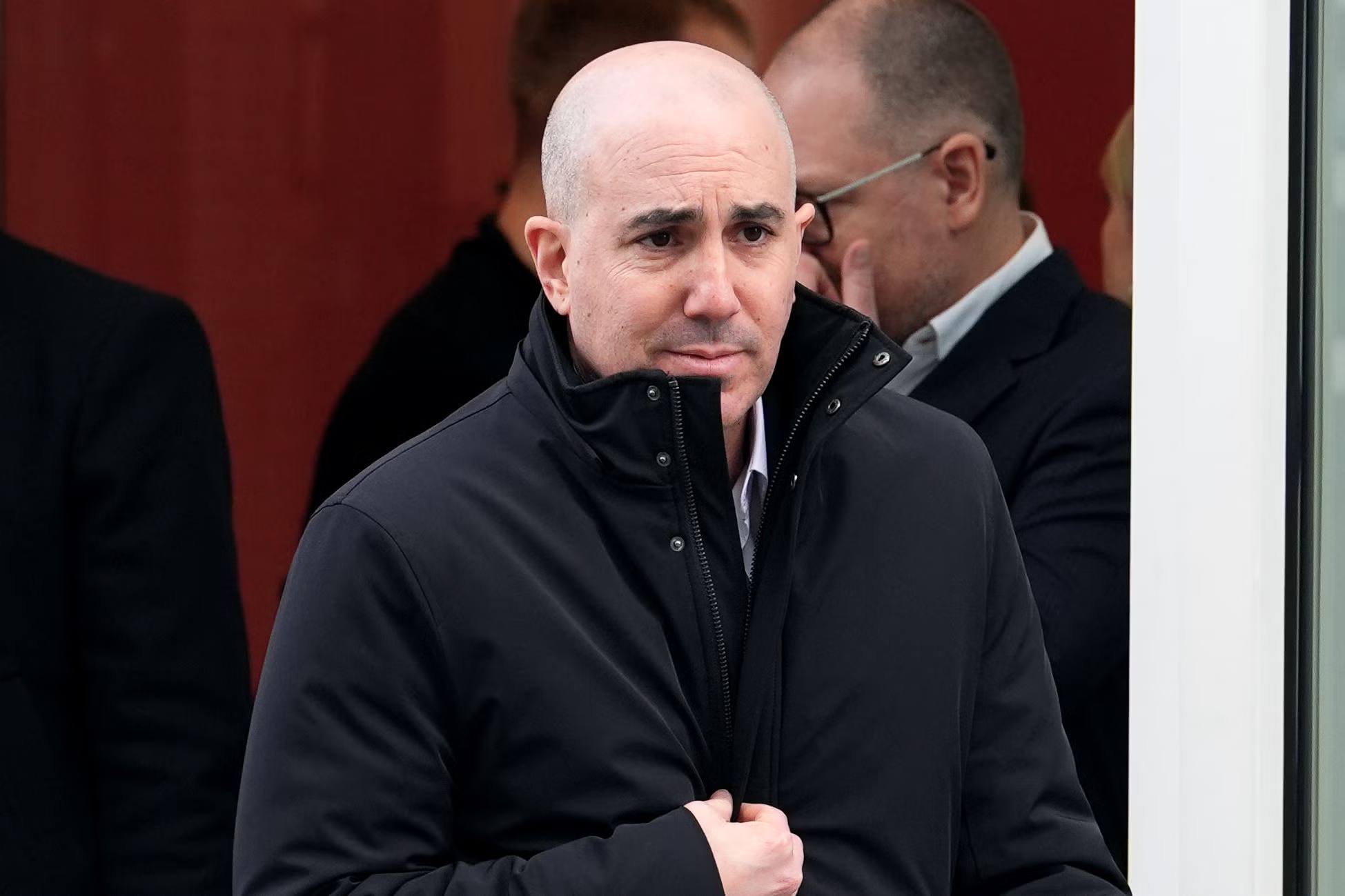
These cost-saving measures have been implemented against a backdrop of ongoing financial struggles, with Manchester United enduring six consecutive years of reported losses prior to this quarter. The consistent financial challenges highlight the difficulties faced by the 20-time English champions, not only in maintaining their competitive edge on the pitch but also in securing robust fiscal health off it.
Despite the current financial dip, the club maintains an optimistic outlook for its future revenue generation. Manchester United’s fiscal 2026 revenue forecast remains robust, projected between £640 million and £660 million. Core profit for the same period is anticipated to range from £180 million to £200 million, signalling the club’s confidence in its long-term commercial strategies and brand strength.
A pivotal figure in the club’s recent strategic direction is minority owner Jim Ratcliffe, whose INEOS group acquired approximately a 29 per cent stake and assumed control of football operations. Ratcliffe has wasted no time in implementing his vision, which includes increasing ticket prices, investing around £230 million in the summer transfer window to bolster the squad, and announcing ambitious plans for a new £2 billion, 100,000-seat stadium.
The club’s performance in European tournaments continues to exert a significant influence on its financial health, particularly impacting broadcasting revenue. Fluctuations in participation and progression through prestigious competitions like the Champions League directly translate into millions of pounds, intensifying financial pressures when performance falls short of expectations. This situation often draws criticism from the club’s passionate global fanbase, who closely link financial stability with on-field success.
The strategic interventions by the new ownership group are aimed at creating a more sustainable financial model, one that can support consistent investment in the squad and infrastructure. This long-term approach seeks to break the cycle of losses and establish a foundation for sustained sporting and commercial excellence, crucial for a club of Manchester United’s stature.
Such financial reports are closely scrutinised by investors, analysts, and stakeholders within the global football industry. They offer a transparent glimpse into the operational realities of one of the world’s most valuable sports franchises, influencing perceptions of its management, market strategy, and future growth potential in an increasingly competitive landscape.
Fan sentiment remains a critical factor, with supporters often expressing concerns about the balance between commercial interests and sporting performance. The financial pressures, exacerbated by the need for significant capital expenditure on projects like a new stadium, underscore the delicate equilibrium the club must maintain to satisfy both its investors and its loyal fanbase.
On the sporting front, the team currently sits sixth in the Premier League table after 15 games, showing signs of recovery with only one loss in their last nine matches. This recent upturn in domestic form offers a glimmer of hope amidst the financial challenges, suggesting that the strategic changes may eventually translate into more consistent results on the pitch, which in turn could positively impact future revenues.
Ultimately, Manchester United faces a crucial period of transformation. The reported financial loss, while significant, is framed by the club’s leadership as a necessary step in a broader strategy to achieve long-term sustainability and reclaim its position at the pinnacle of both European football and global sports business. The coming quarters will reveal the effectiveness of these bold strategic shifts.

![[post_title]](https://samony.com.ng/wp-content/uploads/2025/12/1765458694_The-Lands-End-Christmas-shop-showcases-luxurious-knits-cosy-nightwear.jpeg?lm=693AC306 "Lands’ End Unveils Christmas Collection: Knitwear, Nightwear, Accessories")
![[post_title]](https://samony.com.ng/wp-content/uploads/2025/12/CAC-Sets-New-Requirements-for-Business-Name-Online-Updates-300x297.jpeg?lm=693AC078 "CAC Mandates New Data for Nigeria Business Name Updates")
![[post_title]](https://samony.com.ng/wp-content/uploads/2025/12/E-invoicing-Is-FIRS-really-taking-tax-real-time-monitoring-to-next-300x183.jpg?lm=693ABAF5 "FIRS E-Invoicing System Transforms Nigeria’s Tax Landscape")

![[post_title]](https://samony.com.ng/wp-content/uploads/2025/12/You-are-playing-politics-with-our-future-LAUTECH-students-blast-300x169.jpg?lm=693AB91A "LAUTECH Iseyin Campus: Students Allege Crisis, Call for Intervention")

![[post_title]](https://samony.com.ng/wp-content/uploads/2025/12/CAC-Sets-New-Requirements-for-Business-Name-Online-Updates.jpeg?lm=693AC076 "CAC Mandates New Data for Nigeria Business Name Updates")
