

Analyzing Maduro’s Staying Power: Loyalty, Control, and the Specter of Intervention in Venezuela
Venezuelan President Nicolás Maduro’s actions are drawing attention. At one point, he dismissed English words like “skatepark.” Now, he sings John Lennon’s “Imagine.” Is this a sign of desperation? Or is something else happening?
The White House weighs military options against Venezuela. But pressure hasn’t cracked Maduro’s inner circle. Months pass without major defections or a change in government. That suggests a more complex picture than simple desperation.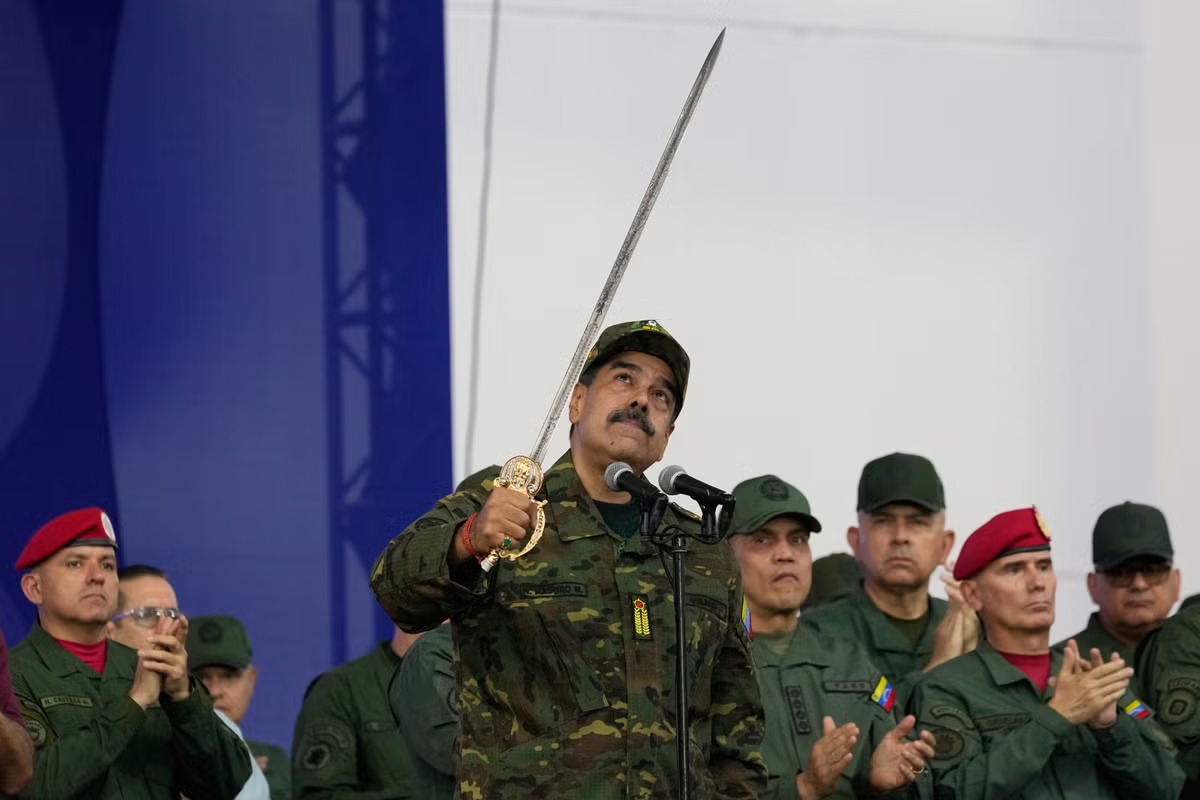 >
>
Maduro’s system seemingly prioritizes loyalty above all else. It rewards loyalists handsomely, but swiftly punishes those deemed disloyal. This principle seems to be the core of his continued control.
Corruption networks are a crucial element. Blessed by both Chávez and Maduro, these networks enable loyal officials—ministers, judges, military leaders—to enrich themselves. Sanctions, U.S. presidential pardons, even electoral defeats seemingly don’t deter them. This also vexes international efforts to dislodge Maduro.
Harsh punishments await perceived wrongdoers, especially within the military. Prison and torture aren’t off the table. This maintains control over the armed forces, who, in return, reportedly engage in illicit activities like drug and oil trafficking. A coup-proof barracks takes precedence over ethical concerns.>
Venezuelan opposition figures, like María Corina Machado, hoped for military support. They predicted the military would abandon Maduro after the disputed 2024 election. Yet, Defense Minister Vladimir Padrino López and other top brass stood firm. This echoes the 2019 barracks revolt, when soldiers loyal to Juan Guaidó failed to unseat Maduro.
The Trump administration has ramped up pressure. It doubled the reward for information leading to Maduro’s arrest on narcoterrorism charges to $50 million. The U.S. State Department designated the Cartel de los Soles, allegedly led by Maduro, as a foreign terrorist organization. Maduro denies these accusations, of course.
Trump even declared Venezuelan airspace “closed.” The Venezuelan government reacted strongly, accusing Trump of “colonial threats.” They rallied supporters, framing the situation as an assault on national sovereignty.
Consider the recent U.S. military actions. The bombing of suspected drug boats in the Caribbean Sea and eastern Pacific Ocean resulted in numerous deaths. Many see these actions as a direct attempt to end Chavismo. The opposition, predictably, reinforced this perception.
After the first boat strike, Maduro’s pilot reportedly rejected a U.S. offer to betray him. “We Venezuelans are cut from a different cloth,” he wrote. “The last thing we are is traitors.” This highlights a powerful sense of national identity, twisted as it may be.
Ruling party supporters marched in Caracas. They celebrated the “anti-imperialist spirit” of Chavismo. Maduro wielded Simón Bolívar’s jeweled sword, leading a pledge to defend peace and freedom. These displays of unity are vital. They prevent dissent and maintain the illusion of unwavering support.
Authoritarian leaders prize unity. They stage public displays of loyalty. The goal: to prevent internal splits and social unrest. Division invites protest.
The designation of Cartel de los Soles opens new avenues for Trump. But administration officials struggle to envision a scenario where Maduro remains in power. The long game, it seems, involves regime change.
Some argue that a show of force will trigger a government transition. This view misunderstands Chavismo. Actions like deploying U.S. military forces actually solidify their resolve. Distrust of the U.S. government runs deep. What incentive do military officers have to betray Maduro and participate in regime change? Especially if the U.S. believes they are all part of a drug cartel.
Venezuela faces a profound crisis. Millions struggle with poverty. Over 7.7 million people have migrated. Support for the ruling party has plummeted.
Maduro maintains his base through tactics like organized marches. These appeal to long-held beliefs and a sense of community.
Zenaida Quintero, a school porter, remembers the food shortages of the late 2010s. Despite these hardships, she remains loyal to Maduro. He was, after all, Chávez’s chosen successor.
Quintero trusts Maduro. Like Chávez, he will not abandon his supporters, she says. “We have to remain united. We have to defend ourselves.”
This loyalty, however misplaced, is key to understanding Maduro’s resilience. It’s not just about power. It’s about a belief system, however distorted. The international community needs a strategy that addresses this deeper reality.

![[post_title]](https://samony.com.ng/wp-content/uploads/2025/11/Troops-rescue-seven-kidnap-victims-in-Kano-300x168.jpeg?lm=692C368D "Nigeria’s Banditry Challenge: Kano Rescue and Systemic Failures")
![[post_title]](https://samony.com.ng/wp-content/uploads/2025/11/1764505265_Neighbours-star-Holly-Valance-grows-close-to-Tommy-Robinson-sparking-300x158.jpg?lm=692C36B2 "Holly Valance & Tommy Robinson: What’s Going On?")



![[post_title]](https://samony.com.ng/wp-content/uploads/2025/11/1764505080_Ruben-Amorim-Man-Utd-are-being-soft-near-our-box-1024x576.jpg?lm=692C35FA "Manchester United’s Defensive Crisis: Amorim’s Tactical Awakening or Impending Exit?")
![[post_title]](https://samony.com.ng/wp-content/uploads/2025/11/Troops-rescue-seven-kidnap-victims-in-Kano.jpeg?lm=692C368B "Nigeria’s Banditry Challenge: Kano Rescue and Systemic Failures")
